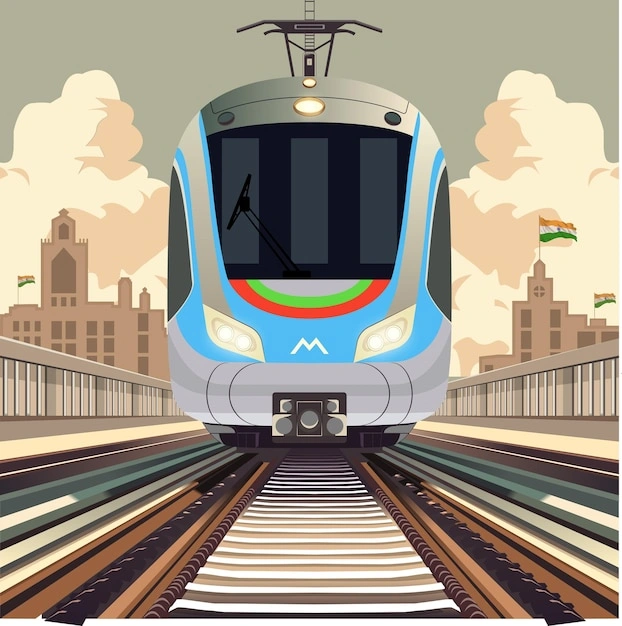
Hyderabad Metro Rail has launched a major urban mobility upgrade by integrating several key MMTS stations with the metro network, creating faster and more seamless transfers across the city. The move is expected to significantly improve daily commuting, reduce travel friction between transport modes, and offer a more convenient way for visitors to explore Hyderabad’s major districts and attractions.
The new connectivity links important rail nodes across central and southern Hyderabad, allowing passengers to switch more easily between metro and suburban rail services. In one step, the city has strengthened two of its most important public transport systems and created a more unified travel network for residents, workers, students, and tourists.
For a fast-growing metropolitan destination where road congestion remains a daily challenge, the integration could become a game-changer for how people move around the city.
Key MMTS Stations Now Connected
The newly connected MMTS stations include Bharatnagar, Lakdikapul, Begumpet, Khairatabad, Malakpet, Secunderabad East, Secunderabad West, and Nampally. These locations are among the city’s busiest and most strategically placed transit points, serving business districts, residential neighborhoods, commercial zones, and visitor areas.
By bringing these stations into closer alignment with the metro network, Hyderabad is reducing the need for multiple disconnected transfers. Instead of relying on separate bus links, auto-rickshaw rides, or longer road journeys between stations, passengers can now access a smoother multi-modal route across the city.
That improved convenience can make a major difference during rush hour, when every saved minute matters.
Faster Journeys for Daily Commuters
The biggest immediate beneficiaries are likely to be Hyderabad’s daily commuters. Thousands of residents travel each day between home, work, schools, colleges, and business districts. Delays caused by traffic congestion or poorly connected transport systems often add time and stress to these routines.
With the metro and MMTS now better integrated, travelers can choose faster and more direct routes. Passengers arriving from suburban corridors can transfer to the metro for quick access to commercial centers, while metro riders can connect onward to MMTS services serving wider parts of the city.
Routes involving hubs such as Secunderabad, Begumpet, and Nampally are expected to become more efficient, helping reduce dependence on private vehicles and easing pressure on congested roads.
For office workers and students in particular, more reliable public transport can translate into shorter door-to-door journey times and improved daily productivity.
Stronger Appeal for Tourists and Visitors
The integration is also good news for Hyderabad’s tourism sector. As one of India’s leading city-break destinations, Hyderabad attracts visitors for heritage landmarks, shopping, culinary experiences, cultural events, and business travel. Easy transport plays a central role in how travelers experience any city.
A connected metro-MMTS network allows visitors to move around with greater confidence and less confusion. Instead of navigating multiple disconnected systems, tourists can use a more streamlined rail-based option to reach central districts and popular urban zones.
Areas around Nampally, Secunderabad, and Lakdikapul are important gateways for many travelers. Better transfers through these hubs can improve first impressions, reduce travel stress, and encourage visitors to explore more of the city.
For hotels, attractions, restaurants, and retail businesses, stronger mobility can help drive visitor spending across a wider geographic area.
A Smarter Solution to Urban Congestion
Like many rapidly expanding cities, Hyderabad faces growing pressure on roads and transport infrastructure. Population growth, rising employment zones, and increasing vehicle ownership all create challenges for urban mobility.
Integrating two established rail systems is a practical way to expand transport efficiency without depending solely on new road capacity. Rail-based travel can move large passenger volumes quickly and sustainably, especially on busy commuter corridors.
The metro-MMTS initiative supports a broader smart-city vision in which transport networks are connected, user-friendly, and capable of adapting to future demand. Rather than operating as separate systems, the two networks can now complement each other more effectively.
That approach can also help encourage modal shift, persuading more people to choose public transport over private cars for regular trips.
Better Experience, Greater Flexibility
A key advantage of the new setup is flexibility. Passengers are no longer limited to one network for their entire trip. They can combine suburban rail for longer distances with metro services for rapid urban access, depending on what best suits their schedule.
This type of travel freedom is increasingly important in modern cities, where commuters need options and reliability. The easier it is to transfer, the more attractive public transport becomes.
For occasional users and visitors, simplified travel choices can remove a common barrier to using city rail systems.
What It Means for Hyderabad’s Future
The new Hyderabad Metro and MMTS integration represents more than a station upgrade. It signals a long-term commitment to connected urban mobility, better traveler experiences, and stronger citywide accessibility.
As Hyderabad continues to grow as a business hub and tourism destination, efficient transport will remain central to its competitiveness. Faster commuting supports economic productivity, while easier visitor movement strengthens the city’s appeal in domestic and international travel markets.
With key MMTS stations now linked to the metro, Hyderabad has taken an important step toward a smarter, faster, and more traveler-friendly future.
For more travel news like this, keep reading Global Travel Wire