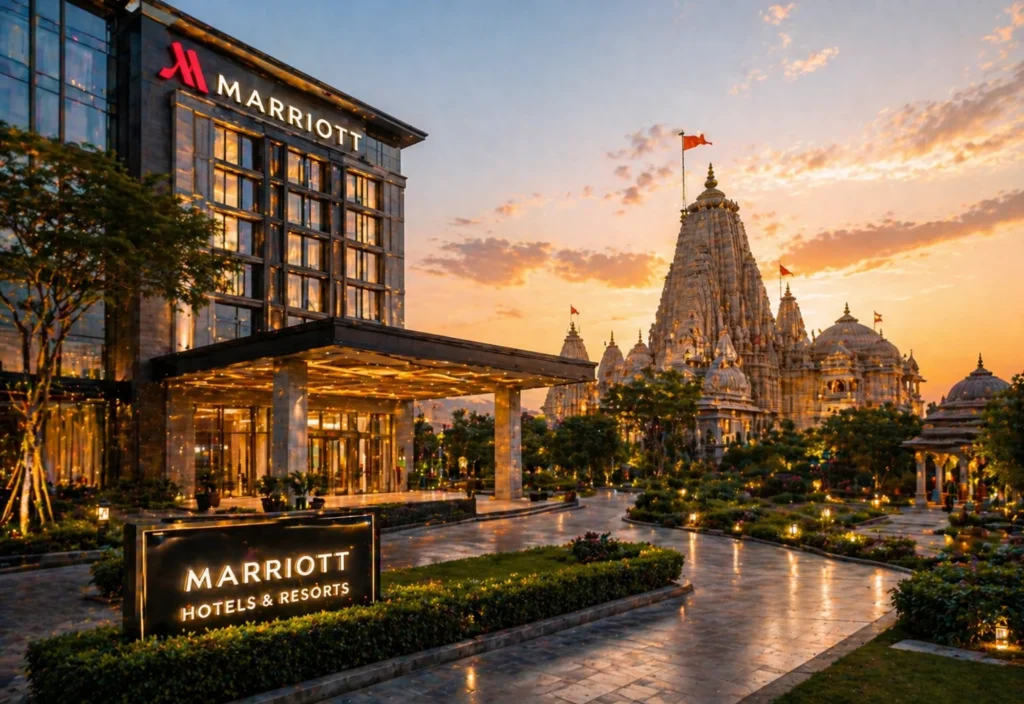
India’s tourism and hospitality sector is set for another major growth phase as Marriott International strengthens its long-term expansion strategy with a pipeline of 200 hotels across the country. The global hotel company is also placing a strong focus on spiritual tourism, signaling growing confidence in India’s rising domestic travel demand, pilgrimage circuits, and emerging destination markets.
The company’s leadership for South Asia has reaffirmed commitment to India despite temporary challenges in international travel flows linked to geopolitical uncertainty in West Asia. While some global transit patterns have shifted in the short term, the hospitality giant sees no long-term slowdown in India’s tourism potential.
India has become one of the world’s most dynamic travel markets, supported by a large domestic traveler base, expanding middle class, better road and air connectivity, digital booking adoption, and increased interest in leisure, wellness, heritage, and faith-based journeys. For hotel brands, this creates opportunities not only in major metros but also in secondary cities, pilgrimage destinations, and regional tourism hubs.
Marriott’s planned pipeline of 200 hotels reflects confidence in this long-term trend. The brand has continued opening new properties at a rapid pace and is broadening its portfolio across luxury, premium, midscale, extended stay, and lifestyle segments. This diversified strategy allows the company to serve business travelers, families, wedding groups, solo explorers, and spiritual tourists alike.
One of the most significant developments is the renewed spotlight on spiritual tourism. India’s pilgrimage economy has expanded sharply in recent years as improved infrastructure, cleaner public spaces, enhanced transport links, and destination upgrades attract millions of visitors annually. Government investment in temple towns, riverfront projects, railway stations, airports, and tourism amenities has helped make religious travel more accessible and comfortable.
Marriott has already entered key pilgrimage destinations such as Tirupati and Katra, while additional properties are planned in Ayodhya and Vrindavan. These cities are witnessing rising visitor demand from across India and overseas communities seeking faith-based travel experiences combined with quality accommodation and modern services.
Tirupati remains one of India’s most visited religious destinations, drawing devotees year-round. Better hospitality supply in the city can support longer stays, family travel, and premium visitor experiences. Katra, the gateway to the Vaishno Devi pilgrimage, also continues to benefit from strong tourism flows and transport improvements.
Ayodhya has emerged as one of India’s fastest-growing spiritual tourism markets, with large-scale infrastructure upgrades, expanded road networks, improved airport access, and hospitality development supporting a sharp increase in arrivals. Vrindavan, deeply associated with devotional tourism, also continues to attract domestic and international visitors seeking temple experiences, festivals, and cultural immersion.
The rise of branded hotels in these cities marks an important shift in India tourism. Pilgrimage travel, once centered mainly on short visits and budget stays, is increasingly evolving into multi-day journeys where travelers seek comfort, cleanliness, family-friendly facilities, and reliable service standards.
This trend benefits the wider tourism economy. New hotels generate employment, create local supplier opportunities, boost transport demand, and encourage spending in restaurants, retail markets, handicrafts, guides, and cultural experiences. Hospitality investment can also help formalize destination ecosystems and improve year-round tourism readiness.
Beyond spiritual tourism, Marriott’s India expansion is expected to support urban and resort growth as well. Major cities continue to attract business travel, conferences, weddings, and international visitors, while destinations such as Goa, Jaipur, Udaipur, Kerala, the Himalayas, and coastal leisure markets remain strong performers.
India’s tourism outlook is further strengthened by rising domestic travel frequency. Weekend getaways, destination weddings, bleisure trips, wellness retreats, and festival travel have all expanded the need for quality hotel inventory. Younger travelers are also exploring new destinations beyond traditional hotspots, creating demand in tier-2 and tier-3 cities.
For travelers, increased hotel supply often brings more choice, better loyalty benefits, stronger service competition, and a wider range of price points. Whether seeking luxury resorts, city business hotels, or comfortable stays near pilgrimage centers, visitors stand to benefit from greater market depth.
The focus on faith-led destinations also aligns with a broader global trend in meaningful travel. Many tourists now seek experiences connected to culture, heritage, spirituality, wellness, and personal reflection rather than only sightseeing. India’s rich religious and cultural landscape positions it strongly in this evolving segment.
Even as short-term international travel patterns fluctuate, domestic tourism continues to provide resilience. India’s large internal market allows hotel developers to plan with confidence, knowing that demand comes from multiple traveler segments across seasons.
The next phase of hospitality growth in India is likely to be more geographically diverse than before. Instead of concentrating only on metros, brands are increasingly looking at temple towns, highway corridors, wildlife zones, heritage clusters, and fast-growing regional cities.
Marriott’s expansion strategy highlights how global hotel companies now view India not just as a major market, but as a long-term growth engine. The combination of infrastructure upgrades, destination development, rising incomes, and powerful cultural travel demand is creating sustained momentum.
For tourists planning future trips, the message is clear: India will offer more hotel choices, stronger service standards, and better stays in both classic destinations and emerging spiritual hubs. As new properties open across the country, India’s tourism landscape is becoming broader, more accessible, and more experience-driven than ever before.