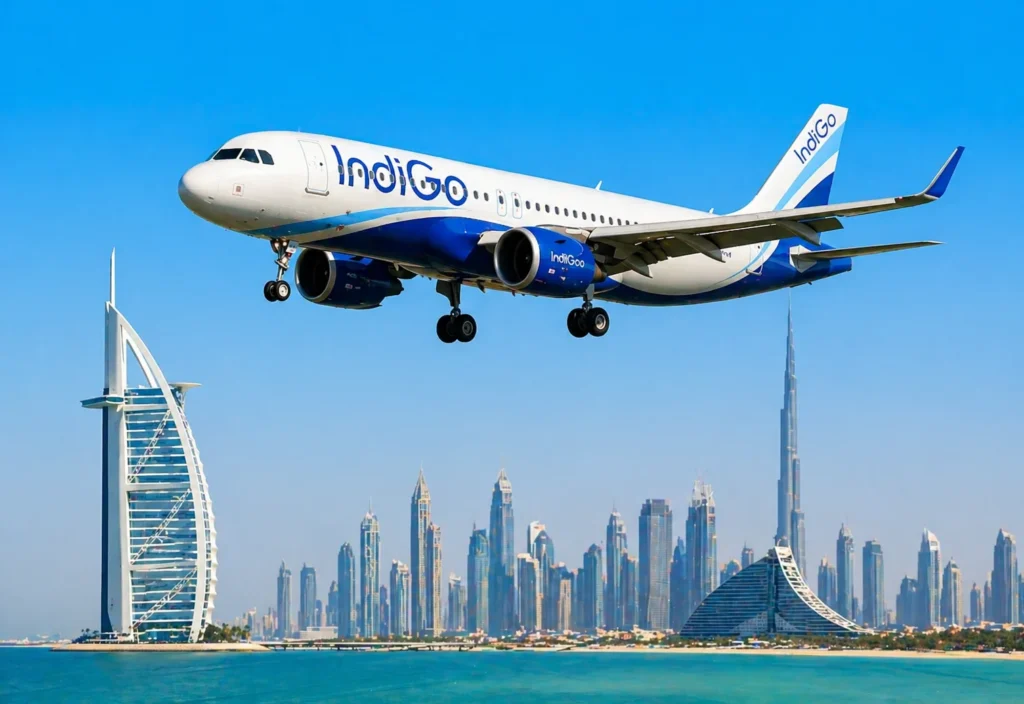
Air travel between India and West Asia received an important boost after IndiGo confirmed operations to five key regional destinations despite continued volatility in the Middle East. The airline’s latest advisory offers reassurance to passengers, families, and tourism stakeholders who depend on these high-demand international routes for holidays, business travel, family visits, and onward global connections.
According to the carrier’s update, scheduled services were planned to operate to Dubai, Abu Dhabi, Sharjah, Akrotiri, and Fujairah, subject to prevailing safety conditions and regulatory approvals. Return flights from these destinations to major Indian cities including Delhi, Mumbai, and Hyderabad were also planned, helping passengers complete disrupted journeys and reconnect with loved ones.
The announcement is significant for regional tourism because West Asia remains one of the busiest international travel corridors for Indian travelers. Strong ties in business, employment, leisure travel, and family connectivity create year-round demand for flights between India and Gulf destinations. Any restoration of services on these routes is closely watched by airlines, airports, hotels, and travel planners.
Dubai remains one of the most popular overseas destinations for Indian tourists. The city attracts visitors with luxury shopping, modern attractions, family entertainment, beaches, desert experiences, and a vibrant events calendar. Abu Dhabi continues to grow through cultural tourism, premium hospitality, motorsport events, and leisure developments. Sharjah offers heritage attractions and family-friendly travel experiences, while Fujairah appeals to beach travelers and divers seeking a quieter coastal escape.
The resumption of flights also supports travelers using these hubs for onward connections. Many passengers flying from India use Gulf airports as gateways to Europe, Africa, and North America. When schedules return, even partially, it helps restore broader international mobility beyond the immediate region.
For tourism markets, flight continuity is essential. Air connectivity drives visitor arrivals, hotel occupancy, restaurant demand, retail spending, attraction visits, and conference activity. When major carriers maintain or restart services responsibly, destinations recover faster and traveler confidence improves.
IndiGo also announced flexible travel support by extending waivers on cancellations and rescheduling for eligible bookings through the stated period. This is especially valuable during uncertain operating conditions, as passengers may need to adjust plans quickly due to changing schedules or personal circumstances.
Flexible booking policies have become a major factor in travel decision-making. Since global travel disruptions in recent years, passengers increasingly prioritize airlines that offer easy changes, refunds, or rebooking support. Such measures reduce stress and encourage travelers to continue planning trips even during uncertain periods.
The current situation also highlights the resilience of modern aviation networks. Airlines regularly assess airspace conditions, airport readiness, fuel logistics, and regulatory guidance before confirming operations. Route planning teams may adjust flight paths, timings, and aircraft deployment to maintain services safely where possible.
For passengers, the best approach remains staying informed through official airline channels. Flight status can change quickly when regional conditions evolve, so checking notifications before leaving for the airport is essential. Travelers should also ensure passports, visas, insurance documents, and onward bookings are up to date.
Those with urgent family travel or time-sensitive business commitments may benefit most from the restored services. Students, professionals, expatriates, and families often rely on India-Gulf routes for essential journeys. The return of flights can reduce uncertainty and offer much-needed travel options.
Tourism boards across West Asia continue to promote their destinations as safe, welcoming, and experience-rich. The Gulf region has invested heavily in airports, hotels, entertainment zones, cruise terminals, cultural attractions, and sporting events. These investments have helped transform the region into one of the world’s fastest-growing tourism hubs.
Dubai and Abu Dhabi in particular have become global leaders in stopover tourism. Many travelers choose to extend layovers into short holidays, combining international journeys with city experiences. Reliable flight schedules are key to sustaining this model.
For Indian outbound tourism, the Gulf region remains attractive because of short flight times, strong value across hotel categories, family-friendly attractions, and frequent airline competition. Weekend breaks, shopping trips, festival travel, and school holiday vacations all contribute to demand.
Travel advisors recommend that passengers keep extra flexibility in itineraries over the coming weeks. Choosing refundable hotel rates, allowing more connection time, and avoiding overly tight schedules can help minimize disruption if flights are adjusted again.
Travel insurance with trip interruption or delay coverage may also provide added reassurance. As geopolitical events can influence aviation unexpectedly, insurance can help reduce financial losses linked to rebooking, missed connections, or additional accommodation.
The broader tourism outlook remains positive despite short-term challenges. Demand for international travel continues to recover strongly, and passengers are increasingly willing to adapt routes or schedules in exchange for reaching their destinations. Airlines that communicate clearly and provide support often retain traveler trust during such periods.
IndiGo’s decision to operate flights to five West Asia destinations sends an important signal to the market: connectivity is returning where conditions allow, and passenger needs remain a priority. The combination of resumed services and booking flexibility provides welcome relief for many travelers waiting to complete their journeys.
For now, travelers should continue monitoring updates, remain flexible, and rely only on verified announcements from airlines and authorities. With careful planning and responsible operations, travel between India and West Asia can continue moving forward even in a challenging environment.
As one of the busiest international corridors for Indian travelers, the gradual restoration of these routes is good news for tourism, families, and business communities across both regions.
For more travel news like this, keep reading Global Travel Wire