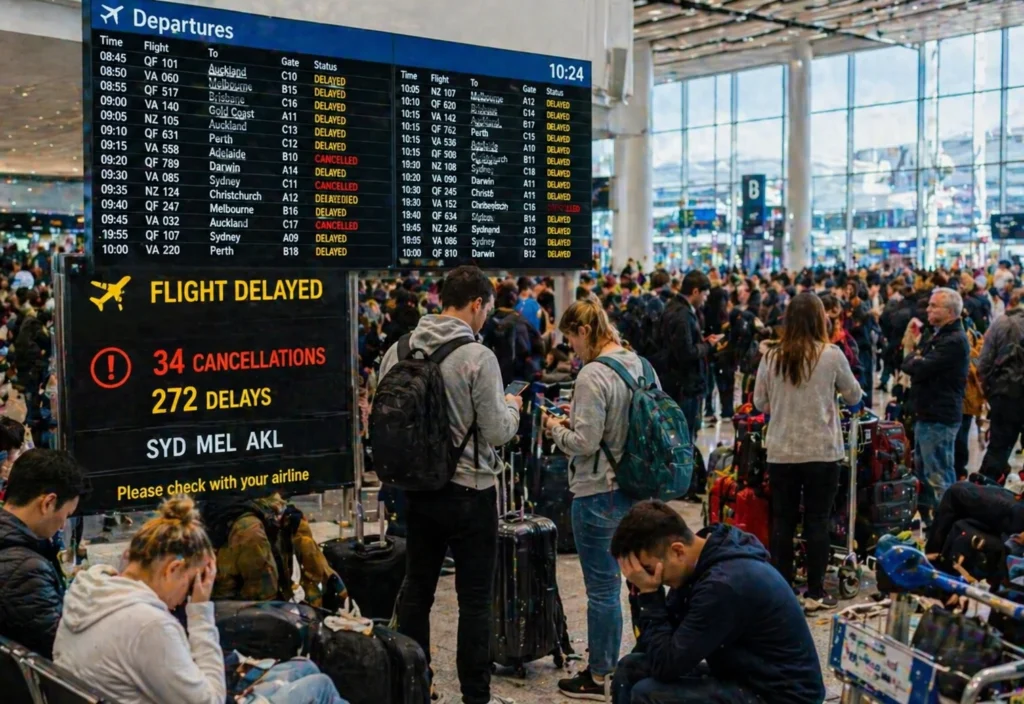
Travelers across Australia and New Zealand faced major aviation disruption after widespread flight delays and cancellations affected key airports during a busy travel period. The operational challenges placed pressure on passengers, airlines, and airport services, highlighting how closely tourism depends on resilient air transport networks.
Major gateways including Sydney, Melbourne, and Auckland experienced schedule interruptions that impacted domestic and international journeys. For tourists, business travelers, and families, the disruption created missed connections, longer waiting times, rebooking challenges, and uncertainty during one of the region’s active travel periods.
While delays and cancellations are a normal part of aviation operations when weather or operational issues arise, the scale of disruption has renewed focus on the need for stronger network flexibility, staffing readiness, and traveler planning.
Why This Matters for Tourism
Australia and New Zealand rely heavily on aviation for tourism. Long distances between cities, island geography, and international visitor demand make air travel essential for moving people efficiently across the region.
Flights connect travelers to iconic destinations such as Sydney Harbour, Melbourne’s cultural districts, the Great Barrier Reef, New Zealand’s adventure hubs, wine regions, beaches, and nature-based tourism areas. When airports experience major delays, the impact can quickly spread into hotels, tours, cruises, events, and local businesses.
Tourism is not only about attractions. It depends on the smooth movement of visitors from departure to arrival. That is why airport performance remains central to destination success.
Major Hubs Under Pressure
Sydney, Melbourne, and Auckland are among the most important gateways in the South Pacific travel network. They handle high passenger volumes and serve as key connection points for domestic services, trans-Tasman routes, and long-haul international flights.
When disruption affects these hubs, consequences often extend well beyond a single terminal. Aircraft arriving late may delay later departures. Crews may exceed allowable duty hours. Connecting passengers may miss onward flights. Rebooking demand can rise rapidly.
This network effect explains why even localized issues can create wider tourism disruption across multiple cities and routes.
What Causes Cascading Delays
Modern airlines operate tightly coordinated schedules designed to maximize aircraft use and meet demand efficiently. Planes may complete several sectors in one day, while crews and ground teams work to carefully timed rotations.
This system works well when operations run smoothly. However, when weather changes, staffing shortages, maintenance checks, or airport congestion occur, schedules can quickly become strained.
A delayed morning flight may affect afternoon departures. A late aircraft can miss its next planned route. Crews may need replacement if working hour limits are reached. By evening, delays can spread across the network.
For travelers, this means a disruption on one route can affect flights that seem unrelated.
Peak Season Travel Challenges
Busy travel periods increase pressure on airports because flights are fuller, schedules are denser, and available backup capacity is often lower. During holiday peaks, school breaks, and strong leisure demand, recovering from disruption can take longer.
Passengers may find fewer alternative seats available, especially on popular routes. Accommodation near airports can also fill quickly when cancellations increase overnight stays.
This is why resilience planning becomes especially important during high-demand seasons. Tourism economies benefit when airlines and airports can recover quickly from operational shocks.
Impact on Travelers
For tourists, delays can affect more than just arrival time. Missed hotel check-ins, lost tour bookings, disrupted cruise departures, and shortened itineraries can all result from aviation delays.
Business travelers may miss meetings or events, while families may face extra costs and added stress. Travelers with multi-city itineraries are often the most affected because one disruption can change an entire journey.
However, digital tools and airline apps have improved communication in many cases. Real-time alerts, mobile rebooking options, and updated gate information can help reduce uncertainty during difficult travel days.
Importance of Staffing and Infrastructure
The disruption also highlights the importance of staffing across aviation. Pilots, cabin crew, engineers, baggage teams, security staff, and customer service teams all play essential roles in keeping flights on schedule.
As travel demand has grown, many global markets have focused on rebuilding workforce capacity and strengthening airport operations. Continued investment in training, recruitment, and infrastructure helps improve recovery speed when unexpected events occur.
For tourism destinations, these behind-the-scenes systems are just as important as marketing campaigns and visitor attractions.
Smart Tips for Tourists
Travelers flying during busy periods can reduce stress by taking practical steps:
Arrive early and monitor flight status before leaving for the airport.
Use airline mobile apps for alerts and rebooking options.
Keep essential items, chargers, medications, and documents in cabin baggage.
Allow generous connection times for multi-flight itineraries.
Choose flexible accommodation or refundable bookings when possible.
Consider travel insurance that includes disruption coverage.
Build buffer time before cruises, major tours, weddings, or important events.
These habits can make a major difference when schedules change unexpectedly.
Positive Long-Term Outlook
Although large disruption days attract headlines, Australia and New Zealand remain among the world’s most desirable tourism regions with strong aviation networks, high safety standards, and world-class visitor experiences.
Airports and airlines continually review operational performance after significant disruption events. Lessons learned often lead to stronger planning, improved passenger communication, and more resilient scheduling strategies.
For travelers, occasional delays are frustrating, but they do not change the long-term appeal of the region’s destinations or the strength of its tourism offering.
Tourism Recovery Through Better Connectivity
Reliable connectivity remains one of the most valuable assets for any destination. As airlines continue expanding routes and airports invest in efficiency, the tourism sectors of Australia and New Zealand are well positioned for continued growth.
The recent Australia New Zealand Flight Disruptions serve as a reminder that smooth travel requires constant coordination across the aviation ecosystem. With smart planning and continued investment, the region can strengthen resilience while welcoming millions of future visitors to its cities, coastlines, and natural wonders.