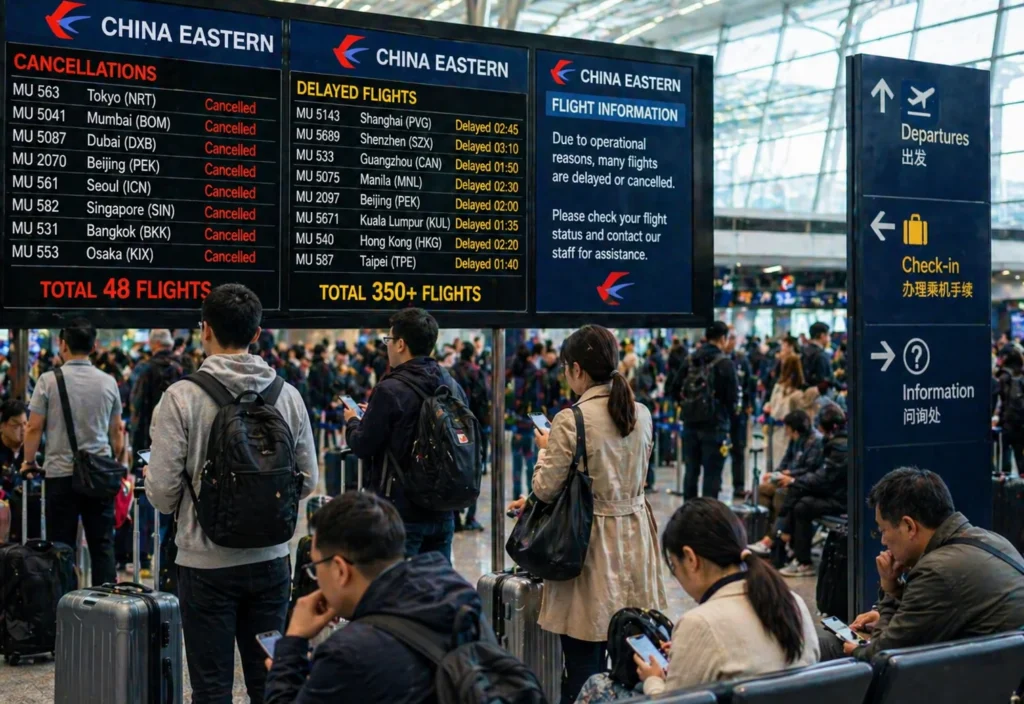
Travelers across Asia-Pacific faced major scheduling problems after widespread delays and cancellations affected China Eastern Airlines operations during a busy April travel period. The disruption impacted passengers flying through key hubs such as Shanghai and Shenzhen, with ripple effects reaching important international gateways including Mumbai, Dubai, and Tokyo.
For the tourism industry, the incident highlights how vital airline reliability is to regional travel flows. Asia-Pacific remains one of the world’s most dynamic tourism markets, and smooth connectivity between business centres, holiday destinations, and transit hubs is essential for sustaining growth.
While airline disruptions can happen for many operational reasons, the scale of delays has renewed attention on hub resilience, passenger communication, and the importance of flexible travel planning.
Why This Matters for Tourism
Airlines are the foundation of modern tourism. They connect travelers to city breaks, beach vacations, family visits, business meetings, cruises, and multi-country itineraries. When a major carrier faces widespread delays, the impact often extends well beyond the airport.
China Eastern plays an important role in linking mainland China with key markets across Asia and the Middle East. Its network supports tourism demand, trade travel, student mobility, and international business connections.
Disruptions on such a network can affect hotel bookings, onward flights, tours, event attendance, and visitor spending in multiple countries at the same time.
Shanghai and Shenzhen as Strategic Hubs
Shanghai is one of Asia’s most important aviation gateways, serving as a major international entry point with strong domestic and long-haul connections. Its airports support huge passenger volumes and act as transfer points for travelers moving between China and global destinations.
Shenzhen is another significant hub, especially for southern China and regional connectivity. Together, these cities form critical pillars in the airline’s operations.
When delays affect hub airports, aircraft rotations, crew scheduling, and connection banks can quickly come under pressure. That is why issues at a few airports can create network-wide consequences.
International Routes Feel the Ripple Effect
The reported impact on routes involving Mumbai, Dubai, and Tokyo is especially important for tourism because these cities are major travel gateways in their own regions.
Mumbai supports one of South Asia’s busiest travel markets and connects passengers onward across India and beyond. Dubai remains a global transfer powerhouse linking Europe, Asia, Africa, and the Middle East. Tokyo is a leading destination for both business and leisure travel with strong regional demand.
When flights to or from these cities are delayed or cancelled, travelers may miss onward journeys, lose valuable holiday time, or face rebooking challenges during busy periods.
How Delays Cascade Across Networks
Modern airline schedules are highly coordinated. A single aircraft may operate multiple sectors in one day, while crews, gates, and maintenance teams follow carefully planned timelines.
If an early flight is delayed, the same aircraft may arrive late for its next departure. That delay can then continue through later sectors. If crews reach regulated working-hour limits, additional changes may be required.
Passengers often see only the final delay announcement, but behind the scenes a chain reaction may already be affecting many flights.
This is why aviation resilience and recovery planning are so important for tourism markets dependent on reliable schedules.
Passenger Experience During Disruption
For travelers, delays can mean more than waiting at the gate. Missed connections, changed itineraries, unexpected hotel stays, and lost tour reservations can all result from operational problems.
International passengers with multi-leg journeys may face the greatest inconvenience because each connection depends on the previous flight operating close to schedule.
However, airlines and airports now increasingly use mobile notifications, digital rebooking tools, and real-time status updates to help travelers respond faster when plans change.
Clear communication remains one of the most important parts of disruption management.
Growing Demand Increases Pressure
Asia-Pacific tourism demand has remained strong, with rising interest in city tourism, cultural travel, shopping trips, family reunions, and business mobility. Strong demand is positive for destinations, but it can also reduce spare seat availability when disruptions occur.
During peak periods, rebooking options may fill quickly and alternative routes may become limited. This makes planning and flexibility even more valuable for travelers.
As tourism grows, investment in fleet capacity, airport infrastructure, staffing, and digital systems becomes increasingly important.
Smart Travel Tips for Passengers
Travelers flying through major hubs can reduce stress during disruption periods by following practical steps:
Check flight status before leaving for the airport
Use the airline mobile app for alerts and self-service changes
Keep important items and chargers in cabin baggage
Allow extra connection time on complex itineraries
Choose flexible fares when possible
Maintain travel insurance with disruption coverage
Save hotel and transport contacts in advance
Stay calm and act early when schedule changes appear
Prepared travelers often recover faster from unexpected changes.
Positive Long-Term Outlook for Asia-Pacific Travel
Although disruption events create short-term challenges, they do not change the long-term strength of Asia-Pacific tourism. The region continues to lead global travel growth through expanding middle-class demand, rising international interest, and strong investment in aviation infrastructure.
China, Japan, India, Southeast Asia, and Gulf connections remain central to future travel expansion. Airlines that learn from disruption events often emerge stronger through improved systems, better communication, and more resilient planning.
For destinations across the region, continued connectivity remains a major opportunity.
Final Word
The recent China Eastern Flight Disruptions are a reminder that efficient air travel requires constant coordination between airlines, airports, crews, and technology systems. In an interconnected tourism market, delays in one hub can influence journeys across multiple countries.
Even so, Asia-Pacific remains one of the world’s most exciting travel regions. With smarter planning, stronger operations, and continued investment, the sector is well positioned to keep welcoming millions of travelers in the years ahead.