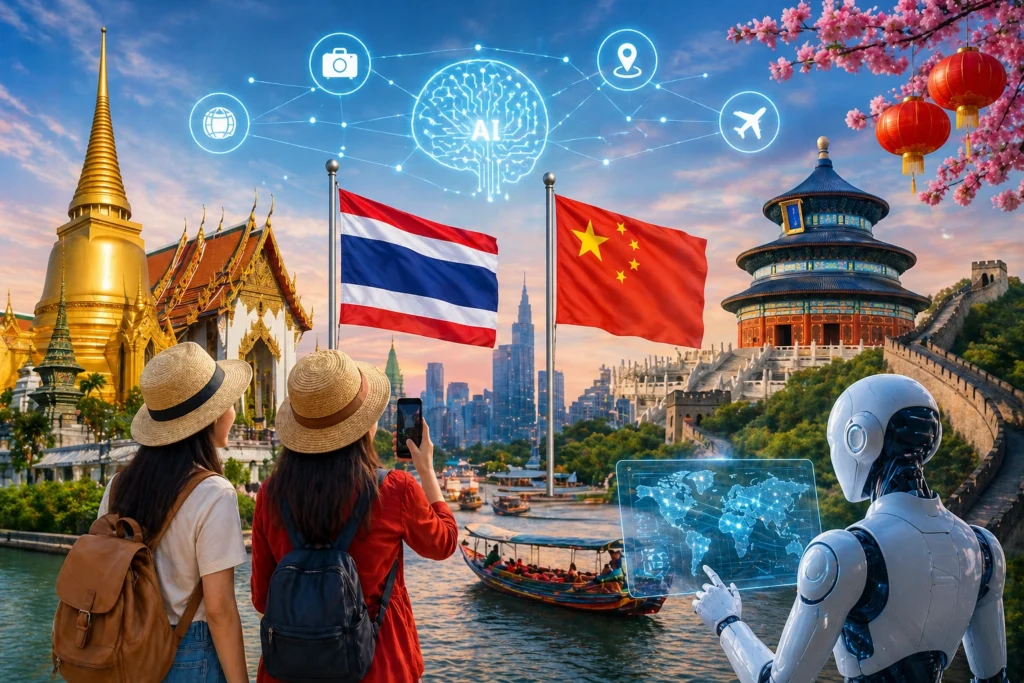
Thailand and China are strengthening tourism ties through a new partnership focused on artificial intelligence, digital media and travel technology, in a move designed to stimulate cross-border visitor growth and modernize destination marketing. Thailand’s Public Relations Department has joined forces with China Media Group to explore how AI-powered tools, smart content creation and next-generation travel media can increase tourism demand between the two countries while improving how travelers discover and plan trips.
The collaboration reflects a wider shift across global tourism, where destinations are turning to digital innovation to compete for travelers. As consumers increasingly rely on mobile platforms, personalized recommendations and video storytelling, governments and tourism organizations are investing in smarter ways to reach audiences and convert interest into bookings.
AI Becomes a New Tool for Tourism Promotion
A major part of the initiative centers on using AI technology in tourism communications. During discussions between officials from Thailand and executives from China Media Group, both sides reviewed how AI presenters, automated content systems and immersive digital storytelling could support future tourism campaigns.
China Media Group recently introduced “Mali,” an AI-driven presenter that demonstrates how artificial intelligence can transform media delivery. Similar tools could be adapted for tourism promotion by offering destination updates, travel inspiration, multilingual information and personalized recommendations for visitors considering trips to Thailand or China.
For travelers, that could mean faster access to relevant information, more engaging trip-planning content and easier navigation through travel choices. For tourism boards, AI can help campaigns reach the right audiences with greater efficiency.
Stronger Digital Reach for Thai and Chinese Destinations
The partnership also focuses on expanding the international visibility of both countries through digital media. China Media Group’s broad global network and access to content creators, video platforms and international audiences provide a powerful channel for showcasing tourism experiences in Thailand and China.
That could include promoting Thailand’s beaches, wellness retreats, culinary tourism and cultural landmarks, alongside China’s heritage cities, scenic landscapes, shopping hubs and modern urban attractions. High-quality digital storytelling is becoming one of the most effective tools in destination marketing, especially among younger travelers who make decisions based on mobile-first content.
By combining official tourism messaging with dynamic media production, both nations can broaden awareness in key source markets and encourage travelers to book longer, higher-value trips.
Benefits for Airlines, Hotels and Local Economies
More effective tourism promotion can deliver direct benefits across the travel supply chain. Increased demand between Thailand and China would support airlines through stronger passenger volumes, particularly on regional routes connecting major cities and leisure destinations. Hotels, resorts and serviced apartments could also gain from higher occupancy and longer average stays.
Local businesses stand to benefit as well. Restaurants, attractions, retailers, guides and transport providers often see strong gains when cross-border tourism expands. If AI tools help travelers discover more experiences and move more confidently through destinations, visitor spending can spread across wider parts of the economy.
Personalized Travel Experiences on the Rise
One of the most important trends behind the agreement is personalization. Travelers increasingly expect recommendations based on their interests, budgets and travel style. AI systems can analyze preferences and suggest itineraries, attractions or seasonal experiences that better match individual needs.
For example, cultural travelers may receive heritage-focused itineraries, while luxury visitors could be guided toward premium hotels and wellness experiences. Family travelers may benefit from kid-friendly routes and simplified logistics. This level of personalization can improve satisfaction and encourage repeat visits.
A Competitive Move in Asia’s Tourism Race
Asia remains one of the most competitive tourism regions in the world, with destinations investing heavily in infrastructure, digital marketing and visitor experience upgrades. By working together on AI tourism promotion, Thailand and China are positioning themselves to capture a larger share of future travel demand.
The collaboration also highlights the growing role of public-sector partnerships in tourism innovation. Rather than relying solely on traditional advertising, governments are increasingly teaming with technology and media organizations to shape traveler behavior through smarter digital ecosystems.
What Comes Next
As the partnership develops, more AI-led campaigns, interactive travel content and technology-based tourism services are expected to emerge. These could include multilingual travel assistants, live destination updates, enhanced booking pathways and richer media experiences that inspire travel from the first search to arrival.
For the global tourism industry, the Thailand-China initiative is another sign that the future of travel growth will be powered not only by flights and hotels, but by data, storytelling and intelligent technology. For travelers, it promises easier planning, richer experiences and more connected journeys across two of Asia’s most influential destinations.
For more travel news like this, keep reading Global Travel Wire