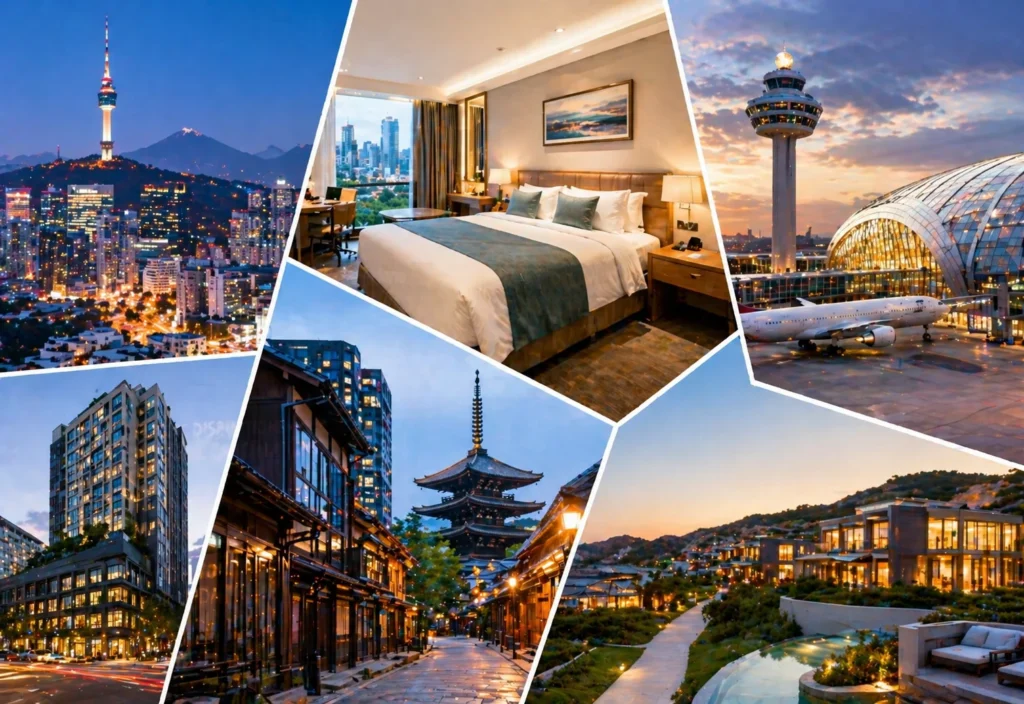
Tourism-linked real estate activity across the Asia Pacific region is gaining fresh momentum as new hotel acquisitions, airport expansion projects, co-living repositioning, and institutional investment reshape the future of travel. Recent developments in South Korea, Singapore, Japan, and Australia highlight growing confidence in tourism demand, hospitality assets, and long-term visitor growth across the region.
From Seoul hotels poised for repositioning to Singapore’s premium airport upgrades and new investment flows into Japan’s hospitality market, the latest wave of activity signals strong interest in destinations that combine travel demand, urban growth, and resilient visitor economies.
Seoul Assets Could Return to Hotel Use
One of the most notable moves comes from South Korea, where two co-living assets in Seoul have changed ownership in a major transaction. The properties, Mangrove Dongdaemun and Mangrove Sinseol, were acquired by new investors with expectations that the sites may eventually be repositioned into hotel use under an international brand.
This potential shift is significant for Seoul tourism. The city remains one of Asia’s most popular urban destinations, attracting business travelers, culture seekers, shoppers, and international visitors drawn by entertainment, cuisine, and heritage experiences.
Hotels in well-connected districts such as Dongdaemun are particularly attractive because they serve both leisure and business segments. If the properties return to hospitality use, they could add valuable room supply in central Seoul and strengthen the city’s accommodation pipeline.
The transaction also reflects a wider trend in adaptive reuse, where residential or alternative lodging assets are converted to meet changing tourism demand.
Australia Expands Worker and Corporate Accommodation
In Western Australia, a major acquisition in Karratha shows how hospitality is evolving beyond traditional hotels. The newly acquired property includes worker accommodation as well as motel-style rooms for managers and corporate guests.
This type of investment is increasingly relevant in resource-driven regions where business travel, project workforces, and corporate mobility create steady demand for accommodation.
For tourism observers, it highlights how travel infrastructure includes multiple lodging formats, not only city hotels and resorts. Regions with strong industrial activity often depend on reliable accommodation for contractors, executives, and long-stay guests.
As Australia continues developing regional economies, purpose-built accommodation can support both business visitation and broader local travel ecosystems.
Japan Attracts Long-Term Institutional Confidence
Japan continues to draw major investor attention, with a new real estate fund commitment targeting domestic sectors including hospitality. The strategy focuses on key cities such as Tokyo and Osaka, both of which remain vital tourism and commercial centers.
This matters for tourism because institutional capital often supports the renovation, expansion, or repositioning of hotels and mixed-use properties that improve visitor experiences.
Japan’s appeal remains strong thanks to its transport efficiency, cultural richness, seasonal travel appeal, and international reputation for service quality. Major cities continue attracting business events, leisure travelers, and high-spending visitors.
When long-term investors commit capital to hospitality markets, it usually signals confidence in stable demand and future growth potential.
For the tourism sector, such investment can help create newer, better, and more competitive accommodation options.
Singapore Strengthens Premium Airport Experience
Singapore is also enhancing its tourism competitiveness through airport innovation. Changi Airport Group has announced plans for a new private terminal at Terminal 2 alongside an expanded lifestyle and amenities precinct.
The project is expected to include private suites, lounges, dining venues, event spaces, and upgraded wellness and leisure facilities. These additions reinforce Singapore’s position as a global leader in airport hospitality and passenger experience.
For tourism, airports are often the first and last impression of a destination. Premium facilities, efficient services, and high-quality amenities can significantly influence traveler satisfaction.
The expanded Hub & Spoke precinct, including event areas and lifestyle spaces, also shows how airports are becoming destinations in their own right rather than simple transit points.
As competition for international travelers intensifies, world-class airport experiences can be a powerful tourism advantage.
Kyoto Hotel Market Remains Active
In Japan’s cultural capital Kyoto, two hotels have reportedly changed hands in another sign of confidence in the city’s accommodation market.
Kyoto remains one of Asia’s most iconic tourism destinations, known for temples, gardens, traditional neighborhoods, seasonal beauty, and heritage experiences. Demand for well-located boutique and lifestyle hotels remains strong, especially as international visitation continues to recover and diversify.
Hotel transactions in Kyoto often attract attention because the city has limited land supply, high visitor appeal, and strong brand value.
When investors buy or reposition hotels in heritage destinations, it can lead to refreshed products, upgraded guest experiences, and stronger tourism capacity.
Why Investors Are Returning to Hospitality
The renewed pace of transactions across Asia Pacific reflects several broader trends.
Travel demand has remained resilient across many markets. Leisure travel continues to recover, business travel is stabilizing, and regional connectivity is improving. Governments are also investing in airports, tourism campaigns, and urban infrastructure that support visitation growth.
At the same time, hospitality assets offer investors exposure to tourism recovery and the potential for rising revenue when occupancy and room rates improve.
Many investors also see opportunities in repositioning older properties, converting non-traditional assets, or developing mixed-use projects that combine accommodation, retail, and lifestyle experiences.
This flexibility makes hospitality attractive in fast-changing travel markets.
What It Means for Travelers
For travelers, increased investment usually leads to better choices and improved experiences.
New ownership can bring renovations, stronger branding, better service standards, and upgraded amenities. Airport projects can improve comfort and convenience. Additional room supply can also help destinations manage demand during peak seasons.
In cities like Seoul, Singapore, Tokyo, Osaka, and Kyoto, travelers may see more diverse accommodation options ranging from luxury hotels to lifestyle concepts and extended-stay products.
For business travelers, enhanced airport lounges, premium terminals, and corporate lodging options can make journeys smoother and more productive.
Ultimately, investment in tourism infrastructure benefits both visitors and local economies.
Asia Pacific Outlook Remains Strong
The latest hospitality deals and development plans show that Asia Pacific remains one of the world’s most dynamic tourism investment regions.
Large populations, growing middle-class travel demand, strong urban centers, and globally recognized destinations continue to attract both travelers and capital. Countries that combine infrastructure quality with visitor appeal are especially well positioned.
Whether through Seoul hotel conversions, Singapore airport upgrades, Japanese hotel acquisitions, or new accommodation formats in Australia, the message is clear: tourism growth is driving the next chapter of hospitality investment.
As new projects come online and more capital enters the sector, travelers across the region can expect stronger connectivity, better stays, and more innovative experiences in the years ahead.
For more travel news like this, keep reading Global Travel Wire