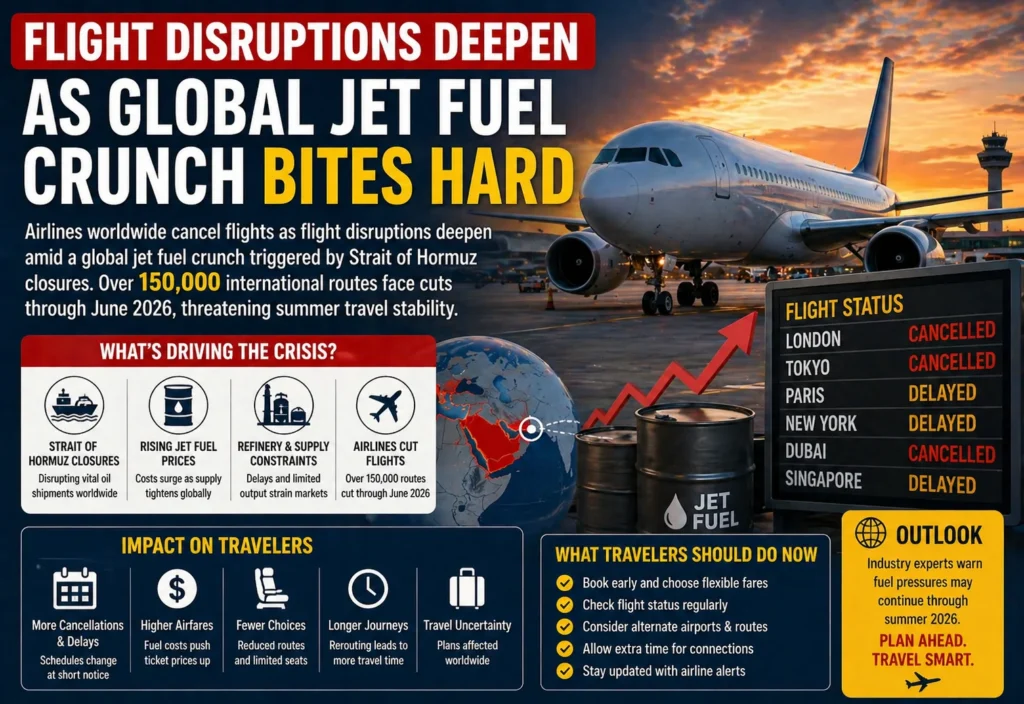
Global aviation is facing a challenging period in 2026 as airlines adjust schedules, review route networks, and manage rising fuel pressure ahead of the peak summer travel season. Across Europe, Asia, and North America, carriers are making operational changes as tighter jet fuel supply and higher energy costs create fresh pressure on international air travel.
For tourists, business travelers, and travel planners, the latest developments are a reminder that aviation remains deeply connected to global supply chains. When fuel markets tighten, the effects can reach airlines, airports, ticket prices, and route availability worldwide.
Despite the current strain, the tourism industry continues to adapt, with airlines prioritizing key routes, governments monitoring supply conditions, and travelers reshaping booking strategies for a busy 2026 season.
Why Jet Fuel Matters to Tourism
Jet fuel is one of the largest operating costs for airlines. It powers global tourism by enabling domestic holidays, international vacations, business travel, student mobility, and family visits.
When fuel prices rise or supply becomes less predictable, airlines may respond by:
- Adjusting flight frequencies
- Pausing low-demand routes
- Reviewing aircraft deployment
- Increasing fares on selected sectors
- Prioritizing high-demand markets
- Improving operational efficiency
These decisions can influence where people travel, how much they pay, and which destinations remain easily accessible.
Global Airlines Respond to Fuel Pressure
Airlines worldwide are focusing on route optimization as they navigate current market conditions. Rather than broad shutdowns, many carriers are making targeted changes designed to protect core networks and maintain reliable service where demand is strongest.
Common strategies include:
- Protecting major hub routes
- Reducing weaker secondary routes
- Consolidating schedules
- Using more fuel-efficient aircraft
- Adjusting seasonal capacity
- Strengthening premium revenue markets
This approach helps airlines remain resilient while continuing to serve millions of passengers.
Europe Faces Summer Planning Challenges
Europe enters summer as one of the busiest tourism regions in the world. Beach holidays, city breaks, cruise departures, festivals, and family travel all depend heavily on aviation.
If fuel pressure continues, some travelers may notice:
- Fewer flight options on niche routes
- Higher prices during peak dates
- Greater demand on major hubs
- Earlier sellouts on popular routes
However, Europe’s extensive rail network and multiple airport options can also provide alternatives for many travelers.
Destinations such as Spain, Italy, Greece, Portugal, France, and Croatia are still expected to attract strong visitor numbers during the summer season.
Asia Remains a Key Growth Market
Asia continues to be one of the most dynamic aviation markets, driven by leisure travel, business demand, and growing middle-class tourism.
Long-haul routes between Asia and Europe, Asia and North America, and intra-Asia services are especially important to global travel recovery.
Fuel-related pressure may encourage airlines to prioritize high-volume city pairs and profitable leisure corridors while temporarily slowing expansion on less established routes.
Even so, demand for destinations such as Japan, Thailand, Singapore, Indonesia, South Korea, Vietnam, and India remains strong.
North America Shows Relative Stability
North America benefits from significant domestic refining capacity and a large internal travel market. This may help cushion some supply shocks compared with more import-dependent regions.
Still, travelers could see the effects of higher fuel costs through:
- Dynamic pricing changes
- Stronger demand for nonstop flights
- Adjusted transpacific capacity
- Busy hub airports during peak periods
The United States and Canada remain major tourism destinations in 2026, supported by leisure travel, events, and sports tourism.
How Flight Disruptions Affect Travelers
Not every disruption means cancellation. In many cases, the impact is more subtle and appears through planning challenges rather than dramatic shutdowns.
Travelers may experience:
- Schedule changes
- Rebooked departure times
- Longer connection options
- Fare increases
- Reduced frequency on some routes
- Faster sellouts on key dates
Being proactive is often the best defense against inconvenience.
Smart Booking Tips for Summer 2026
Travelers planning holidays or business trips can take practical steps to reduce risk and improve flexibility.
Book Early
Popular flights may fill faster when capacity is tighter.
Choose Flexible Fares
Changeable tickets can be valuable if schedules shift.
Prefer Major Hubs
Large airports often retain stronger connectivity and more alternatives.
Check Flights Regularly
Airlines may update schedules closer to departure.
Consider Alternate Airports
Nearby airports can sometimes offer better options or lower fares.
Allow Extra Connection Time
If connecting internationally, avoid tight transfers.
Why Major Hubs Matter More Now
During periods of operational pressure, major hub airports often receive priority because they support the highest passenger volumes and strongest network value.
Travelers routing through key hubs may find:
- More daily departures
- Better rebooking choices
- Stronger alliance connectivity
- More customer service support
- Greater access to alternate carriers
This is why flexible routing through major cities can be a smart strategy in 2026.
Governments and Industry Monitoring the Situation
Aviation authorities, airports, and airline groups continue to monitor fuel availability and operational resilience. In many markets, planning focuses on protecting essential connectivity, supporting tourism flows, and minimizing passenger disruption.
The aviation industry has repeatedly shown the ability to adapt quickly through schedule management, fleet flexibility, and smarter network planning.
That adaptability will be critical during the current period.
Tourism Demand Remains Strong
Despite fuel-related headwinds, global demand for travel remains healthy. People continue prioritizing holidays, reunions, events, and international experiences.
Tourism drivers for 2026 include:
- Summer vacations
- Sports events
- Business travel recovery
- Remote work travel
- Family visits
- Cultural tourism
- Cruise and resort holidays
This demand gives airlines strong incentive to preserve as much capacity as possible.
What Travelers Should Do Right Now
If you have upcoming travel plans:
- Reconfirm flights weekly
- Download airline apps
- Watch fare trends before booking
- Purchase suitable travel insurance
- Keep itineraries flexible
- Save customer service contacts
- Arrive early during peak travel days
Prepared travelers are best positioned to handle change smoothly.
Final Word
Flight disruptions linked to fuel pressure are creating new challenges for global aviation, but they are also driving smarter planning across the travel industry. Airlines are protecting core routes, travelers are adapting booking habits, and destinations continue preparing for a strong summer.
For tourists in 2026, the message is clear: travel demand is alive and well—success will come from planning ahead, staying flexible, and booking smart.