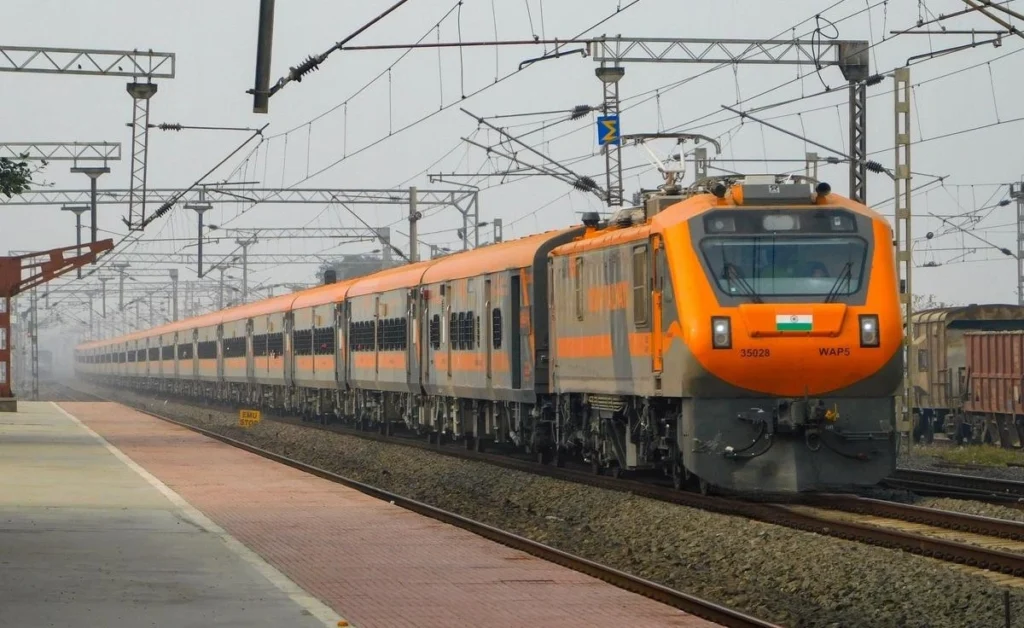
Indian Railways is accelerating network modernization with the expansion of the Amrit Bharat Express, a new generation of superfast passenger trains designed to combine affordability, comfort and operational efficiency. The latest focus includes strategic long-distance corridors linking Banaras with Pune and Ayodhya with Mumbai, two routes with strong demand from pilgrims, migrant workers, students, families and business travellers.
The rollout highlights a broader effort to deliver faster journeys and better onboard standards for everyday passengers while strengthening national connectivity across major cultural and commercial centres.
What Makes Amrit Bharat Express Different
Amrit Bharat Express has been positioned as a value-focused premium category that bridges the gap between traditional long-distance trains and fully air-conditioned premium services. Unlike higher-fare train products, this service is designed for mass-market travellers who need dependable and comfortable journeys at accessible prices.
Its defining innovation is push-pull technology, where locomotives are attached at both ends of the train. This allows quicker acceleration, faster deceleration and smoother operations, particularly on long routes with multiple halts. It also reduces delays linked to engine reversals at junctions, helping improve punctuality.
Banaras to Pune Route Strengthens Economic and Social Links
The Banaras-Pune corridor is one of the most important inter-state travel markets connecting Uttar Pradesh and Maharashtra. Demand comes from religious tourism, education, employment migration and family travel, making reliable rail capacity essential throughout the year.
By introducing Amrit Bharat Express on this route, Indian Railways is expected to ease pressure on heavily used existing services while offering passengers faster and more comfortable alternatives. The connection between Banaras, one of India’s leading spiritual destinations, and Pune, a major education and technology hub, also supports stronger economic exchange and labour mobility.
Ayodhya to Mumbai Link Supports Rising Pilgrimage Demand
Ayodhya has seen a major increase in visitor interest, creating strong demand for direct connectivity with India’s largest metro regions. The new Ayodhya-Mumbai service responds to that shift by linking a growing pilgrimage destination with the country’s financial capital.
For travellers from western India, the route offers easier access to Ayodhya without complex transfers. At the same time, residents and workers travelling toward Mumbai gain another long-distance rail option with improved scheduling and modern coaches. The service also supports domestic tourism growth tied to faith-based travel.
Push-Pull Technology Improves Speed and Reliability
Push-pull operations are becoming increasingly important in modern rail systems because they maximize efficiency without requiring costly turnaround delays. With power available from both ends, trains can maintain better momentum, especially on gradients and busy mixed-traffic corridors.
For passengers, the benefits are practical: reduced travel times, fewer operational stoppages and more dependable arrival schedules. For Indian Railways, better asset utilization and quicker route clearance can improve overall line capacity across congested sections of the network.
Upgraded Coaches Bring Better Passenger Comfort
The Amrit Bharat Express also introduces noticeable improvements in the onboard experience. Coaches built by the Integral Coach Factory in Chennai include upgraded interiors, improved seating ergonomics, mobile charging points, enhanced luggage racks and smoother ride quality.
Semi-permanent couplers help reduce vibration during the journey, while the maximum permissible speed of 130 km/h supports faster long-distance operations where track conditions allow. These features bring a more modern travel environment to price-sensitive passenger segments that form the backbone of Indian rail demand.
Safety and Sustainability at the Core
Passenger safety remains central to the project. The train incorporates Kavach, India’s indigenous automatic train protection system, aimed at reducing collision risks and strengthening operational safety standards.
Environmental improvements are also part of the package, with zero-discharge toilets and sensor-based water systems helping improve hygiene while reducing waste. These upgrades reflect how modernization is now being tied to sustainability as well as speed.
Economic Impact Beyond the Railway Network
Better rail connectivity often creates wider benefits beyond transport itself. Intermediate stations along these routes may see stronger local commerce as passenger flows increase. Food vendors, hotels, taxis, retail outlets and tourism services can all gain from higher traveller volumes.
The project also supports domestic manufacturing under the Make in India initiative, with train components and production handled within the country. This helps generate industrial jobs and strengthens India’s rail supply chain ecosystem.
A Scalable Model for India’s Rail Future
The Banaras-Pune and Ayodhya-Mumbai launches are widely seen as part of a much larger plan to expand the Amrit Bharat fleet nationwide. If performance targets are met, more corridors could receive similar services in the coming years.
For millions of passengers, that would mean broader access to faster, safer and more comfortable rail journeys without premium pricing. As Indian Railways continues its transformation, Amrit Bharat Express may become one of the most important symbols of inclusive modernization on the network.
For more travel news like this, keep reading Global Travel Wire