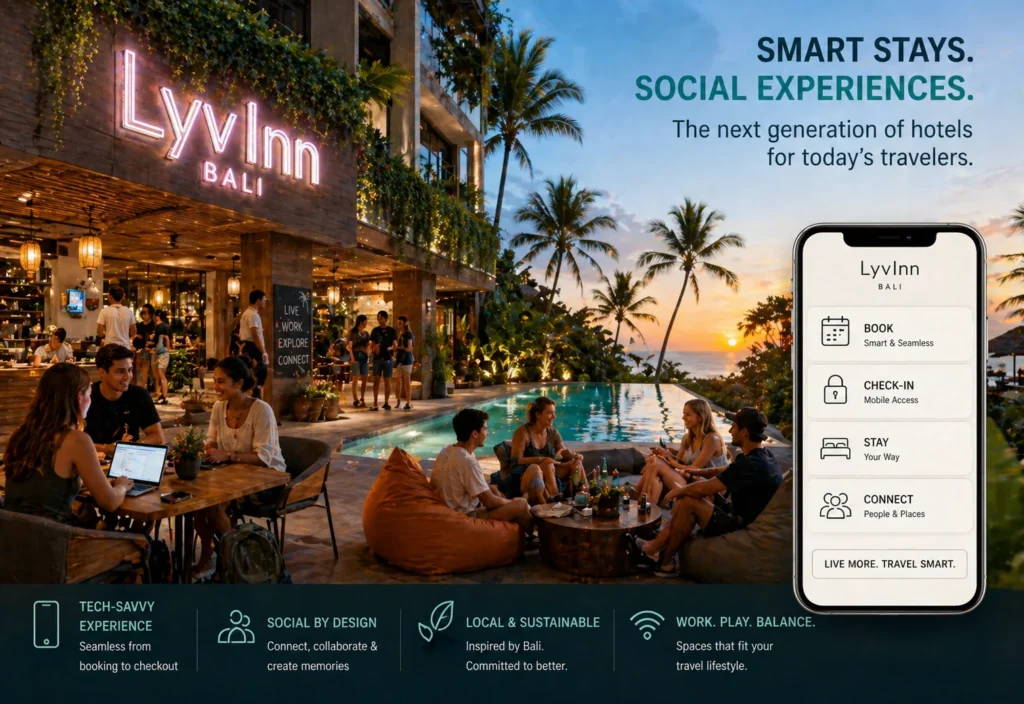
The future of tourism is becoming younger, smarter, and more connected as new hotel concepts adapt to the expectations of digital-first travelers. One of the latest hospitality brands gaining attention is LyvInn, a modern lifestyle hotel concept focused on socially driven stays, technology-enabled experiences, and efficient hospitality design.
With ambitions linked to destinations such as Bali, one of Asia’s most desirable tourism hotspots, LyvInn represents a wider industry shift toward accommodation built for modern guest behavior. Today’s travelers—especially younger generations—want more than a room. They seek convenience, digital ease, vibrant social spaces, authentic local experiences, and value for money.
As tourism evolves in 2026, hotel brands designed for these preferences may become some of the strongest performers in the global hospitality market.
Why Bali Is the Perfect Launchpad for New Travel Trends
Bali continues to rank among the world’s most popular destinations for leisure travel, remote work, wellness escapes, and youth tourism. The island attracts international visitors with its beaches, culture, spirituality, nightlife, cuisine, and natural beauty.
It is also a destination where traveler expectations move quickly. Guests visiting Bali often look for:
- Seamless digital booking
- Stylish yet affordable stays
- Community experiences
- Wellness options
- Flexible workspaces
- Social events and networking
- Local cultural immersion
Because of this dynamic environment, Bali is an ideal market for testing future-ready hotel concepts.
The Rise of Smart Hotels
Technology is no longer an optional feature in hospitality—it is becoming part of the core guest experience. Travelers increasingly expect fast, frictionless, and intuitive services from the moment they search for a stay.
Smart hotels can include features such as:
- Mobile check-in and check-out
- Keyless room entry
- App-based guest requests
- Smart room controls
- AI-supported service systems
- Personalized offers
- Fast digital payments
These tools save time while giving guests more control over their journey.
For younger travelers raised in a mobile-first world, convenience often influences booking decisions as much as price or location.
Designed for Social Travel
One of LyvInn’s defining concepts is creating spaces where travelers can connect. This reflects a major tourism trend: many guests now want accommodation that encourages interaction rather than isolation.
Social hospitality can include:
- Shared lounges
- Co-working areas
- Community kitchens
- Rooftop events
- Group experiences
- Wellness classes
- Local tours and meetups
For solo travelers, digital nomads, backpackers, and young couples, these environments can add value far beyond the room itself.
The hotel becomes part of the trip experience rather than simply a place to sleep.
Youth Travel Is Driving Tourism Growth
Young travelers are one of the most influential forces in tourism today. They travel frequently, share experiences online, shape destination trends, and often prioritize experiences over material purchases.
This segment is fueling demand for:
- Budget-friendly city breaks
- Island escapes
- Adventure travel
- Music and festival tourism
- Sustainable stays
- Work-from-anywhere travel
- Flexible multi-destination trips
Destinations and hotel brands that understand this audience can build strong long-term loyalty.
As these travelers grow older and spending power increases, early brand relationships may become even more valuable.
Why Investors Are Watching New Hotel Models
Modern hotel concepts are attracting investor interest because efficient design and technology can improve profitability.
Digitally optimized hotels may benefit from:
- Lower operating costs
- Better use of space
- Faster service response
- Stronger guest satisfaction
- Higher occupancy potential
- Scalable business models
When paired with destinations that already enjoy strong tourism demand, such models can be especially attractive.
This explains why innovation in hospitality is now a major conversation not only for travelers, but also for developers and tourism investors.
Frankfurt to Bali: Global Growth Potential
LyvInn already operates in Frankfurt, showing that the concept can work in urban gateway markets. Expanding toward tourism-driven destinations such as Bali would create a powerful combination of city efficiency and resort lifestyle appeal.
This dual-market potential matters because traveler behavior increasingly blends multiple trip purposes:
- Work and leisure travel
- Short city stays plus beach escapes
- Remote work with vacation time
- Cultural travel combined with relaxation
- Social travel mixed with wellness experiences
Brands that can adapt across different travel styles may enjoy wider global relevance.
AI as a Support Tool, Not a Replacement
An important message from modern hospitality leaders is that technology should enhance service rather than replace human warmth.
Artificial intelligence works best when used for behind-the-scenes coordination, speed, and personalization. Staff can then focus on the emotional side of hospitality: welcoming guests, solving problems, and creating memorable moments.
This balance is especially important in destinations like Bali, where hospitality is deeply connected to culture and personal interaction.
The future of travel is likely to combine digital efficiency with genuine human connection.
What Travelers Want in 2026
Today’s travelers are increasingly clear about what matters most:
- Convenience
- Clean design
- Great location
- Social atmosphere
- Fast Wi-Fi
- Flexible pricing
- Local experiences
- Sustainability
- Personalized service
Hotel brands built around these priorities are likely to outperform traditional one-size-fits-all models.
For many guests, the best stay is one that feels effortless, inspiring, and connected to the destination.
Bali Tourism Outlook
Bali remains one of Southeast Asia’s strongest tourism magnets. Continued investment in hospitality innovation can help the island attract new visitor segments while keeping pace with changing demand.
Smart lifestyle hotels can complement Bali’s existing luxury resorts, wellness retreats, villas, and boutique stays by giving travelers more diverse accommodation choices.
This variety strengthens destination appeal and supports longer stays, repeat visits, and broader traveler demographics.
Final Word
LyvInn’s Bali vision highlights where tourism is heading in 2026: toward smarter hotels, stronger communities, and guest experiences designed for the digital generation.
As younger travelers reshape the market, hospitality brands that blend technology, social energy, and authentic service may define the next era of global tourism success.