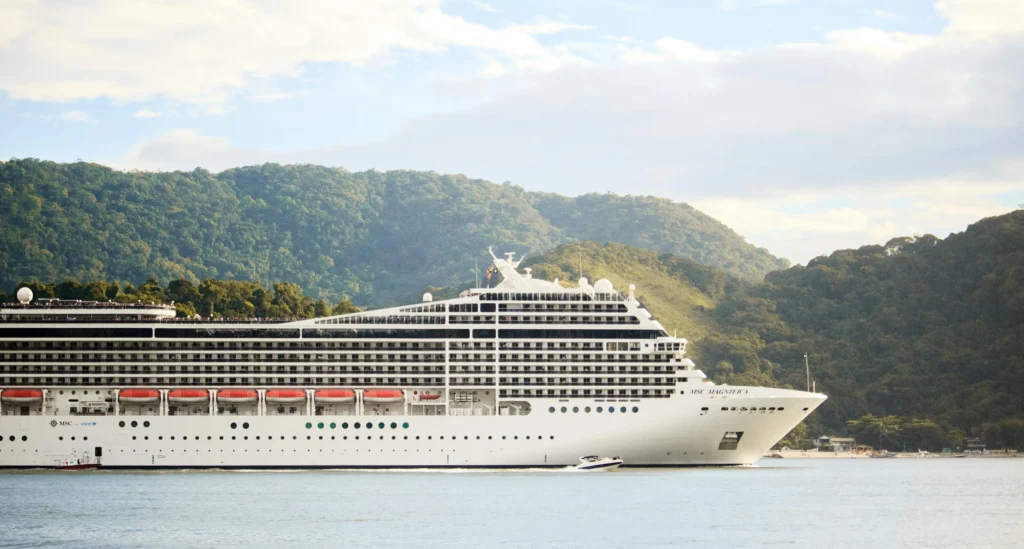
A stark and unsettling calm surrounds the cruise ship at the center of a deadly hantavirus outbreak off the coast of West Africa. Footage obtained by official sources shows empty decks, silent public spaces, and medical personnel in full protective gear. The ship, carrying nearly 150 passengers and crew, has been adrift, awaiting medical intervention as the number of cases climbs.
Health officials have confirmed that three passengers have died, and at least four others have fallen ill in what is being identified as a hantavirus outbreak. The World Health Organization has stepped in, confirming that the virus likely spread after exposure to rodent droppings. Typically, hantavirus is contracted by inhaling contaminated particles, often in rural or isolated settings, but this outbreak has alarmed global health authorities due to its rare spread on a cruise.
The ship, which had been traveling from Cape Verde, was initially on a weeks-long polar cruise from Argentina to Antarctica, stopping at isolated islands in the South Atlantic. Once symptoms emerged, the vessel drifted off the West African coast, stranded as health teams scrambled to contain the outbreak. Passengers, now isolated in their cabins, have been instructed not to leave, minimizing the risk of further transmission.
The ship remains adrift, waiting for a secure disembarkation plan. Health officials on board, along with Spanish authorities, have developed a detailed protocol for disembarkation. The passengers and crew will be transferred to Tenerife’s industrial port, far from the residential areas, in sealed, guarded vehicles through a cordoned corridor. Spanish Prime Minister Pedro Sánchez’s government has fully cooperated with the WHO to ensure the evacuation proceeds safely.
Dr. Tedros Adhanom Ghebreyesus, Director-General of the WHO, has taken personal interest in the operation. He will visit Tenerife to observe the disembarkation and stand alongside local health workers. In a statement, Dr. Tedros commended the island’s response, highlighting the community’s resilience and compassion in handling a rare public health crisis.
Hantavirus, a group of viruses transmitted mainly via rodent droppings, rarely spreads between humans. The World Health Organization emphasized that while human-to-human transmission is rare, the Andes strain of hantavirus is an exception. Once infected, the virus can cause severe respiratory illness, and health officials have raised alarm due to its high fatality rate, sometimes reaching 50% if untreated.
The WHO also confirmed that 12 countries are linked to this outbreak, either because their citizens were aboard or due to medical evacuations. These countries include Canada, Denmark, Germany, the Netherlands, New Zealand, and the United States. Authorities in these nations are tracking passengers who may have come into contact with the virus, ensuring they receive medical monitoring.
The impact on tourism in Tenerife is palpable, as the island is a popular vacation destination. Local tourism operators have assured travelers that major attractions remain open and that safety measures are being implemented.
For more travel news like this, keep reading Global Travel Wire