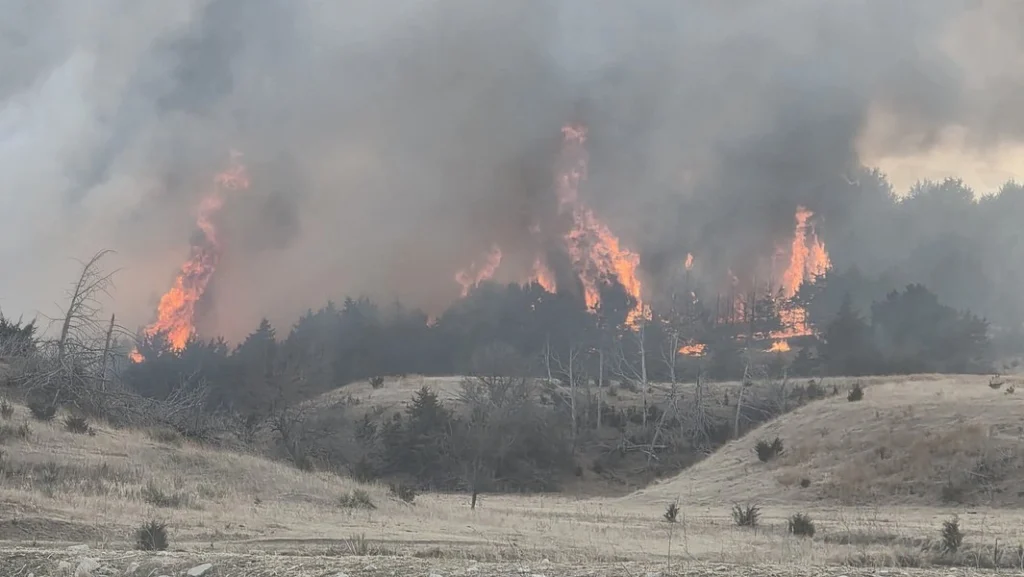
Nebraska’s ranching communities are facing a deepening agricultural crisis as historic wildfires, prolonged drought conditions, damaged grazing land, and mounting livestock pressures continue devastating operations across western parts of the state. Months after powerful fires scorched nearly one million acres, many ranchers remain trapped in survival mode while severe drought prevents meaningful environmental recovery and threatens long-term agricultural stability.
The crisis has evolved far beyond immediate wildfire destruction. Ranch operators throughout Nebraska are now struggling with ruined pastureland, destroyed fencing systems, damaged water infrastructure, rising livestock costs, and declining forage availability as drought conditions continue worsening across more than 90% of the state.
Agricultural communities fear that the combined impact of extreme wildfire activity and persistent drought could trigger long-term economic instability throughout Nebraska’s ranching sector, which remains a critical part of the state’s rural economy and agricultural identity.
Historic Wildfires Leave Long-Term Damage Across Nebraska
The scale of destruction caused by Nebraska’s 2026 wildfire season has become one of the most severe environmental disasters in recent state history. The Morrill Fire alone burned more than 642,000 acres, becoming the largest wildfire ever recorded in Nebraska after rapidly spreading through dry grasslands fueled by powerful winds and severe drought conditions.
Ranchers throughout the Sandhills region described landscapes transformed from productive grazing pasture into barren, desert-like terrain where grasslands, fencing, and livestock infrastructure were destroyed within hours.
According to ranch owner Joe Van Newkirk, the fire advanced nearly 14 miles in just 10 minutes under extreme wind conditions, leaving little opportunity for ranchers and emergency responders to contain the flames before widespread destruction occurred.
Although some homes survived, large areas of grazing land remain heavily damaged. Ranchers continue reporting destroyed watering systems, sand-filled livestock tanks, and severely degraded pasture conditions months after the fires ended.
The Cottonwood Fire created additional devastation by burning more than 129,000 acres while destroying corrals, ranch shops, fencing, hay storage, and livestock facilities across several rural communities.
Drought Conditions Intensify Recovery Challenges
Severe drought has become one of the most significant barriers preventing recovery across Nebraska’s burned ranchlands. Without sufficient rainfall, pasture regeneration remains extremely limited, leaving ranchers unable to restore natural grazing cycles essential for cattle and horse operations.
Much of Nebraska remains classified under severe, extreme, or exceptional drought categories, creating conditions where burned soil remains vulnerable to erosion, blowing sand, and further environmental degradation.
Ranchers report that pastureland recovery has stalled almost entirely in some regions because dry weather continues preventing grass growth. Livestock watering tanks and irrigation systems have also become clogged with drifting sand as drought conditions strip topsoil from already damaged landscapes.
The prolonged drought has forced many operators to rely on expensive supplemental feeding programmes rather than traditional grazing systems, sharply increasing operational costs at a time when infrastructure rebuilding expenses are already overwhelming many agricultural families.
Agricultural experts warn that the combination of wildfire destruction and prolonged drought could create multi-year economic consequences for Nebraska’s livestock industry if rainfall patterns fail to improve significantly.
Livestock Stress and Breeding Concerns Raise Alarm
Beyond infrastructure losses and pasture damage, ranchers are increasingly reporting concerns about livestock health, productivity, and reproductive stability under prolonged environmental stress.
Horse breeder Owen Johnson explained that several mares on his ranch have demonstrated unusual breeding cycle disruptions following months of wildfire-related stress, confinement, and drought exposure. Animals that would normally follow predictable reproductive patterns are now showing irregular responses, creating uncertainty for future livestock production and breeding operations.
Livestock throughout affected areas continue facing unstable grazing conditions, reduced forage availability, and extended periods of confinement caused by destroyed fencing and unsafe pasture conditions.
Ranchers fear that continued environmental pressure could eventually weaken herd recovery, reduce productivity, and increase long-term financial losses throughout Nebraska’s ranching industry.
Agricultural analysts note that prolonged stress on livestock can influence breeding performance, weight gain, disease vulnerability, and overall herd sustainability, particularly when combined with limited nutrition and drought-related environmental strain.
Rural Communities Rally to Support Ranchers
Despite the scale of devastation, ranchers across Nebraska say community support has become one of the strongest sources of recovery assistance during the crisis. Donations of hay, livestock feed, fencing materials, and emergency supplies have arrived from farming communities across multiple U.S. states.
Ranch operators described emotional scenes as volunteers traveled hundreds of miles from states including Georgia and Wisconsin to assist families facing livestock shortages, infrastructure destruction, and escalating financial pressure.
The national response has reinforced long-standing solidarity within America’s agricultural communities, where farmers and ranchers frequently mobilize support during natural disasters and environmental emergencies.
While immediate aid has helped many ranchers stabilize operations temporarily, long-term recovery remains uncertain without sustained rebuilding support and improved weather conditions.
Economic Impact Extends Beyond Agriculture
Nebraska’s wildfire and drought emergency also carries broader economic implications for rural communities, local businesses, and tourism sectors tied to outdoor recreation and agricultural heritage.
Western Nebraska’s ranching culture plays a major role in supporting local economies through livestock production, agricultural commerce, rodeo tourism, hunting tourism, and rural hospitality activity. Environmental instability affecting ranch operations can create ripple effects across transportation, equipment supply, local retail, hospitality, and tourism-related industries.
Environmental experts increasingly warn that climate-related disasters such as prolonged drought and extreme wildfire seasons are becoming more frequent across several U.S. agricultural regions, placing additional pressure on rural economies already vulnerable to weather volatility.
For Nebraska ranchers, the coming months will likely determine whether meaningful recovery becomes possible or whether drought conditions continue deepening one of the state’s most severe agricultural crises in decades.
While rebuilding efforts continue, many farming communities acknowledge that lasting recovery will ultimately depend on rainfall, environmental resilience strategies, and long-term support capable of restoring both the land and the livelihoods tied to it.
For more travel news like this, keep reading Global Travel Wire