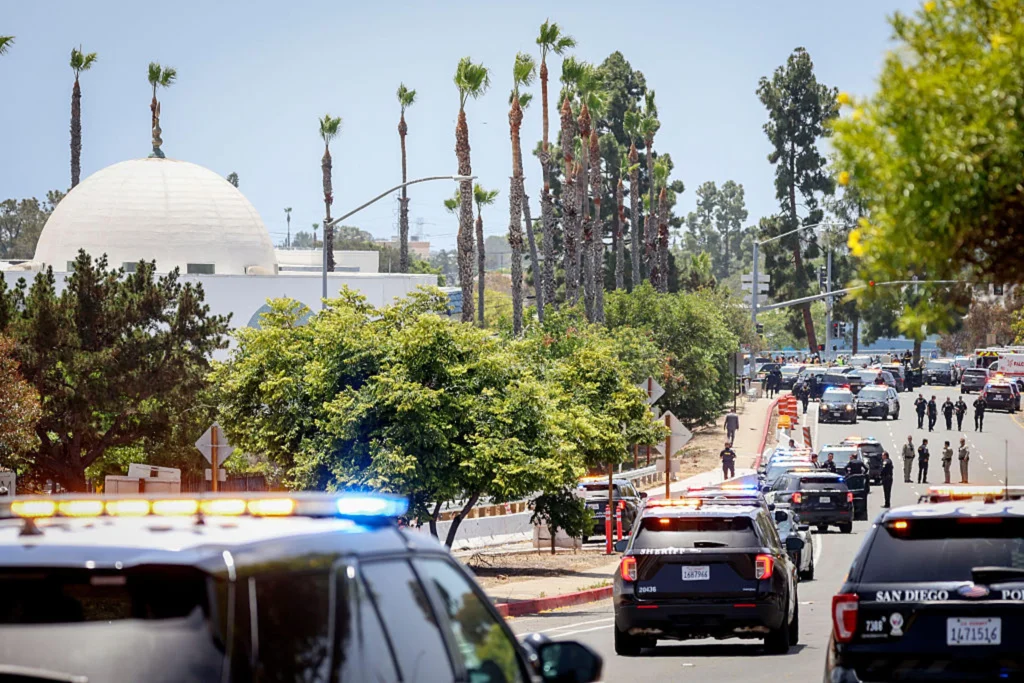
A deadly shooting at the Islamic Center of San Diego has intensified concerns surrounding public safety perceptions, community security, and the potential impact on California’s tourism industry after three adult men were killed in what investigators are examining as a possible hate crime linked to anti-Muslim rhetoric.
The tragedy unfolded in San Diego’s Clairemont neighborhood shortly before 11:40 a.m. local time when authorities responded to reports of gunfire at one of the county’s largest mosques. Law enforcement later discovered the two suspects dead from self-inflicted gunshot wounds inside a vehicle located several blocks from the scene. Federal authorities and local investigators, including the FBI, continue examining evidence associated with the attack.
The incident occurred only weeks before Eid al-Adha, one of the most significant observances in the Islamic calendar, deepening shock and grief across the Muslim community in Southern California and beyond.
Community Mourns Victims as Heroic Actions Emerge
Among those killed was a longtime mosque security guard credited with helping save lives after warning teachers and staff members at the nearby Al Rashid School, which is affiliated with the Islamic Center. More than a dozen children were safely evacuated during the incident.
Additional victims reportedly included a local shopkeeper and another community member who attempted to protect worshippers during the chaos. The attack on a religious center that also houses educational facilities has intensified emotional trauma throughout the community and prompted renewed calls for stronger security protections at places of worship.
San Diego officials, California state leaders, civil rights organizations, and faith representatives strongly condemned the violence following the shooting. Public statements emphasized the importance of protecting religious freedom while reaffirming commitments to community safety and inclusivity.
Authorities also pledged enhanced security measures around religious institutions as concerns over hate-motivated violence continue affecting communities nationwide.
Tourism Industry Watches Public Safety Perceptions Closely
Beyond the immediate tragedy, the incident has sparked wider discussion about how high-profile violent events can influence destination perception and traveler confidence. Tourism analysts and hospitality experts consistently note that visitor perceptions of safety play a major role in travel decision-making, particularly for international travelers unfamiliar with local conditions.
California remains one of the world’s most visited tourism regions, drawing millions of domestic and international travelers annually to destinations including San Diego, Los Angeles, San Francisco, Anaheim, and coastal resort communities. San Diego itself is widely recognized for beaches, cultural attractions, convention tourism, family entertainment, and year-round outdoor recreation.
However, high-visibility violent incidents can temporarily affect visitor sentiment, especially when they involve places traditionally viewed as safe community spaces such as schools, religious centers, or cultural institutions.
Travel industry stakeholders including hotels, airlines, tour operators, convention organizers, and tourism boards closely monitor public safety developments because destination confidence directly influences booking behavior, convention attendance, and leisure travel planning.
Potential Economic Effects Extend Beyond Immediate Community
Research across global tourism markets has shown that highly publicized incidents of violence can produce measurable short-term economic effects on local travel industries, even when such events remain statistically rare. Hotel occupancy, restaurant traffic, attraction attendance, and tourism-related spending can experience temporary declines when travelers perceive heightened security risks.
For San Diego, tourism remains a major economic driver supporting hotels, restaurants, transportation providers, entertainment venues, and local attractions throughout the region. City officials and tourism promoters are expected to increase communication efforts emphasizing public safety, emergency preparedness, and the city’s broader reputation as a secure and welcoming destination.
Industry analysts generally believe that long-term tourism resilience depends on the strength of a destination’s overall infrastructure, visitor experience quality, and public confidence in local emergency response systems.
San Diego’s established tourism reputation and diversified visitor economy may help limit longer-term impacts if authorities continue communicating safety measures clearly and effectively.
Religious Institutions Increase Security Across California
Following the attack, religious institutions across California have begun reviewing security procedures and emergency response plans to protect worshippers and visitors. Mosques and community centers throughout the Bay Area and Southern California are reportedly reassessing safety protocols, increasing volunteer security presence, and strengthening coordination with law enforcement agencies.
San Diego police also increased patrols around places of worship and major public gathering spaces after the shooting in an effort to reassure residents and visitors. Authorities encouraged communities to remain vigilant, utilize emergency alert systems, and follow official guidance regarding public safety updates.
Security experts note that maintaining visible but balanced safety measures is increasingly important in tourism-dependent cities, where both residents and visitors expect secure public environments without disrupting normal community activity.
Tourism Resilience Depends on Community Recovery and Communication
Despite the tragedy, local leaders continue emphasizing unity, resilience, and long-term recovery as central priorities for the city. Vigils, community gatherings, counseling services, and public support initiatives have emerged across San Diego in response to the attack.
City officials reiterated commitments to protecting civil rights, supporting affected families, and maintaining San Diego’s reputation as an inclusive international destination welcoming travelers from diverse backgrounds and cultures.
Tourism specialists note that destinations facing crises often recover more effectively when authorities maintain transparent communication, demonstrate strong emergency response capabilities, and highlight community solidarity.
For San Diego, maintaining traveler confidence while supporting affected communities will remain critical in the weeks ahead as investigations continue and the city works toward healing after one of the region’s most devastating acts of violence in recent years.
For more travel news like this, keep reading Global Travel Wire