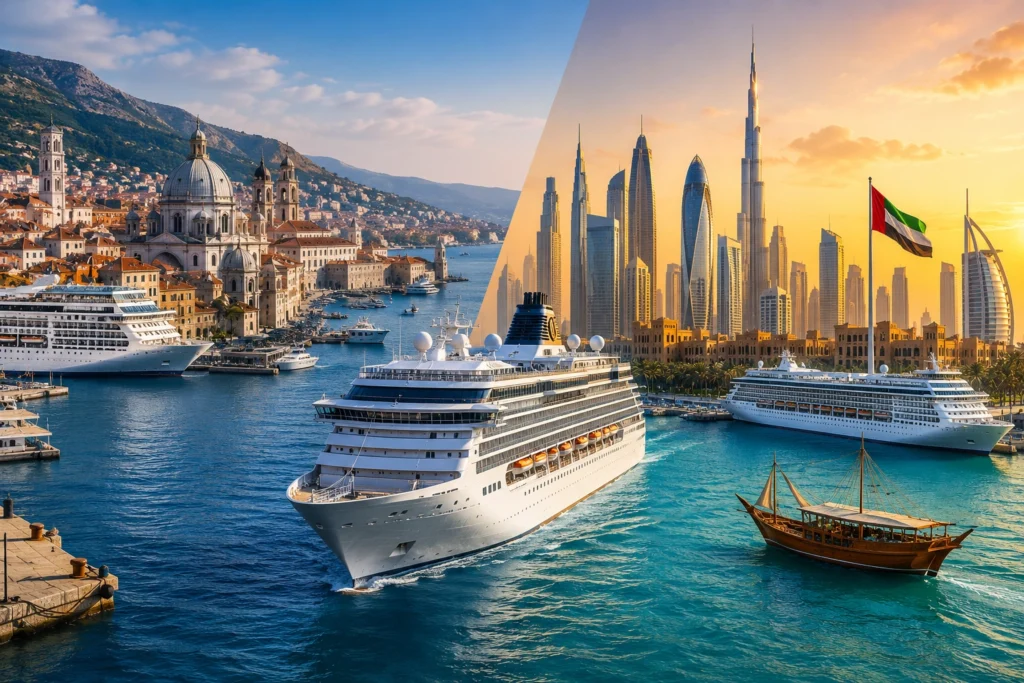
The global cruise industry is undergoing a major geographical shift as Mediterranean destinations introduce tighter tourism regulations while Gulf nations aggressively expand maritime infrastructure to capture rising international cruise demand. Cities including Santorini, Venice, Barcelona, Athens, Dubai, Doha, Abu Dhabi, Jeddah, Muscat, and Manama are now at the center of a rapidly evolving competition shaping the future of global cruise travel.
As European ports impose passenger caps, environmental taxes, and restrictions on large vessels, Gulf countries are investing heavily in cruise terminals, tourism developments, and winter travel programs designed to attract international operators and high-spending travelers.
The contrasting strategies are reshaping cruise itineraries, seasonal deployment patterns, and tourism economies across both Europe and the Middle East.
Mediterranean Ports Tighten Cruise Regulations
Several of Europe’s most iconic cruise destinations are entering a new phase of tourism management as authorities respond to concerns surrounding overtourism, environmental sustainability, and pressure on local infrastructure.
Santorini has become one of the clearest examples of this shift. Greek authorities are reviewing docking schedules and limiting visitor flows as the island struggles to manage large daily cruise passenger arrivals during peak summer periods.
Venice continues enforcing restrictions on large cruise vessels entering its historic lagoon, redirecting ships toward terminals outside the city center in an effort to preserve fragile waterways and historic architecture.
Barcelona, one of Europe’s busiest cruise hubs, is also tightening tourism management policies through stricter port controls and revised urban tourism planning measures aimed at reducing congestion in central districts.
Across Italy, Greece, Spain, and Cyprus, governments are increasingly prioritizing sustainable tourism policies focused on environmental protection, heritage preservation, and improved quality of life for local communities.
The result is a more regulated Mediterranean cruise landscape where operators face tighter scheduling requirements, operational limitations, and evolving sustainability obligations.
Cruise Operators Rethink European Itineraries
The regulatory changes across Southern Europe are forcing major cruise companies to redesign itineraries and rethink deployment strategies throughout the Mediterranean region.
Cruise lines are increasingly incorporating secondary ports, alternative destinations, and longer sailing schedules to maintain capacity while adapting to reduced access at heavily visited cities.
Passengers traveling through Europe are beginning to experience modified embarkation procedures, adjusted shore excursions, and revised port rotations as cruise operators work around stricter operational frameworks.
Travel agencies and tourism providers are also restructuring regional packages to accommodate changing port accessibility and visitor management systems.
While Mediterranean cruising remains enormously popular, the new regulatory environment is encouraging operators to diversify global itineraries and seek emerging markets capable of supporting large-scale cruise growth with fewer operational restrictions.
Gulf Nations Accelerate Maritime Tourism Expansion
At the same time Europe is tightening controls, Gulf countries are rapidly positioning themselves as the next major frontier for global cruise tourism.
Dubai, Abu Dhabi, Doha, Jeddah, Muscat, and Manama are all expanding maritime infrastructure and investing heavily in tourism diversification strategies designed to attract international cruise operators and winter travelers.
Dubai and Abu Dhabi remain the Gulf’s leading cruise gateways thanks to world-class terminals, luxury tourism offerings, strong airline connectivity, and integrated hospitality infrastructure. Cruise passengers visiting the UAE increasingly combine maritime travel with desert experiences, shopping tourism, entertainment districts, and cultural attractions.
Saudi Arabia is also rapidly expanding its presence in the cruise market through Cruise Saudi and major Red Sea tourism initiatives. Ports in Jeddah and other coastal regions are increasing capacity for larger vessels while promoting new cultural and leisure destinations along the kingdom’s coastline.
Doha, Muscat, and Manama are similarly upgrading passenger terminals and strengthening regional cruise partnerships to attract operators seeking alternative seasonal deployment opportunities.
Winter Cruise Demand Fuels Gulf Growth
One of the Gulf region’s greatest competitive advantages lies in its ability to attract winter cruise tourism during Europe’s colder off-season months.
As temperatures drop across the Mediterranean, cruise travelers increasingly seek warm-weather alternatives in the Arabian Gulf and Red Sea. This seasonal shift is driving strong growth in multi-country cruise itineraries linking destinations such as Dubai, Abu Dhabi, Doha, Muscat, and Jeddah.
The winter cruise market is generating wider economic benefits throughout the Gulf by supporting hotel occupancy, aviation demand, retail spending, and tourism-related employment.
Governments across Saudi Arabia, the UAE, Qatar, Oman, and Bahrain are supporting this expansion through simplified visa programs, global tourism marketing campaigns, and long-term infrastructure investment strategies designed to strengthen the region’s global tourism competitiveness.
The growing cruise sector is also benefiting airlines and hospitality operators as international visitor movement across the Gulf continues rising.
Sustainability Versus Expansion Reshapes Global Cruise Travel
The evolving divide between Europe’s sustainability-driven restrictions and the Gulf’s expansion-focused strategy reflects broader changes within the global tourism industry.
Mediterranean destinations are prioritizing environmental protection, destination management, and long-term preservation of historic urban centers facing increasing pressure from mass tourism.
Meanwhile, Gulf nations are actively leveraging cruise tourism as part of wider economic diversification agendas aimed at reducing dependence on oil revenues and positioning the region as a year-round global tourism destination.
Industry analysts expect cruise operators to continue balancing these competing realities by deploying ships more strategically between regulated European markets and rapidly expanding Middle Eastern destinations.
Cruise Travelers Face a More Diverse Global Market
For cruise passengers, the transformation is creating a more geographically diverse range of travel options across Europe, the Middle East, Asia, and beyond.
Travelers can expect increasing variation in cruise experiences, from sustainability-focused Mediterranean itineraries with stricter visitor controls to large-scale luxury developments and rapidly expanding maritime tourism infrastructure in the Gulf.
As international cruise demand continues growing, the competition between regulated heritage destinations and emerging tourism hubs is likely to redefine deployment strategies, passenger flows, and global cruise economics well beyond 2026.
The maritime tourism industry is no longer centered exclusively around traditional European ports. Instead, the rise of Gulf cruise tourism signals a broader redistribution of global travel influence across the world’s fastest-growing tourism regions.
For more travel news like this, keep reading Global Travel Wire