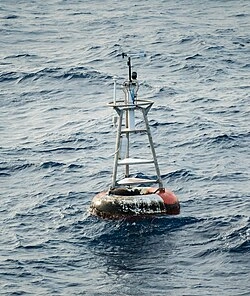
A mysterious point in the middle of the Atlantic Ocean with no land, no port, and no visible attraction is rapidly becoming one of the most talked-about destinations in global cruise tourism. Known as Null Island, the phantom location positioned precisely at zero degrees latitude and zero degrees longitude in the Gulf of Guinea is attracting growing fascination from travelers, cruise operators, geospatial experts, and maritime enthusiasts worldwide.
What began decades ago as a simple digital mapping error has evolved into a remarkable maritime phenomenon that is now influencing global cruise itineraries stretching from the United States and the United Kingdom to Australia and Asia. Luxury world cruises are increasingly incorporating ceremonial pauses near the exact coordinates where the equator intersects with the prime meridian, transforming a nonexistent place into a modern travel legend.
The result is a strange fusion of technology, navigation, geography, and human imagination unlike anything else in contemporary tourism.
Cruise Travelers Sail Thousands of Miles to Reach Empty Ocean
Unlike traditional cruise destinations filled with beaches, landmarks, or historic ports, Null Island offers travelers nothing but endless open water.
Yet this absence has become the attraction itself.
Passengers aboard luxury world cruises are now gathering on ship decks and navigation bridges to witness the exact moment vessels cross the famous coordinates. Travelers closely monitor geolocation devices, track digital coordinates in real time, and photograph screens showing the precise intersection of 0° latitude and 0° longitude.
For many passengers, reaching the location has become a milestone comparable to crossing the Arctic Circle, the International Date Line, or the equator itself.
Cruise lecturers Gail and Russell Lee described the experience during a Viking World Cruise voyage that approached the coordinates hundreds of miles off West Africa. As the ship neared the point, passengers crowded public viewing areas while countdowns unfolded across mobile devices and navigation systems.
The ship eventually paused briefly at the invisible destination, allowing travelers to celebrate a place that technically does not exist.
How a Digital Mapping Error Created a Global Travel Curiosity
Null Island is not an actual island. Instead, it originated as a technical placeholder created by digital mapping systems.
When geographic data lacks valid coordinates, many software systems automatically assign a default value of zero latitude and zero longitude. Over time, massive amounts of misplaced digital information — including photos, addresses, businesses, fitness data, and mapping errors — accumulated at the same point in the Gulf of Guinea.
This accidental concentration of missing data eventually became an inside joke within the Geographic Information Systems industry.
Cartographers and geospatial specialists began referring to the coordinates as “Null Island,” gradually building a fictional mythology around the nonexistent landmass. The joke expanded across mapping communities, software companies, and online developer forums before eventually spreading into mainstream travel culture.
What was once a hidden technical reference has now become one of the internet age’s strangest tourism stories.
Cruise Lines Turn Phantom Geography Into a Maritime Attraction
The growing fascination surrounding Null Island has encouraged cruise operators to integrate the coordinates into select world cruise itineraries.
Several luxury cruise voyages have deliberately navigated toward the location, allowing passengers to participate in what many describe as a once-in-a-lifetime maritime experience. Travelers often receive commemorative certificates recognizing their crossing of the coordinates.
The unusual popularity of the destination reflects broader tourism trends favoring experiential travel and rare geographic milestones over conventional sightseeing.
Rather than focusing solely on physical attractions, modern travelers increasingly seek symbolic journeys, storytelling experiences, and unique navigational achievements.
Industry observers note that the appeal of Null Island lies partly in its exclusivity. Very few people on Earth have ever intentionally traveled to the exact coordinates, making the experience feel deeply personal despite the absence of physical scenery.
The Hidden Risks Behind the Humor
Although Null Island has become a humorous cultural phenomenon, experts warn that the underlying issue highlights serious vulnerabilities within digital mapping systems.
Researchers studying geospatial analytics have emphasized that incorrect coordinate defaults can create significant real-world problems if mapping errors remain undetected. Faulty geographic data can affect logistics systems, emergency response coordination, transportation routing, and commercial databases.
Academics analyzing the phenomenon discovered large collections of misplaced digital records concentrated at the coordinates, demonstrating how software defaults can distort location-based systems globally.
In more serious scenarios, mapping inaccuracies could potentially misdirect emergency services, disrupt navigation systems, or create dangerous operational errors in transportation and logistics sectors.
The story of Null Island therefore serves as both an entertaining travel curiosity and a reminder that digital infrastructure remains imperfect despite society’s growing dependence on mapping technology.
Human Fascination With Imaginary Places Continues
The popularity of Null Island also reflects humanity’s enduring fascination with mythical geography and invisible boundaries.
Throughout history, explorers and travelers have been captivated by destinations defined more by symbolism than physical reality. Ancient legends of Atlantis, phantom islands on medieval maps, and fictional locations like Agloe in New York all demonstrate how imagined places can acquire cultural significance over time.
For modern cruise travelers, Null Island represents a contemporary version of that same tradition — a place born entirely from digital systems yet transformed into something emotionally meaningful through storytelling and shared experience.
Maritime lecturers and travel historians increasingly compare the phenomenon to centuries-old exploration traditions where crossing invisible geographic lines carried ceremonial importance for sailors and explorers.
A New Kind of Destination for the Digital Age
As cruise tourism evolves, Null Island is emerging as one of the most unusual examples of how technology, travel, and mythology can intersect in the modern world.
What started as a software placeholder buried deep inside mapping systems has unexpectedly become a symbolic destination attracting travelers from across the globe. The coordinates may contain no physical island, but they now occupy a unique place within modern maritime culture.
For cruise passengers sailing across vast Atlantic waters, the journey to absolute zero has become less about reaching a location and more about participating in a story that blends geography, imagination, digital culture, and human curiosity into one unforgettable experience.
For more travel news like this, keep reading Global Travel Wire