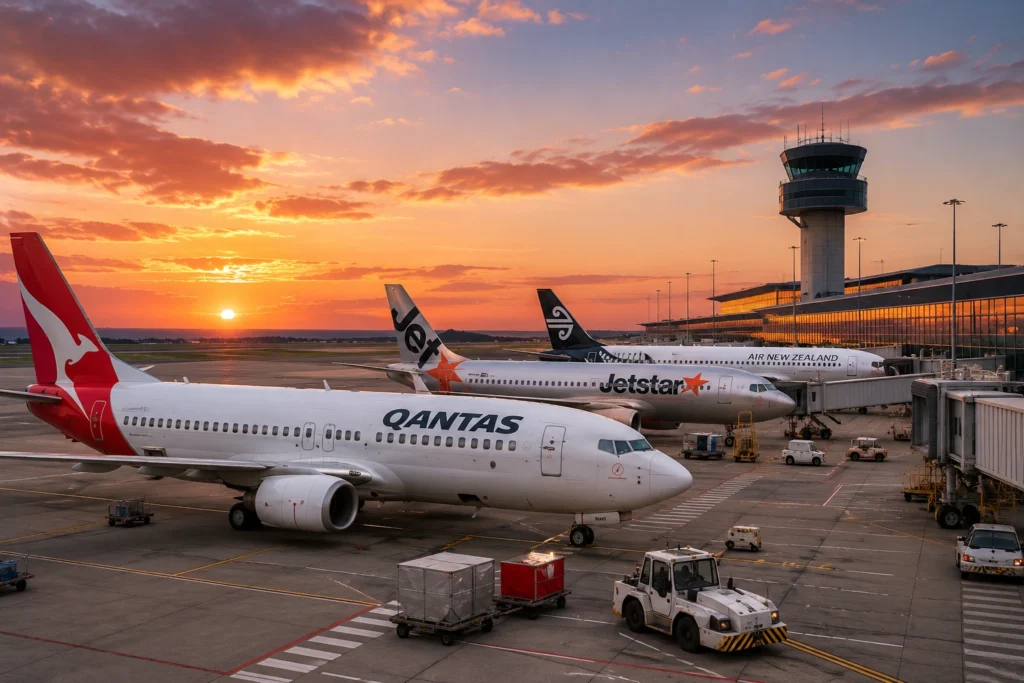
Travellers flying across Australia and New Zealand are facing schedule changes as Qantas, Jetstar and Air New Zealand adjust selected services in response to elevated jet fuel costs and wider aviation pressures linked to the conflict in the Middle East.
The changes affect domestic and trans-Tasman travel, adding a new planning consideration for holidaymakers, business passengers and tourism operators preparing for upcoming journeys. While airlines are working to move affected customers onto alternative flights, passengers should check bookings carefully and allow greater flexibility when arranging connecting services, hotel stays and ground transport.
The adjustments do not represent a shutdown of regional aviation networks. However, they show how global events can influence air capacity far beyond the areas directly affected by conflict.
Qantas and Jetstar Extend Capacity Reductions
The Qantas Group has extended previously announced domestic capacity reductions of five percentage points until the end of September 2026. The reductions primarily affect Qantas and Jetstar services on major capital-city routes.
The group has also reduced capacity across the Tasman Sea while reshaping parts of its international network. At the same time, Qantas is adding more seats between Australia and Europe, including additional Perth–Rome services and flights to Paris operating from Sydney through Singapore.
The changes reflect a careful balancing act. Airlines must manage higher fuel costs while maintaining access to popular destinations and preserving reliable connections across their networks.
Customers affected by Qantas and Jetstar schedule changes are being contacted directly and offered alternative flights or refunds. Travellers with domestic connections should review their updated itineraries closely, particularly when flights are booked separately or involve onward travel with another carrier.
Air New Zealand Consolidates Selected Services
Air New Zealand has also announced schedule adjustments for travel during May and June 2026. The airline said the consolidations affect around four per cent of flights but only one per cent of passengers travelling during the period.
The carrier has emphasised that the vast majority of affected customers will still travel on the same day. This is important for New Zealand’s tourism economy, where reliable domestic links connect international gateways with regional attractions, hotels and tour operations.
Earlier changes covered a separate period from March 16 to May 3, when Air New Zealand consolidated a small number of domestic and international flights, mainly during off-peak or lower-demand times.
For visitors planning multi-stop itineraries across New Zealand, schedule monitoring remains essential. A revised flight time can affect car-rental collection, accommodation check-in, ferry connections or booked activities, even when passengers still reach their destination on the same day.
High Fuel Costs Drive Airline Decisions
The latest changes are strongly linked to fuel-price volatility associated with the Middle East conflict. Qantas has said jet fuel prices more than doubled after its first-half financial outlook, while Air New Zealand has also reported fuel prices at more than twice their usual level.
Fuel is one of the largest operating costs for airlines. When prices rise sharply, carriers may consolidate lower-demand flights, adjust fares or redeploy aircraft to routes with stronger demand.
The impact extends into tourism. Reduced frequencies can limit choice on popular travel days and place additional pressure on remaining services. Hotels, attractions and tour operators may also need to accommodate passengers arriving later than expected or changing travel dates.
Travellers Should Review Airline Updates
Passengers with upcoming flights should check their booking status directly through official airline channels and respond promptly if an alternative itinerary is offered. Travellers using separate tickets for connecting flights should allow additional time between services.
Refund and assistance options depend on the airline, the ticket conditions and the reason for the disruption. Under Australian consumer protections, travellers may be entitled to a replacement service, refund or reimbursement in certain circumstances when a flight is cancelled or significantly delayed.
Qantas also advises that eligible passengers may be able to claim reasonable out-of-pocket costs such as accommodation, meals or transport following a disruption. Air New Zealand provides online options for passengers whose new flights are unsuitable, including selecting another flight or requesting a refund or credit where available.
Tourism Sector Adapts to Changing Capacity
Australia and New Zealand remain strongly connected tourism markets, with air services supporting city breaks, regional holidays, family visits and international itineraries.
The current reductions are a reminder that travellers should build flexibility into their plans. Booking realistic connection times, monitoring airline messages and retaining receipts for necessary expenses can help reduce stress when schedules change.
As airlines adapt to global fuel pressures, regional tourism operators will continue watching capacity closely. Reliable aviation links remain essential to keeping visitors moving across Australia, New Zealand and the wider trans-Tasman travel market.
For more travel news like this, keep reading Global Travel Wire