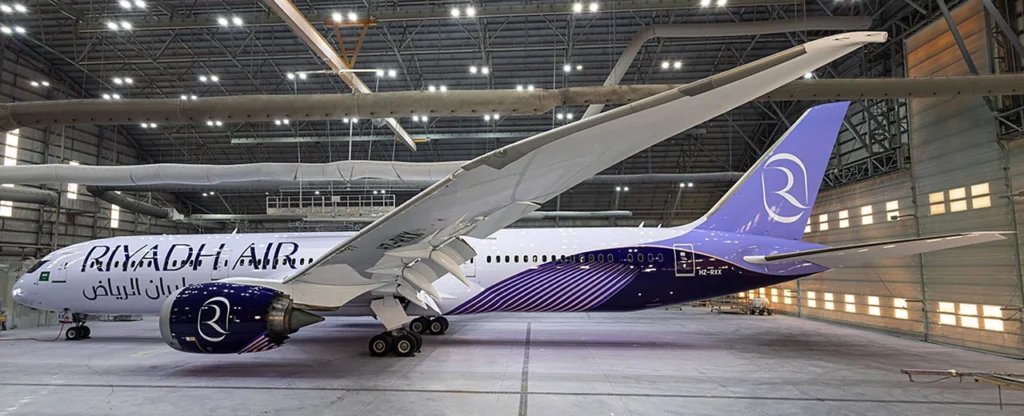
Saudi Arabia’s new national carrier Riyadh Air has received its first newly built Boeing 787-9 Dreamliners, marking a major step toward full commercial operations and a wider international route network from the Kingdom’s capital.
The aircraft arrival strengthens Riyadh Air’s long-haul ambitions as the airline prepares to connect Riyadh with major business and tourism markets. London, Cairo, Dubai, Jeddah, Madrid and Manchester feature among the destinations identified within the carrier’s developing network, with further routes expected as additional aircraft enter service.
The milestone carries wider significance for Saudi Arabia’s tourism strategy. New long-haul capacity can make the Kingdom more accessible to international visitors while supporting hotels, attractions, events, restaurants and ground transportation providers across the country.
Dreamliner Fleet Supports International Route Growth
Riyadh Air has committed to 39 Boeing 787-9 aircraft, with options for 33 additional Dreamliners. The wide-body jets form a central part of a broader fleet strategy designed to connect the airline with more than 100 global destinations by 2030.
The Boeing 787-9 is suited to long-distance operations, providing the range required for routes linking Riyadh with destinations across Europe, Asia, Africa and other international markets.
For passengers, the aircraft offers a more comfortable long-haul journey through larger windows, reduced cabin noise and a modern interior design. The Dreamliner is also designed to improve fuel efficiency, supporting the airline’s goal of building a more sustainable fleet as international operations expand.
Riyadh Air’s fleet plans extend beyond the Boeing aircraft. The airline is also preparing to operate Airbus A321neo jets for regional routes and has placed firm orders for Airbus A350-1000 aircraft to support future wide-body growth.
Premium Cabins Target Business and Leisure Travelers
The Riyadh Air Boeing 787-9 Dreamliners are configured to carry 290 passengers across several cabin categories.
The aircraft includes four Business Elite suites and 24 Business Class seats, both featuring fully flat beds and privacy doors. Premium Economy offers 39 seats, while Economy accommodates 223 passengers.
This cabin strategy gives the airline the flexibility to serve different segments of the international travel market. Business travelers can access premium products designed for long journeys, while leisure passengers gain a broader range of options when planning holidays, family visits or stopover itineraries.
The airline is also investing in digital services, in-flight entertainment and connectivity as it works to create a technology-led passenger experience. These features will be especially important on longer routes, where comfort and onboard service strongly influence traveler satisfaction.
London and Cairo Strengthen Tourism Connectivity
London Heathrow has played an important role in Riyadh Air’s preparations. The airline began operating launch flights to London in October 2025 using a leased Boeing 787-9 technical spare aircraft named Jamila as part of its operational readiness program.
The arrival of newly built Dreamliners supports the transition toward a permanent long-haul fleet. London remains a key market because it connects Saudi Arabia with one of Europe’s largest aviation hubs and a major source of business, leisure and visiting-friends-and-relatives travel.
Cairo is also positioned as an important route within the airline’s expansion strategy. The Riyadh–Cairo market carries strong demand, reflecting close economic, cultural and family links between Saudi Arabia and Egypt.
As the network grows, new routes can support inbound tourism while giving Saudi residents more direct access to international destinations.
Aviation Expansion Creates Tourism Opportunities
Riyadh Air’s fleet development forms part of Saudi Arabia’s broader effort to strengthen aviation and tourism under Vision 2030.
Improved air connectivity can help visitors reach cultural landmarks, entertainment districts, heritage destinations and luxury resorts more easily. It can also support emerging tourism regions by creating smoother connections through Riyadh.
The impact extends across the hospitality sector. Additional flights can generate demand for hotels, restaurants, tour operators, airport services and local transportation. Events, exhibitions and business conferences may also benefit as international access improves.
Riyadh Air is working with tourism partners to promote destinations and improve the visitor journey. This approach positions aviation as more than a transportation service. It becomes a driver of economic development and a gateway to new travel experiences.
Saudi Arabia Advances Its Global Aviation Ambitions
The delivery of Riyadh Air’s first newly built Boeing 787-9 Dreamliners represents an important step in the airline’s growth.
With a modern fleet, premium cabins and an expanding route map, Riyadh Air is preparing to compete for international travelers while supporting Saudi Arabia’s tourism objectives.
As more aircraft arrive and commercial schedules expand, the airline is set to play a central role in connecting Riyadh with the world and bringing more visitors closer to the Kingdom’s rapidly evolving tourism landscape.