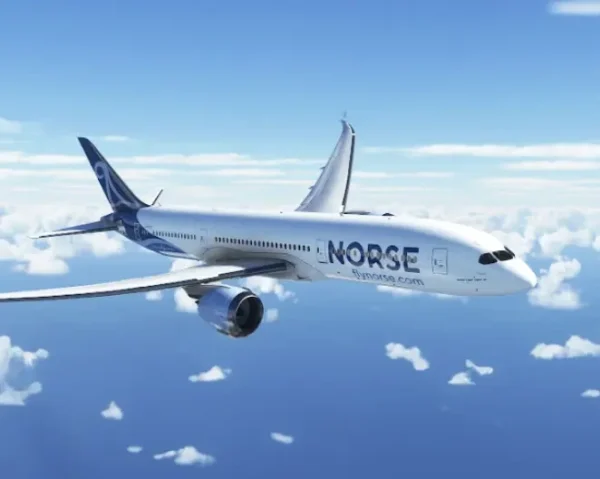
Norse Atlantic Airways is entering the summer 2026 travel season with a leaner scheduled network, stronger unit revenue and a rapidly expanding charter business, offering a clear example of how long-haul airlines are adapting to high fuel prices and geopolitical uncertainty.
The Norway-based airline reported that total revenue per available seat kilometre in its own network reached 5.4 US cents in May 2026, up 20% from 4.5 US cents during the same month last year. Total available capacity fell by 29% year over year as the carrier reduced routes that were not delivering sustainable returns.
At the same time, the airline achieved a 97.4% load factor across its network and ACMI or charter operations, compared with 95.5% in May 2025. The figures show that Norse Atlantic carried fewer passengers overall while filling a greater proportion of its available seats.
Capacity Cuts Reshape the Scheduled Network
Norse Atlantic operated 157 flights within its own scheduled network in May 2026, down from 520 during the same period last year. The airline transported 104,234 passengers across scheduled, ACMI and charter operations, representing a 43% year-over-year decline from 182,854 passengers.
However, the lower passenger count does not tell the entire story. The airline has deliberately adjusted capacity to demand while seeking higher average fares and improved revenue efficiency. Its scheduled network recorded a load factor above 93%, reflecting strong demand for the remaining direct long-haul routes.
For travellers, the strategy may mean fewer seats on selected services and a greater need to plan early for popular summer dates. High load factors can reduce last-minute availability, particularly for passengers seeking specific departure times or lower-priced fares.
Charter Operations Become a Major Growth Driver
The most striking change in Norse Atlantic’s operating model is the expansion of ACMI and charter services. The airline operated 256 ACMI and charter flights in May 2026, compared with 64 a year earlier, representing a fourfold increase.
ACMI arrangements involve providing aircraft, crew, maintenance and insurance for another operator. This allows Norse Atlantic to deploy aircraft beyond its own scheduled network while responding to demand from airlines and travel partners seeking additional long-haul capacity.
The shift creates a more balanced business model. Scheduled flights remain important for passengers booking direct long-haul journeys, while charter and ACMI services help the airline maintain aircraft utilisation and diversify operations.
Norse Atlantic also continues to support cargo services, adding another dimension to its long-haul aviation business.
Higher Fares Reflect a Changing Aviation Market
The airline said it was filling adjusted capacity at higher average fares. This development arrives as aviation businesses continue to respond to elevated fuel prices and wider operational challenges.
For passengers, the market environment reinforces the importance of comparing fares early, reviewing baggage rules and checking flexible booking conditions. Travellers planning peak-season journeys may also benefit from keeping alternative dates in mind, particularly when direct flights are a priority.
The impact extends beyond ticket prices. Strong transatlantic demand supports hotels, airports, attractions, restaurants, cruise connections and local tourism businesses on both sides of the Atlantic. However, reduced capacity on selected routes can also influence where travellers choose to spend holidays and how they build multi-destination itineraries.
Punctuality Faces External Pressure
Norse Atlantic completed 100% of its scheduled flights during May 2026. However, 78% of flights in its own network departed within 15 minutes of their scheduled times, compared with 81% a year earlier.
The airline attributed the punctuality pressure to continued air traffic control delays, airport congestion and knock-on travel disruption linked to the Middle East conflict.
These challenges are not limited to one carrier. International aviation depends on interconnected airports, airspace access and tightly coordinated schedules. A disruption in one region can affect aircraft positioning, crew planning and passenger connections across multiple markets.
Boeing 787 Fleet Supports Long-Haul Operations
Norse Atlantic operates a fleet of 12 Boeing 787 Dreamliners across destinations in North America, Europe, Africa and Asia. The aircraft support the airline’s direct long-haul passenger services as well as its expanding charter and ACMI operations.
As summer demand builds, the airline’s May performance highlights a wider shift in aviation strategy. Growth is no longer measured solely by the number of passengers carried or flights operated. Airlines are increasingly focused on using aircraft efficiently, matching seats to demand and strengthening revenue performance.
Travellers Should Plan Ahead for Summer Flights
For passengers booking long-haul journeys this summer, the message is straightforward: check schedules early, compare fares carefully and allow time for possible airport delays.
Norse Atlantic’s capacity adjustments and packed flights show that demand remains strong even as aviation faces a complex operating environment. The airline’s expanding charter business and improved revenue performance suggest that flexibility will remain central to its strategy throughout summer 2026.
For more travel news like this, keep reading Global Travel Wire