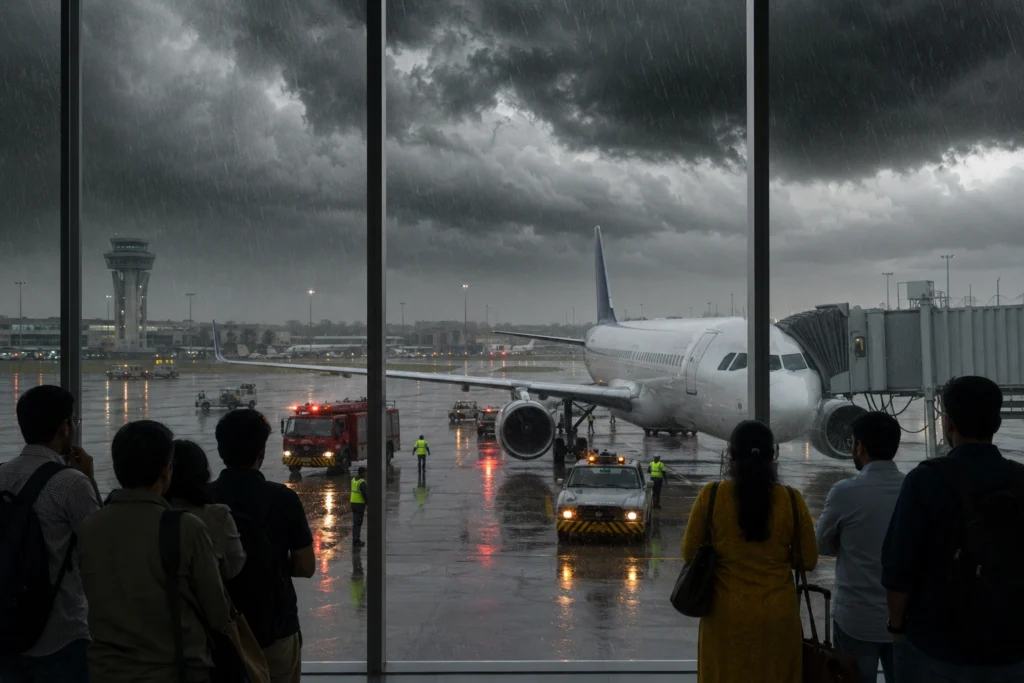
India’s domestic aviation network is facing renewed scrutiny after passengers on a Bengaluru–Chennai flight were evacuated as a safety precaution following the detection of smoke inside the aircraft before departure. The incident comes as advancing monsoon conditions create an additional layer of uncertainty for travellers using busy airports across southern India.
The evacuation placed immediate attention on passenger safety, airport coordination, and airline preparedness during a high-demand travel period. It also demonstrated how a single operational event can affect journeys beyond one aircraft, particularly when passengers require rebooking, aircraft inspections, baggage handling support, and revised departure arrangements.
For travellers, the most important message is practical: check flight status before leaving for the airport, monitor airline notifications, and allow additional time for connections during periods of unsettled weather.
Safety Procedures Take Priority at Bengaluru Airport
The Bengaluru–Chennai service was evacuated before completing its scheduled journey after smoke was detected while the aircraft was preparing for departure. Passengers exited the aircraft using emergency procedures as airport teams responded to the situation.
Precautionary evacuations are designed to move travellers away from a potential risk quickly, even when the cause has not yet been determined. Smoke inside an aircraft requires immediate attention because conditions can change rapidly in an enclosed cabin.
Once an emergency slide is deployed, the aircraft must remain out of normal service until inspections and required maintenance work are completed. This can affect subsequent flights planned for the same aircraft and create knock-on scheduling changes across an airline’s network.
Passengers may also face revised boarding arrangements, replacement aircraft, delayed baggage processing, or alternative travel options. Clear airline communication becomes especially important for families, older passengers, and travellers with onward connections.
Monsoon Conditions Add Pressure to Summer Journeys
The aviation disruption arrives as India’s southwest monsoon continues to advance. Official weather guidance has identified rainfall, thunderstorms, lightning, and gusty winds across parts of southern India, including areas of Karnataka.
Weather does not automatically mean flight cancellations. However, storms and strong winds can influence airport operations, aircraft sequencing, ground handling, runway movements, and departure timing. Airlines may also adjust schedules when conditions affect multiple airports across the network.
For visitors travelling through Bengaluru, Chennai, or other major southern gateways, flexibility is becoming increasingly important. Domestic journeys often connect with international flights, rail services, hotel check-ins, and tour departures. Even a moderate delay can affect an entire itinerary when transfer windows are tight.
Tourism and Business Travel Depend on Reliable Connections
Bengaluru and Chennai are two of southern India’s most important urban gateways. Both cities serve business travellers, family visitors, students, medical tourists, and leisure passengers exploring wider destinations across Karnataka and Tamil Nadu.
Bengaluru provides access to technology and business districts as well as regional tourism circuits. Chennai supports corporate travel, coastal journeys, cultural tourism, medical visits, and onward connections across southern India.
Reliable flights between major domestic cities remain essential for hotels, airport transfer operators, restaurants, conference venues, tour providers, and local attractions. When disruptions occur, the impact can extend beyond the airport as travellers revise accommodation, ground transport, and activity bookings.
Travellers Should Build More Flexibility Into Plans
Passengers flying during the monsoon period should review itineraries carefully before departure. Airline applications and official flight-status tools can provide real-time updates on boarding times, delays, cancellations, and schedule changes.
Travellers with connecting flights should allow more time between sectors, particularly when transferring between domestic and international services. Keeping essential medication, travel documents, chargers, and basic personal items in hand luggage can also reduce inconvenience during unexpected delays.
Passengers should follow crew instructions immediately during any emergency response. Leaving bags behind during an evacuation is essential because luggage can slow movement and create additional risks for other travellers.
India Aviation Faces a Resilience Test
The Bengaluru–Chennai evacuation underscores the importance of safety-first decision-making across India’s growing aviation market. Rising passenger demand creates opportunities for tourism and regional connectivity, but it also increases pressure on airlines, airports, and ground-handling teams to maintain reliable operations.
As monsoon conditions develop across the country, travellers should expect occasional changes and plan accordingly. The incident is a reminder that operational disruptions can be inconvenient, but rapid safety procedures remain essential for protecting passengers and maintaining confidence in domestic air travel.
For more travel news like this, keep reading Global Travel Wire