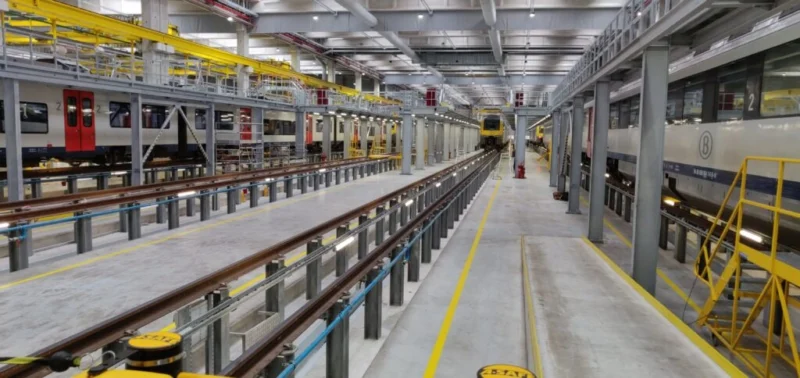
Belgium is reinforcing its position in European high-speed rail as SNCB prepares to invest nearly €50 million in its specialist TGV workshop in Forest, Brussels.
The investment will be delivered over the next three years and will adapt the facility for expanded capacity and new-generation rolling stock. The Forest workshop already supports the maintenance, repair and cleaning of high-speed trains operating on the Brussels–France corridor, making it an important operational asset for cross-border rail travel.
For passengers, the project is more than an engineering upgrade. A larger and better-equipped maintenance base can help support train availability, service resilience and reliable journeys between major European cities. For tourism and business travel, the investment strengthens Brussels as a practical gateway for rail trips across Belgium, France and neighboring markets.
Forest Workshop Supports High-Speed Rail Operations
The Forest TGV workshop has played a central role in Belgium’s high-speed rail network since the 1990s. The specialist site is dedicated to high-speed rolling stock and supports maintenance activity linked with TGV, Eurostar and SNCF services.
Its location in Brussels gives the workshop strategic importance. The Belgian capital is one of Europe’s best-connected rail cities, offering direct or convenient onward access to destinations including Paris, London, Amsterdam, Cologne and cities in southern France.
Reliable workshop operations help keep this network moving. High-speed trains require regular inspections, cleaning and technical maintenance before returning to service. Any improvement in workshop capacity can support smoother fleet rotation and reduce pressure on busy international schedules.
For travelers, stronger maintenance infrastructure can translate into a more dependable journey experience, especially during peak periods when demand rises for city breaks, conferences and seasonal holidays.
Brussels Gains From Cross-Border Rail Growth
Brussels is well positioned to benefit as more travelers choose rail for journeys between major European cities.
The city’s international rail connections make it attractive for short leisure trips, business travel and multi-country itineraries. Visitors can combine Brussels with destinations such as Paris, London or Amsterdam without relying on airport transfers.
The Forest investment supports that travel pattern by strengthening the operational backbone behind high-speed services.
Belgium also benefits from its central location within Europe. Rail travelers arriving in Brussels can continue to Bruges, Ghent, Antwerp and other Belgian destinations, spreading tourism demand beyond the capital.
Hotels, restaurants, attractions and event venues can all benefit when rail connectivity becomes more reliable and easier to use.
Eurostar Fleet Plans Add Future Momentum
The timing of the workshop upgrade is significant because Eurostar is preparing for a major fleet expansion.
Eurostar has confirmed an order for 30 new double-decker trains based on the Avelia Horizon platform, with an option for a further 20 trains. The new units are expected to support the company’s long-term passenger growth strategy and will be the first double-decker high-speed trains designed to operate through the Channel Tunnel and on the United Kingdom network.
The Forest upgrade does not mean the Brussels workshop will become the sole maintenance base for the future fleet. However, the investment shows why Belgium is preparing its high-speed rail infrastructure for the next generation of international train travel.
Modern fleets require maintenance capacity that can support larger passenger volumes, advanced technology and demanding turnaround schedules.
Brussels–Basel Pilot Expands Tourism Potential
Belgium’s cross-border rail map is also set to gain a new connection.
From July 2027, SBB, SNCF Voyageurs and SNCB plan to pilot an extension of the existing Brussels–Strasbourg TGV INOUI service through to Basel. The trial will operate one return journey on Fridays, Saturdays and Sundays.
The route will create a stronger rail link between Belgium, France and Switzerland. For tourists, Basel offers access to museums, cultural attractions and the wider Upper Rhine region, while Brussels provides a gateway to Belgium and onward connections toward neighboring countries.
The pilot could support weekend travel, business mobility and rail-based holiday itineraries across several European markets.
Rail Investment Supports Sustainable Travel
High-speed rail is increasingly important for travelers seeking alternatives to short-haul flights and road journeys.
The Forest workshop investment supports that transition by strengthening the systems required to keep international trains operating efficiently.
For Belgium, the benefits extend beyond railway infrastructure. Improved high-speed rail reliability can support tourism, meetings travel and the wider visitor economy.
By investing nearly €50 million in the Forest TGV workshop, SNCB is reinforcing Brussels as a European rail hub while preparing for future fleet growth and expanding cross-border travel demand.
For more travel news like this, keep reading Global Travel Wire