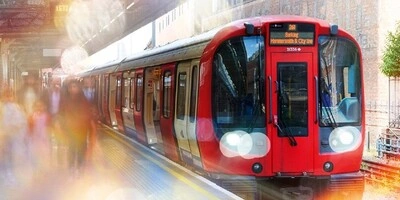
London Underground passengers can now stay connected for longer sections of their journeys as Transport for London expands high-speed mobile coverage across more stations and tunnels.
The latest phase has improved connectivity on sections of the Bakerloo, Metropolitan and Circle lines, giving travelers greater access to mobile data, messaging services and calls while moving through the Tube network.
Around 60 percent of stations classified as underground now have mobile coverage. TfL remains on track to extend coverage across the entire Tube network by the end of 2026.
The rollout is being delivered with Boldyn Networks and represents one of the most important digital upgrades in the history of London’s transport system. For visitors, commuters and business travelers, better underground connectivity can improve journey planning, communication and access to real-time travel information.
Bakerloo, Metropolitan and Circle Lines Gain Wider Coverage
The latest expansion means passengers on several heavily used lines can remain connected across longer parts of their journeys.
The Bakerloo, Metropolitan and Circle lines are particularly important for visitors because they serve central London stations, interchange points and areas linked with hotels, shopping districts, attractions and business zones.
Further coverage has also reached stations including Vauxhall, Temple, Nine Elms and Gloucester Road.
Major interchange stations such as King’s Cross St Pancras, Victoria and Paddington are being connected in phases because of their scale and operational complexity.
For international visitors arriving by rail or airport transfer services, stronger mobile coverage at these hubs can make onward journeys easier to manage.
Full Tube Connectivity Remains a Major 2026 Goal
TfL is working toward full Underground mobile coverage by the end of the year.
The expansion includes station platforms, ticket halls, corridors and tunnel sections. Installing equipment in deep-level tunnels requires carefully planned engineering work, often carried out overnight during limited maintenance windows.
The vast majority of the Northern, Bakerloo and Metropolitan lines are expected to have tunnel coverage by the end of summer.
The project also extends beyond the Tube. Work is progressing on underground sections of the Docklands Light Railway and the Windrush line between Highbury & Islington and New Cross.
The Elizabeth line already has mobile coverage throughout its stations and tunnel sections, providing a model for wider network connectivity.
Better Digital Access Improves the Visitor Experience
For travelers, reliable mobile coverage underground is increasingly an essential part of the journey.
Visitors can use transport apps to check routes, monitor service changes and compare onward connections without waiting to return above ground. Mobile access also supports hotel navigation, restaurant reservations, attraction bookings and digital ticketing.
For business travelers, stronger coverage makes it easier to send messages, check schedules and remain connected between meetings.
The improvement is particularly valuable in a city where many journeys involve transfers across multiple Underground lines.
Instead of losing signal during key stages of a trip, passengers can access information throughout more of their route.
Mobile Connectivity Supports London Tourism
London’s tourism economy depends heavily on efficient transport.
Visitors use the Underground to reach major attractions, museums, theatres, shopping districts, hotels and entertainment venues across the capital.
Better mobile connectivity can support tourism spending by making it easier for travelers to discover nearby restaurants, book activities and navigate unfamiliar areas.
The upgrade may also improve the experience for visitors attending major events, concerts and sporting fixtures, when passenger demand rises sharply across central stations and interchange points.
Digital access is becoming part of the destination experience itself.
Engineering Work Continues Across a Complex Network
The London Underground presents significant technical challenges because much of the network was built long before modern communications infrastructure existed.
Engineers are installing systems capable of supporting multiple mobile operators across stations and tunnels.
The network is designed to serve customers using EE, Three UK, Vodafone and Virgin Media O2.
This shared infrastructure approach allows passengers across different mobile networks to benefit from the rollout without requiring separate systems for each operator.
Connected Journeys Become the New Standard
The London Underground mobile coverage expansion is changing how passengers move through the capital.
With around 60 percent of underground stations now connected and full network coverage targeted by the end of 2026, London is moving closer to a fully digital transport experience.
For travelers, the result is greater convenience, easier navigation and more reliable communication.
For the city, the project strengthens the connection between transport technology, tourism growth and everyday mobility across one of the world’s busiest urban rail systems.
For more travel news like this, keep reading Global Travel Wire