Safari Portal is positioning its unified travel planning and guest management system as a timely digital solution for travel advisors, tour operators, and destination management companies seeking more efficient ways to manage complex travel journeys.
As global tourism businesses move away from fragmented tools, demand is growing for centralised platforms that connect itineraries, documents, client communication, invoices, destination content, and booking management. Safari Portal’s system responds to this shift by bringing core travel planning functions into one structured digital environment designed to support both business operations and traveller experience.
The platform reflects a wider transformation across the tourism sector, where travel companies increasingly need faster workflows, better client visibility, and mobile-accessible trip information. For agencies, tour operators, and destination specialists handling international travel, safari itineraries, multi-country journeys, and high-touch client service, this kind of integrated infrastructure is becoming increasingly important.
How Safari Portal Travel Dashboards Work
Safari Portal Travel Dashboards serve as a unified workspace where travel businesses can organise the full customer journey. According to the information provided, the system brings together itineraries, lookbooks, invoices, destination content, travel insurance details, and supporting documents inside a single client-accessible platform.
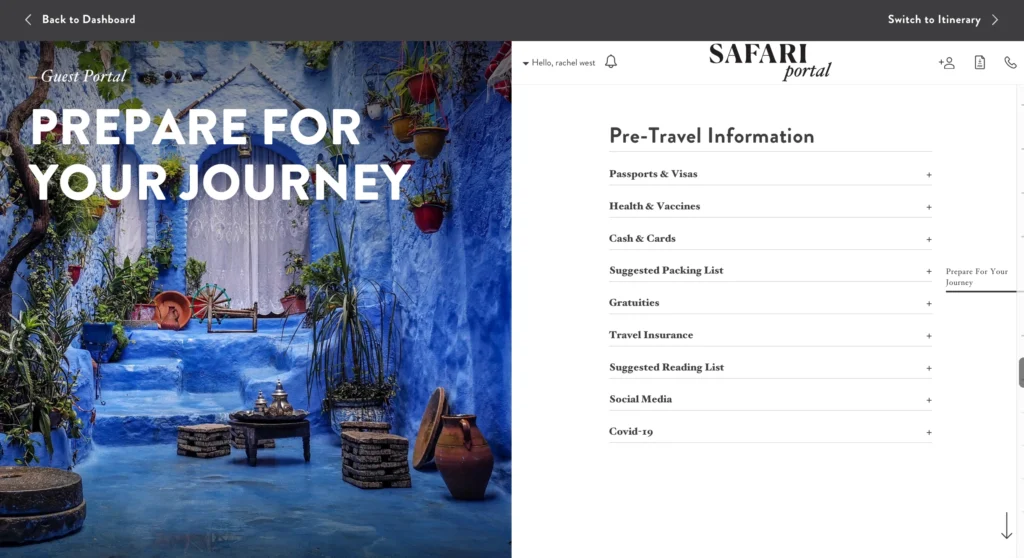
At the centre of the system is the guest portal. This feature allows travellers to access their trip details in one place, including interactive itineraries, pre-travel guidance, flight information, destination notes, and essential documents. For clients, this reduces the confusion often caused by scattered emails, PDFs, spreadsheets, and separate booking confirmations.
For travel companies, the dashboard creates a more controlled workflow. Advisors and operators can update journey information, organise client communication, and manage booking-related content without relying on several disconnected systems. This improves internal coordination and gives teams a clearer view of each traveller’s journey from planning to departure.
Boosting Efficiency For Travel Agencies And Tour Operators
Operational efficiency is one of the most important benefits of Safari Portal’s travel planning model. Traditional travel planning can involve multiple channels, including email threads, manual documents, supplier notes, invoices, and third-party tools. This often creates delays, duplicated work, and a higher risk of missed updates.
Safari Portal addresses that challenge by centralising trip-related information in one digital ecosystem. Its features, including drag-and-drop itinerary creation, reusable content blocks, and dynamic updates, are designed to reduce manual workload and make itinerary production faster.
This is particularly relevant for tour operators and destination management companies that handle detailed travel programmes involving hotels, transfers, attractions, flights, guides, and local experiences. In these cases, even a small communication gap can affect the traveller’s experience. A unified dashboard helps reduce that risk by keeping journey details structured and accessible.
The platform also supports collaboration between travel advisors and clients. Travellers can review itinerary options, respond to proposed changes, and access updated documents through the system. This can shorten the time between enquiry, approval, and booking confirmation, which is increasingly important in a competitive tourism marketplace.
Improving The Traveller Experience Through Guest Portals
For travellers, the biggest change comes from having a single digital hub for all trip information. Instead of searching through separate files, messages, and attachments, clients can use Safari Portal’s guest portal to view their itinerary, documents, destination guidance, and important travel details in one place.
This supports a smoother traveller experience before and during the journey. Mobile access is especially valuable for international trips, remote destinations, and safari travel, where connectivity may be limited and travellers need reliable access to essential information. Offline access to itineraries and documents can help reduce stress during airport transfers, border crossings, hotel check-ins, and guided excursions.
A more organised digital journey also strengthens traveller confidence. When clients can clearly see their flights, accommodation, activities, insurance information, and destination guidance, they are more likely to feel supported by their travel provider. For premium, luxury, and adventure travel companies, this sense of clarity can become part of the overall service experience.
Why Safari Portal Matters For Global Tourism Businesses
Safari Portal’s travel planning system fits into a broader tourism technology trend focused on integrated ecosystems. Travel companies are increasingly adopting platforms that combine planning, communication, customer relationship management, and real-time updates in one environment.
This matters because modern tourism is more connected and more complex than ever. A single itinerary can involve airlines, hotels, cruise operators, rail services, local guides, transfer companies, insurance providers, and attractions. Without a centralised management system, businesses may struggle to maintain accuracy across every stage of the journey.
For destination management companies, the benefits can be especially strong. They often coordinate several suppliers across multiple locations and must keep both overseas travel sellers and end clients informed. A unified dashboard can improve supplier coordination, reduce errors, and help deliver a more consistent guest experience.
Impact On Hospitality, Aviation And Destination Services
The introduction of better travel dashboards can also support the wider tourism supply chain. Hotels benefit when guest arrival details, preferences, and itinerary updates are more clearly managed. Airlines and transfer partners benefit when clients receive accurate timing and documentation. Local attractions and guides benefit when travellers arrive better informed and prepared.
For destinations, improved digital planning can enhance visitor flow and satisfaction. When travellers receive clearer information before arrival, they are more likely to engage confidently with local experiences, excursions, restaurants, cultural attractions, and hospitality services. This can support local spending and strengthen the economic impact of tourism.
In safari and adventure travel, where itineraries may include remote lodges, charter flights, conservation areas, park permits, and specialist guides, digital coordination is particularly valuable. Safari Portal’s focus on structured guest management gives operators a tool for handling these layered journeys with greater precision.
A More Connected Future For Travel Planning
Safari Portal’s unified travel planning and guest management system highlights how digital infrastructure is becoming central to the future of tourism operations. As travellers expect faster communication, clearer documents, and mobile-ready journeys, travel companies are under pressure to modernise their planning systems.
By combining dashboards, guest portals, itinerary tools, documentation, invoices, destination content, and client communication, Safari Portal offers a model built around clarity and efficiency. For travel advisors, tour operators, and destination management companies, the platform could help reduce operational friction while improving the traveller experience.
As international tourism continues to expand across more personalised and complex journeys, systems that connect planning, service delivery, and guest communication are likely to become even more important. Safari Portal’s approach shows how travel technology is moving from back-office support to a central role in shaping the modern tourism experience.
For more travel news like this, keep reading Global Travel Wire