Dubai’s planned electric air taxi network has reached a major milestone, with the flagship vertiport beside Dubai International Airport achieving technical completion ahead of targeted commercial operations before the end of 2026.
The airport facility will anchor an initial four-stop network connecting Dubai International Airport with Dubai Marina, Palm Jumeirah and Downtown Dubai. The system is being developed through cooperation between Dubai’s Roads and Transport Authority, Skyports Infrastructure and Joby Aviation.
For visitors, the network promises dramatically shorter journeys between the airport and some of Dubai’s busiest tourism, hospitality and business districts. A flight from Dubai International Airport to Palm Jumeirah is expected to take about 12 minutes, compared with an estimated 45-minute journey by road under typical traffic conditions.
However, the wider network is still being developed. The Dubai Marina facility is under construction, while work at Dubai Mall and Atlantis The Royal on Palm Jumeirah is expected to progress as the partners prepare for passenger operations.
Airport Vertiport Connects Directly with Metro
The completed flagship facility is located beside Dubai International Airport and has been designed as a multimodal transport hub rather than a standalone aviation terminal.
The four-storey vertiport covers approximately 3,100 square metres and includes two dedicated aircraft take-off and landing areas. It is directly accessible from Emirates Metro Station and includes an integrated multistorey car park, allowing passengers to connect between metro, road and aerial transportation.
The station has been designed to handle as many as 170,000 passengers and 42,000 aircraft movements annually when the network reaches broader utilization.
Digital booking, automated check-in and streamlined boarding systems are expected to reduce waiting times. Premium passenger facilities will also support travelers moving between international flights, hotels, attractions and business centers.
Dubai Marina Hub Moves Into Construction
The network’s second vertiport is being developed at the American University in Dubai.
Its location has been selected to serve Dubai Marina, Dubai Internet City and surrounding residential, tourism and commercial areas. These districts experience substantial daily movement from hotel guests, residents, technology professionals and leisure visitors.
The Marina station could provide faster connections for travelers staying near the waterfront, Jumeirah Beach Residence and nearby hospitality zones. It may also improve access to corporate districts where road congestion can extend journey times during peak periods.
Construction at the Marina site represents the next stage in transforming the four-node plan into an operating citywide transport system.
Palm Jumeirah Gains Resort-Based Air Access
The Palm Jumeirah vertiport is planned for Atlantis The Royal, one of Dubai’s most prominent luxury resorts.
Its location could give hotel guests and visitors direct access to the air taxi network within one of the city’s most important resort districts. Palm Jumeirah contains luxury hotels, residences, restaurants, beaches and entertainment venues that attract substantial international demand.
A rapid connection from Dubai International Airport could appeal particularly to time-sensitive travelers, premium leisure guests and business visitors combining meetings with resort stays.
The vertiport may also support movement between Palm Jumeirah and other tourism areas without requiring passengers to travel along congested road corridors.
Dubai Mall Hub Targets Downtown Visitors
Downtown Dubai’s vertiport will be positioned at Dubai Mall, providing aerial access to a district that includes Burj Khalifa, hotels, restaurants, retail attractions and major entertainment venues.
Dubai Mall attracted nearly 111 million visitors in 2024, highlighting the scale of potential demand surrounding the planned station.
The location could enable international visitors to transfer more efficiently between the airport and Downtown Dubai. It may also create fast links between the city center, Palm Jumeirah and Dubai Marina once all four facilities become operational.
The project is expected to complement existing metro, taxi and chauffeur services rather than replace them.
Electric Aircraft Promise Faster Urban Flights
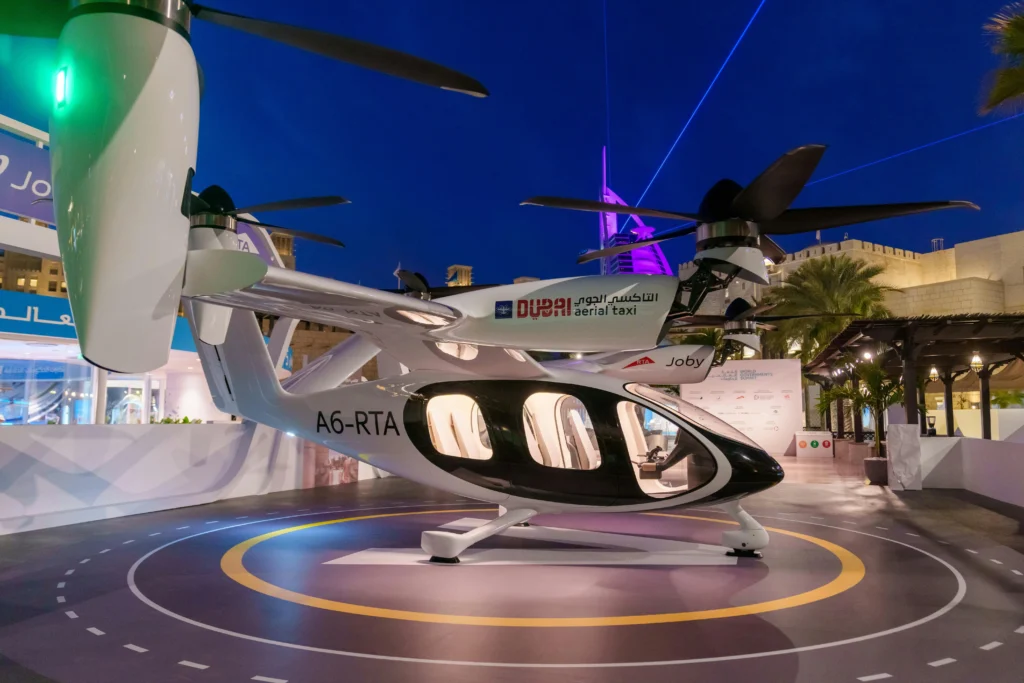
Joby Aviation plans to operate the network using an all-electric vertical take-off and landing aircraft.
The aircraft is designed to carry a commercial pilot and up to four passengers. Its six tilting propellers enable vertical take-off before transitioning into forward flight.
Joby says the aircraft can travel at speeds of up to 320 kilometres per hour and cover approximately 160 kilometres on one charge. It is also being developed with multiple system redundancies and a low acoustic profile intended to support operations in dense urban areas.
Flights will produce no operating emissions, although the overall environmental impact will also depend on electricity generation, infrastructure and passenger utilization.
Uber Integration Could Simplify Bookings
Joby and Uber have announced plans to offer air taxi journeys through the Uber application.
Eligible trips would appear as an Uber Air option, combining the aerial segment with ground pick-up and drop-off through Uber Black. This arrangement is intended to create a single booking journey covering transport to the vertiport, the flight and the final road connection.
Commercial service remains dependent on regulatory approvals, testing and final operational preparations.
Tourism Impact Will Depend on Successful Launch
The network could enhance Dubai’s appeal to visitors who prioritize speed, convenience and advanced travel technology.
Hotels, shopping destinations, restaurants and attractions near the vertiports may benefit from easier movement between major districts. The system could also strengthen Dubai’s reputation as a testing ground for premium and sustainable mobility.
However, claims of immediate property-price surges or guaranteed VIP visitor growth remain unconfirmed. The network’s true tourism and economic impact will depend on pricing, operating frequency, passenger capacity, regulatory approval and public adoption after commercial flights begin.
For more travel news like this, keep reading Global Travel Wire