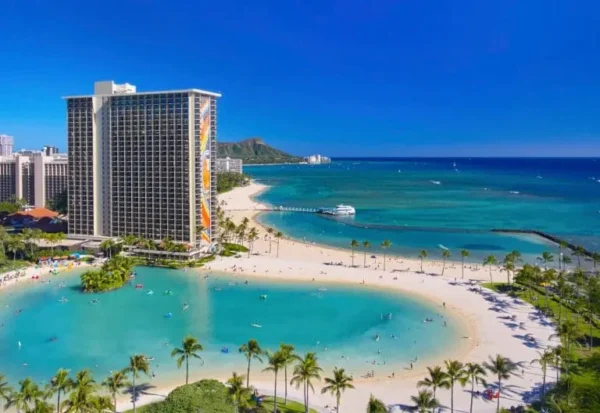
Hilton Hawaiian Village Waikiki Beach Resort has placed its newly renovated Rainbow Tower at the center of a refreshed premium accommodation strategy, strengthening one of Honolulu’s most recognizable beachfront hotel products.
The upgraded tower combines modern coastal interiors, Pacific-inspired design details and panoramic views across Waikiki Beach, Diamond Head and the Pacific Ocean. Its renewed positioning gives travel advisors, tour operators and holiday brands a stronger high-value product to offer families, couples, celebration travelers and luxury guests visiting Hawaii.
Hilton officially describes Rainbow Tower as newly renovated, with guestrooms featuring coastal colors, warm wood accents, natural textures and an updated design intended to complement the surrounding ocean environment. The tower also provides direct access to the resort’s pools, lagoon, restaurants and Waikiki Beach.
Rainbow Tower Strengthens Hilton’s Beachfront Offer
Rainbow Tower is more than another accommodation block within Hilton Hawaiian Village.
Its distinctive rainbow mosaic, beachfront location and broad selection of ocean-facing rooms have made it one of Waikiki’s most recognizable hotel landmarks. The renovation allows Hilton to modernize that established identity while retaining the tower’s close visual connection to Honolulu’s coastline.
Guests can choose from oceanfront rooms, ocean-view categories, lagoon-facing accommodation, corner rooms, junior suites and larger premium suites. Hilton also lists mobility- and hearing-accessible options, expanding the renovated product’s appeal across a wider range of travelers.
Several room categories accommodate up to four guests, while larger suites offer additional space for families, premium leisure travelers and special occasions.
Modern Design Supports Premium Room Sales
The redesigned interiors use a clean coastal style rather than a heavily themed resort aesthetic.
Ocean-inspired colors are paired with Pacific Island textures, woven furnishings, pendant lighting and carved wood surfaces. This creates a more contemporary guest environment while maintaining a strong sense of place.
For travel sellers, the renovation creates a clearer room-upgrade pathway. Oceanfront and high-floor accommodation can be positioned around view quality, while corner rooms and suites offer greater space and stronger appeal for honeymooners, anniversary trips and multigenerational holidays.
That differentiation is important in Waikiki, where hotels compete not only on price but also on room condition, balcony outlook, proximity to the beach and access to resort facilities.
A refreshed room product allows Hilton to compete more effectively for travelers willing to spend more for comfort, location and a recognizable international brand.
Resort Scale Adds Value Beyond the Room
Rainbow Tower benefits from its location within the wider Hilton Hawaiian Village resort complex.
The oceanfront property includes five guest towers and a broad range of amenities, including swimming pools, waterslides, a saltwater lagoon, dining venues, spa services, fitness facilities, organized activities and entertainment.
This integrated setting gives guests the flexibility to spend significant portions of their stay within the resort while maintaining easy access to Waikiki’s shops, restaurants and attractions.
Families can combine beachfront accommodation with pools and water activities. Couples can select ocean-view rooms, dining and wellness experiences, while meeting and incentive groups can use the resort’s larger event and accommodation infrastructure.
For long-haul visitors arriving after extended flights, having accommodation, dining, recreation and beach access within one destination can also simplify the first stage of a Hawaii holiday.
Oʻahu’s Competitive Hotel Market Raises the Stakes
The renovation arrives in a mature and highly competitive lodging market.
Official state reporting shows that Oʻahu remains Hawaii’s largest accommodation center, with a substantial concentration of visitor units and hotel rooms. The state’s 2025 Visitor Plant Inventory confirms that hotels continue to dominate the island’s lodging supply, reinforcing the need for established properties to reinvest in quality and guest experience.
In a market with extensive hotel inventory, renovation is one of the most effective ways for a legacy resort to maintain relevance without relying on major physical expansion.
Updated rooms can support stronger rates, improve guest satisfaction and give wholesalers and advisors renewed reasons to recommend a familiar property.
Hawaii Tourism Focuses on Visitor Value
Hawaii’s tourism strategy increasingly emphasizes destination stewardship, visitor spending and the quality of the travel experience rather than simple growth in arrivals.
Oʻahu remains central to the state’s visitor economy, accounting for a substantial share of statewide tourism spending and receiving millions of visitors annually. The Hawaii Tourism Authority has also highlighted the need to balance tourism activity with community needs, infrastructure pressure and responsible destination management.
Against that background, renovating existing accommodation can support higher-value tourism without necessarily expanding Waikiki’s overall development footprint.
Guests choosing improved rooms may spend more on dining, activities and premium experiences, benefiting restaurants, attractions, transport providers and other tourism businesses.
Waikiki Gains a Stronger Premium Product
The renewed Rainbow Tower gives Hilton Hawaiian Village a timely commercial advantage.
Its combination of modern interiors, beachfront access, resort-scale amenities and prominent views creates a more competitive product for travelers comparing Hawaii with other luxury beach destinations in the Caribbean, Mexico and the Pacific.
For visitors, the renovation offers a more polished stay in one of Waikiki’s best-known towers. For the travel trade, it creates stronger opportunities to sell upgraded room categories and higher-value packages.
For Hawaii tourism, the project demonstrates how reinvestment in established hotels can support quality, competitiveness and visitor spending while preserving the identity of an iconic beachfront resort.
For more travel news like this, keep reading Global Travel Wire