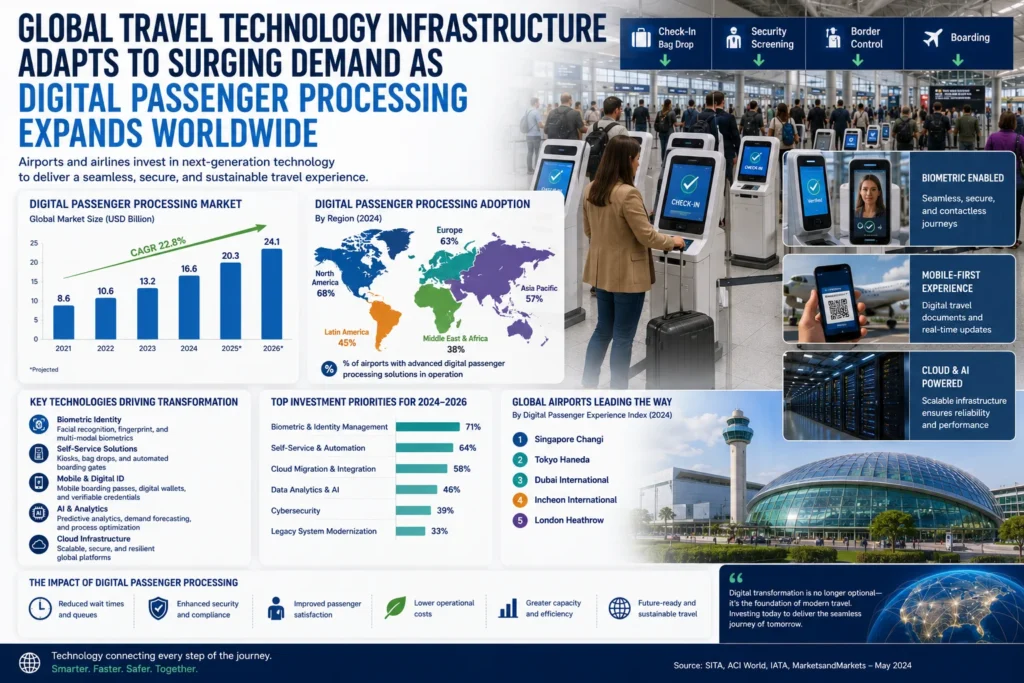
The global tourism ecosystem is supported by an intricate grid of digital platforms that manage millions of reservations, flight itineraries, and passenger check-ins every day. Official transport registry disclosures and international hospitality data highlights that contemporary vacationers and corporate commuters rely entirely on real-time network availability. Securing seamless cross-border transit requires a sophisticated technological backbone. As a leading travel technology provider, companies like Spain’s Amadeus IT Group are central to keeping international flight routes active and ensuring that global distribution networks operate at peak efficiency.
According to global aviation intelligence updates, more than 70 percent of long-haul travel itineraries involve multiple digital touchpoints before a passenger steps onto an aircraft. These include online agency searches, automated seat allocations, and terminal baggage drop verifications. Because the modern travel grid spans thousands of international gateways, the underlying infrastructure must constantly adapt to fluctuating passenger volumes, geopolitical realignments, and shifting traveler booking behaviors.
Operational Core of Modern Tourism Logistics
To understand how global mobility functions, transport authorities split the aviation software market into two primary operational segments: Distribution and IT Solutions. Official financial updates from the first quarter of 2026 show that these twin pillars generate significant industrial momentum. Total group revenue for the quarter reached 1,682.6 million euros, representing a steady 3.1 percent increase, or 7.9 percent when adjusted for constant currency metrics. This financial stability confirms that travel sellers and legacy airlines are continually investing in upgraded software solutions to manage their daily passenger flows.
The distribution sector functions via vast global distribution systems that connect international travel agencies, corporate managers, and online flight aggregates to real-time airline inventories. When a consumer uses an online platform to search for flights from London to Tokyo or Miami to Buenos Aires, the pricing data and available seats are fetched within milliseconds from centralized databases. Official records show that air distribution revenues remained stable in the early months of 2026, supported by strong commercial booking behaviors across Europe, North America, and emerging Asian corridors.
Unpacking the Mechanics of Passenger Management Architecture
Beyond simple ticket sales, the physical handling of travelers inside international terminal hubs depends heavily on advanced Passenger Service Systems. A prime example of this technology is the widely deployed Amadeus Altéa Suite. This specialized, modular system handles critical back-end tasks for hundreds of airlines globally, including core reservations, inventory control, and real-time departure management.
Official airline operations data shows that the Air IT Solutions segment achieved a robust 7.5 percent revenue expansion during the early stretch of 2026. This growth was driven by a 3.1 percent increase in total passengers boarded worldwide, alongside a substantial 8.6 percent expansion in revenue per passenger boarded at constant currency. Platforms like the Altéa Suite enable airlines to process vast amounts of passenger information simultaneously, which drastically reduces manual terminal queue times and speeds up boarding procedures at approximately 4,750 international airports.
By integrating automated rebooking algorithms, these systems also offer a critical safety net during unexpected network disruptions, giving travelers the autonomy to rearrange their flights directly through mobile interfaces.
Financial Resilience and Strategic Market Positioning
The commercial performance of these advanced platforms directly influences international investment sentiment. Listed on the Spanish Stock Exchange under the ticker AMS, the travel technology provider commands a multi-billion-euro market capitalization, with shares trading around 51 euros in recent sessions. Brokerage reports and consensus overviews tracked by major international banks reveal that a clear majority of sector analysts maintain a highly positive outlook on the stock, viewing it as a stable large-cap anchor within European information technology portfolios.
This strong market position is reinforced by consistent research and development investments. Public registry records indicate that the firm channels an average of 16 percent of its total revenues back into software innovation, making it one of the top research and development spenders in the European software sector. These funds support a global network of thousands of software engineers who focus on transitioning older legacy systems into flexible cloud-based architectures, allowing third-party developers to design customized hospitality and retail apps.
Future Trends: Biometrics and Frictionless Journeys
Looking toward the remainder of the 2026 travel season, public aviation summaries indicate a significant focus on integrating machine learning and advanced biometric identity validation into public transit hubs. Official corporate releases highlight the upcoming acquisition of specialized biometric security providers, which will embed facial recognition and digital identity checkpoints into the standard traveler path.
This technological evolution aligns with the newly published 2026 Travel Trends report, which monitors shifting visitor habits on a global scale. Contemporary travelers are increasingly looking for customized, multi-modal travel options, including pet-friendly flight accommodations and entertainment-inspired tourism routes.
As transit networks continue to modernize their operational frameworks, the ability to deliver secure, data-driven software solutions will remain essential to maintaining global travel confidence, preventing airport bottlenecks, and ensuring a predictable experience for millions of international passengers.
For more travel news like this, keep reading Global Travel Wire