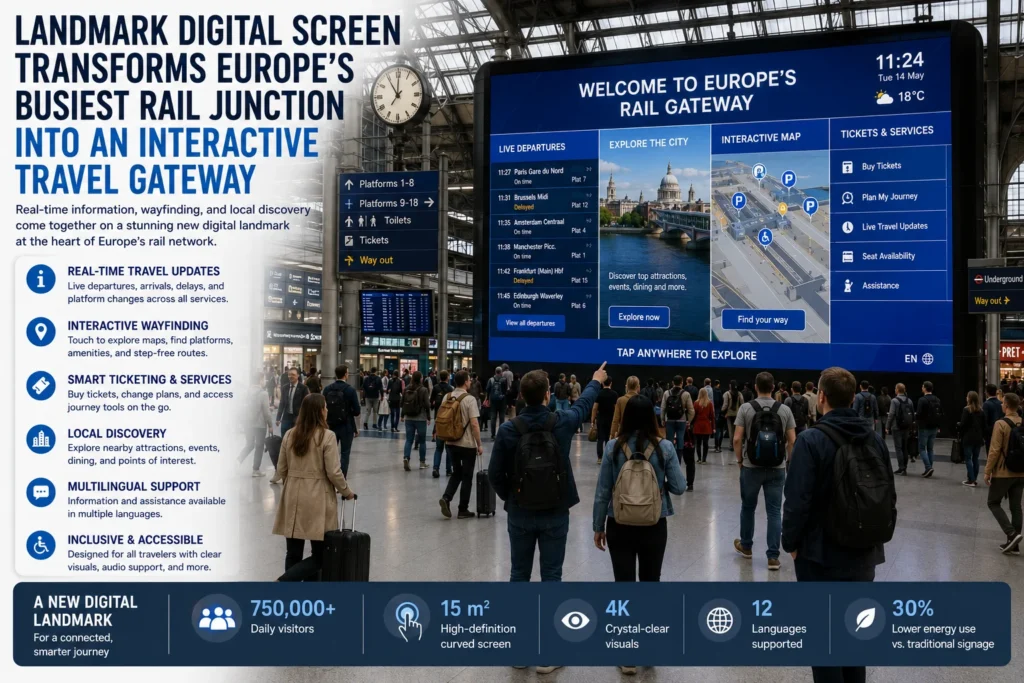
A monumental shift in transit media architecture is taking place across Central European transportation networks. Official installation data released by municipal urban development boards and corporate media frameworks for the mid-2026 travel season confirms the activation of “The Whale” at Hamburg Central Station. This massive 342-square-meter digital screen represents a structural evolution in German rail infrastructure, seamlessly blending real-time multi-modal passenger data with full-motion 3D digital-out-of-home (DOOH) media channels.
According to regional transit reports, this large-scale project marks a deliberate move toward programmatic, experience-based communication platforms in public transit hubs. Located inside the north concourse of Germany’s most highly frequented railway station, the screen is engineered to engage an immense, high-intent audience. It offers regional tourism boards, international aviation brands, and hospitality groups an impactful tool to capture the attention of moving travelers at a critical junction in their journeys.
Technical Composition and Structural Scale of Germany’s Premier Screen
Technical specifications published by the manufacturing partners highlight the sheer scale of this indoor engineering milestone. The display measures 38 meters in width by 9 meters in height and features an advanced 10-millimeter pixel pitch spacing configuration. This specific pixel density ensures that high-resolution visual storytelling, real-time navigation alerts, and commercial text displays remain sharp and legible from any vantage point across the broad terminal concourse.
The programmatic architecture of the display is optimized to align with the physical flow of pedestrian traffic. Content schedules are configured for 10-second full-motion visual windows with a rotation capability of up to 20 repetitions per hour. This balanced structure integrates essential regional weather feeds, local news tickers, and public train status notifications directly alongside commercial content, providing passengers with continuous functional value during their terminal dwell times.
Connecting Multi-Modal Tourism and High-Volume Transit Flow
The strategic deployment of this technology inside Hamburg Central Station leverages the hub’s unique status as a major node for European rail travel. Public railway census metrics show that the station processes over 550,000 daily visitors and manages roughly 720 scheduled train movements every 24 hours. This massive footprint makes it the single most frequented railway station in Germany and the second-busiest transport hub anywhere in Europe.
The station operates as a critical multimodal link, tying long-distance intercity transit directly to localized urban mobility networks, including:
Eight primary long-distance national railway paths connecting key European capitals.
Four specialized high-frequency urban railway commuter loops.
Six subterranean rapid underground platforms handling metropolitan traffic.
The dedicated S1 direct rail pipeline connecting terminal gates to Hamburg Airport.
The direct connection to the S1 airport rail line provides a unique opportunity for global tourism operators. As international vacationers and business executives increasingly utilize interconnected air-rail itineraries, a premium visual asset at this junction allows travel brands to build route awareness and promote regional tourism packages directly to travelers moving through transfer paths.
Advancing MICE Tourism and Event Engagement Frameworks
According to local tourism board releases, the deployment of this large-format media asset provides exceptional support for the meetings, incentives, conferences, and exhibitions (MICE) sector. Hamburg maintains a leading position as a premier European host city for major trade shows, international maritime conferences, and corporate exhibitions.
MICE travelers typically arrive in highly concentrated passenger waves, requiring rapid regional orientation and immediate access to event logistics. By utilizing a prominent digital canvas at the primary arrival point, event organizers and destination marketers can display real-time convention greetings, welcome messages, localized venue wayfinding, and corporate partner campaigns. This immediate communication channel helps shape initial destination impressions and extends marketing visibility directly into the physical point of arrival.
Actionable Media Strategies for Hospitality and Leisure Providers
For local and regional travel businesses aiming to connect with high-intent consumers, this dynamic display infrastructure offers highly adaptable commercial applications:
First, premium hotel groups can highlight localized short-stay packages and business amenities to incoming passengers who may require immediate or late-season accommodation options. Second, regional tour companies can broadcast visual itineraries for harbor excursions, musical theater productions, and historical museum exhibits, effectively capturing leisure demand at the point of destination entry. Third, cruise lines can deploy targeted visual campaigns to engage inbound passengers before they transfer to the city’s primary cruise ship terminals.
Finally, transport providers can leverage the screen’s flexible scheduling to display real-time rail-pass updates, regional transit connections, and multi-modal travel opportunities during peak holiday periods.
Establishing a Global Benchmark for Smart Station Modernization
The activation of this digital installation sets a brand-new standard for how global transit facilities can modernize their public spaces without disrupting primary operational transport functions. While major global aviation hubs have historically led the implementation of wide-format digital video walls, the European rail sector is rapidly adopting parallel strategies as train travel positions itself as a sustainable, core component of international tourism.
As the 2026 travel season continues to see record passenger volumes across the continent, transforming railway halls into smart communication environments will remain a defining trend in destination marketing. By providing flexible, programmatic content that adapts to shifting commuter demographics throughout the day, modern transport hubs are evolving into vital digital marketplaces, shaping consumer choices and building destination influence right on the station floor.
For more travel news like this, keep reading Global Travel Wire