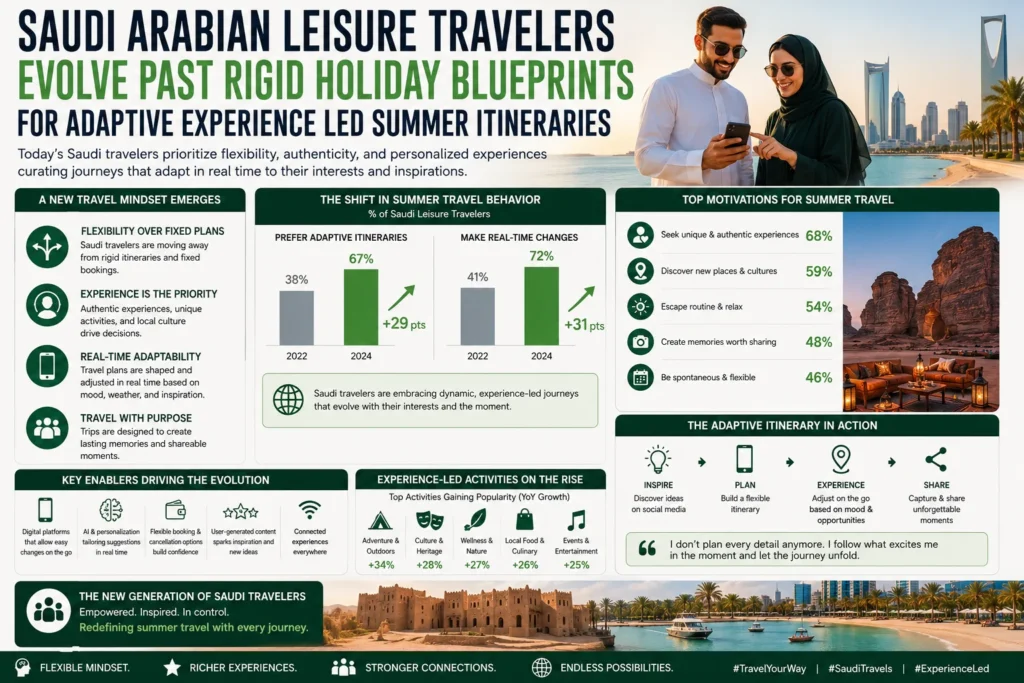
A structural transformation is unfolding across the Middle East’s largest outbound visitor market as Saudi Arabian holidaymakers alter their approach to peak summer vacation logistics. Official consumer research briefs published by global travel comparison platforms indicate that traditional, long-lead booking habits are rapidly giving way to highly flexible, adaptive planning methods. This changing consumer behavior across the Kingdom of Saudi Arabia shows a clear preference for personalized discovery, greater price transparency, and multi-hub flight options, profoundly impacting regional carrier demand and destination marketing models.
Statistical data tracking regional booking patterns confirms that the long-standing baseline for locking in summer plans months in advance has noticeably dissolved. Analysis reveals that while 42 percent of travelers within Saudi Arabia secure their core international flight arrangements ahead of time, approximately 44 percent now intentionally delay their final booking decisions until close to their target departure date. This calculated approach allows holidaymakers to evaluate fluid fare options, coordinate multi-generational family requirements, and select destinations based on sudden cost-to-value corrections rather than adhering to fixed, outdated itineraries.
The shift toward deliberate planning flexibility is actively supported by the growth of sophisticated digital reservation technologies and mobile tracking applications across the Middle East. Official aviation sector reviews highlight that roughly 80 percent of consumers surveyed in the region express high confidence in deploying advanced electronic search filters, comparative routing tools, and smart dynamic alert systems to manage their itineraries. Rather than browsing static vacation packages, modern Saudi travelers rely heavily on comprehensive single-source comparison interfaces to monitor real-time pricing drops, handle baggage allowances, and choose alternative arrival hubs simultaneously.
A notable structural trend emerging from this strategic planning shift is the growing acceptance and preference for multi-city itineraries incorporating regional layover hubs. Data tracks a major global spike in the usage of digital transit and stopover filtering tools, which has expanded by 80 percent within a brief operational window. For outbound travelers from Saudi Arabia, connecting routes running through major Gulf Cooperation Council gateways—most notably Zayed International Airport in Abu Dhabi, Dubai International Airport, and Hamad International Airport in Doha—are no longer viewed as transit delays. Instead, they are treated as practical routing options that unlock premium carrier inventory at highly competitive price tiers.
This operational shift directly matches the strategic capacity expansions underway across regional aviation networks. Civil aviation frameworks in the United Arab Emirates and Qatar continue to optimize connection windows, streamline transit security protocols, and introduce brief visa-free stopover tourism options designed to capture passing long-haul traffic. Saudi leisure travelers take advantage of these integrated transit networks to balance their total travel times against available budgets, smoothly transitioning through state-of-the-art terminals before continuing on to long-haul destinations across Europe, Southeast Asia, and beyond.
Furthermore, the core motivation guiding destination selection has changed, shifting from generic sightseeing options toward specialized, experience-driven travel. Tourism data indicates that Saudi Arabian travelers are prioritizing itineraries built explicitly around localized cultural immersion, unique regional dining encounters, and nature-centric outdoor recreation. Popular search metrics reflect a steep rise in interest for smaller, under-the-radar regional hubs rather than traditional high-density capital cities. Trending markets showing substantial search growth include diverse international locations like Shanghai, Da Nang, Yerevan, and Munich, as families look for hidden enclaves away from common social media tracks.
Domestic lifestyle elements also drive this focus on flexible travel logistics. Coordinating multi-generational travel schedules remains highly complex, with approximately 46 percent of surveyed heads of households noting that aligning group preferences and budgets presents a distinct structural challenge. The widespread adoption of highly customizable, modular booking platforms helps ease these organizational pain points, allowing specific subsets of an extended family group to adjust their accommodation preferences, change their travel dates, or choose specific airline tiers without disrupting the wider group’s overall travel frame.
As national aviation platforms continue to integrate advanced digital systems in line with Vision 2030 mobility targets, the shift toward last-minute, value-conscious travel planning is expected to become a permanent feature of the market. Global hospitality networks and international tourism boards looking to capture a share of this high-value outbound market must continually adapt by introducing flexible cancellation policies, clear real-time inventory updates, and highly personalized activity options. By aligning their commercial models with the tech-focused, agile mindset of the modern Saudi traveler, industry players can successfully engage with a demographic that values personal choice, seamless transit logistics, and purposeful discovery above all else.
For more travel news like this, keep reading Global Travel Wire