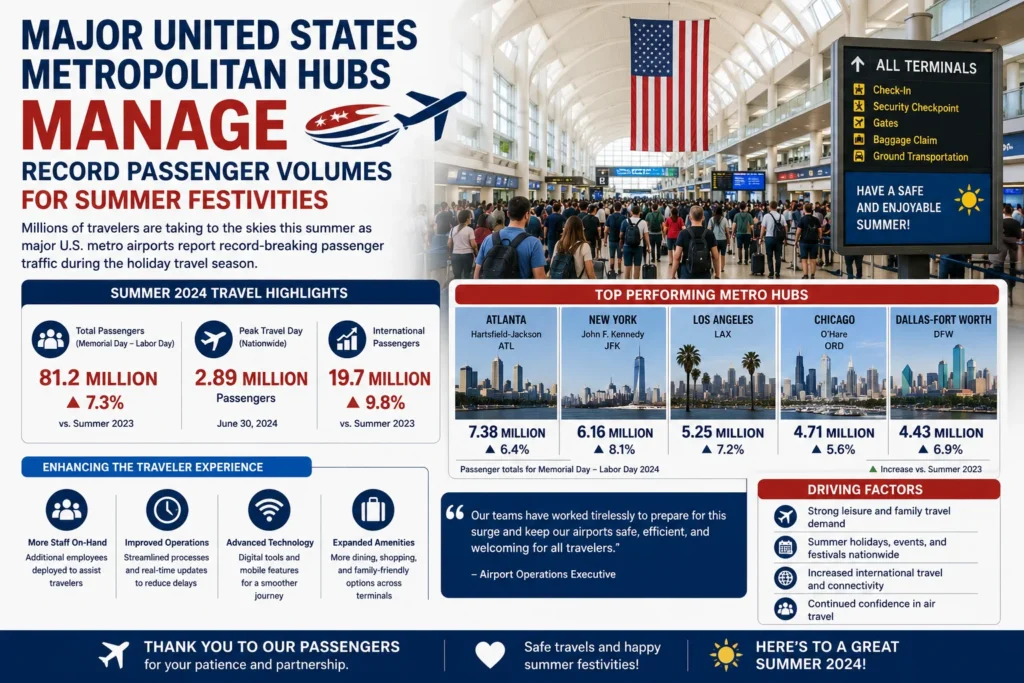
The landscape of seasonal air travel across the United States is experiencing an unprecedented shift in passenger distribution as major metropolitan areas handle robust summer travel patterns. According to localized travel data and metrics monitored by state tourism boards, high-profile cultural tourism events during the month of June have grown into highly influential economic drivers. Major international and domestic gateways in New York, California, Illinois, and Washington are recording a significant influx of travelers, testing the capacity of regional infrastructure and establishing these destinations as primary hubs for global visitor engagement.
The structural scaling of passenger demand during this period has introduced unique logistical dynamics for transportation networks. With millions of visitors coordinating travel schedules to participate in historic public gatherings, local transit systems, hospitality groups, and airport operators are adjusting resources to manage peak passenger volumes. Tourism frameworks—including state-level promotion bureaus and national initiatives like Visit The USA—actively highlight the economic vitality generated by these large-scale gatherings, which effectively rival international sporting events in total passenger turnout.
Detailed Performance Analysis Across Principal Transit Corridors
The concentration of summer arrivals remains centered around four primary states, each hosting historic, high-density public events that attract substantial cross-border traffic. Industry performance data outlines the specific regions managing the highest volume of inbound movements:
New York (Manhattan): Operating as a central focus for global inbound travel, New York City experiences a major surge in terminal traffic at John F. Kennedy International and LaGuardia airports. The historical significance of landmarks like Greenwich Village drives high room occupancy rates across the hospitality sector, as transcontinental travelers solidify bookings months in advance.
California (San Francisco & Los Angeles): The West Coast market benefits from a dual-center demand pattern. San Francisco’s historic corridors along Market Street and Los Angeles’ expansive entertainment districts in West Hollywood draw extensive international flight allocations, prompting carriers to optimize fleet operations to accommodate the heavy passenger flow.
Illinois (Chicago): As a central Midwest transit node, Chicago O’Hare International Airport experiences heightened operational activity. Local tourism statistics show that seasonal celebrations in neighborhoods like Northalsted generate substantial auxiliary revenue for local restaurants, museums, and regional transport providers.
Washington (Seattle): The Pacific Northwest records notable growth in regional arrivals, with downtown Seattle and Seattle Center drawing considerable volumes of domestic and Canadian cross-border travelers, expanding the typical summer tourism baseline.
Economic Yields and Infrastructure Adaptation
Financial indicators compiled by municipal tourism bureaus reveal that seasonal cultural gatherings provide critical economic stability for urban hospitality markets. The high volume of dedicated travelers translates directly into prolonged stays and increased average expenditure per visitor. This reliable revenue stream helps offset typical seasonal lulls in standard corporate travel, filling hotel room inventories and stabilizing premium transit routes during competitive summer pricing cycles.
However, the sheer density of these coordinated arrivals requires precise capacity management from airport ground crews, hospitality staff, and local municipal councils. To maintain seamless physical throughput, major airports are coordinating real-time updates across digital platforms to help passengers navigate busy terminal environments. Local transit authorities are also implementing specialized route management plans to ensure that elevated foot traffic around major event venues does not interrupt core city logistics.
Long-Term Destination Branding and Sustainable Mobility
Aviation and hospitality analysts note that the sustained popularity of experiential travel is reshaping how seasonal transit capacity is deployed. Modern travelers are increasingly prioritizing destinations that offer profound cultural, historical, or community significance. This behavioral shift allows independent municipal markets to successfully leverage localized heritage to future-proof their tourism sectors against wider macroeconomic fluctuations.
As major urban centers continue to expand their event calendars, the integration of advanced digital reservation frameworks and automated crowd-management systems remains vital to protecting public infrastructure from overcapacity. For international and domestic passengers navigating these busy corridors, official travel advisories emphasize the importance of early booking strategies and real-time schedule monitoring. By balancing high-yield economic expansion with disciplined operational planning, the primary tourism markets in the United States demonstrate how resilient infrastructure can successfully accommodate the world’s largest cultural gatherings.
For more travel news like this, keep reading Global Travel Wire