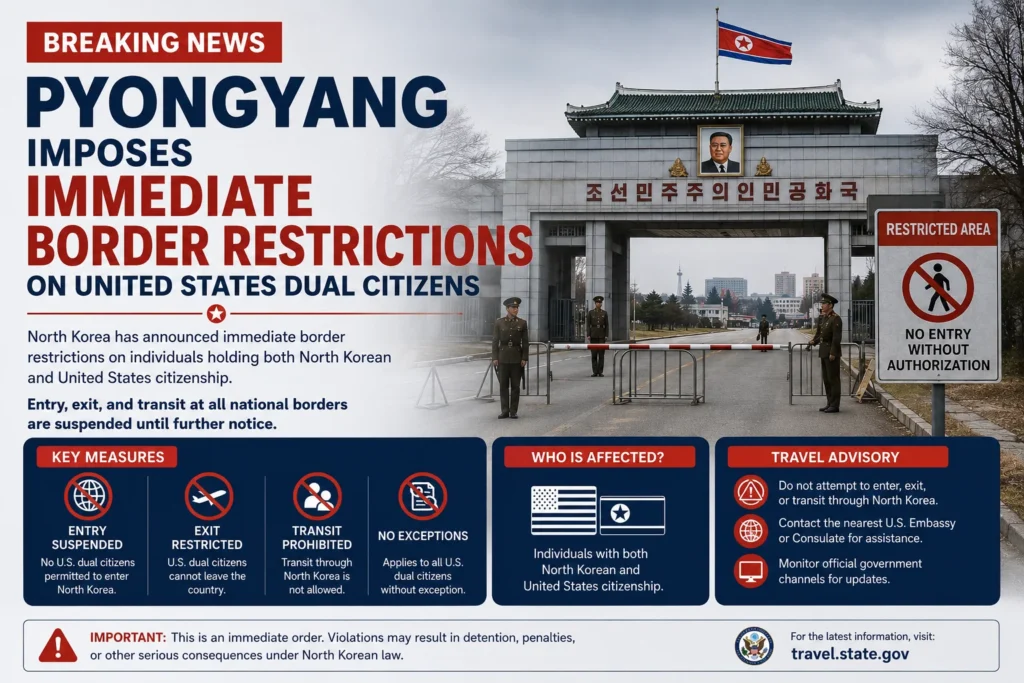
In an unexpected shift in regional border management, authorities in the Democratic People’s Republic of Korea have implemented strict international travel restrictions specifically targeting American dual nationals. According to formal procedural updates verified by specialized regional travel registries, Pyongyang has officially banned United States citizens who hold dual nationality from entering the country under any passport. This recent administrative directive represents a major policy reversal, effectively terminating a long-standing operational avenue that previously permitted individuals with secondary citizenships to visit the country.
The newly enacted ban is structured to apply across all primary travel classifications, encompassing visits intended for leisure tourism, regional commercial enterprise, or international sporting events. Official notifications from regional travel operators confirm that the security protocol has taken effect immediately. Moving forward, immigration officials and consulate staff will conduct comprehensive identity background checks during the entry visa approval sequence, deliberately screening all inbound applicants for any verified or historical links to United States citizenship. Individuals confirmed to possess American nationality alongside a secondary passport will face an immediate denial of entry clearance.
Closing Historical Passport Loopholes Along the Peninsula
The implementation of this administrative measure directly addresses a historical loophole utilized by specific travelers to navigate around previous diplomatic barriers. Since 2017, the United States Department of State has maintained a strict prohibition on the use of U.S. passports for transit to, in, or through the country, a safety mandate that federal authorities have renewed annually every August. However, prior to this recent border update, dual nationals frequently managed to legally visit the region by presenting secondary passports issued by nations that maintain formal diplomatic relations or friendly travel accords with Pyongyang.
This regulatory tightening significantly complicates the border landscape, particularly during a period when external access remains highly limited. Following the sweeping pandemic-era border closures initiated in 2020, general international tourism to the capital city and its surrounding provinces has remained suspended for nearly all global demographics. Currently, official immigration logs indicate that only verified tour groups originating from the Russian Federation are actively permitted entry for organized leisure tourism, rendering the new dual-citizenship scrutiny particularly impactful for incoming Russian visitors who hold secondary American or South Korean passports.
Continuous Fluidity and Recent Historic Shifts in Regional Tourism
The sudden introduction of these entry barriers marks another notable setback for regional tourism boards and international tour operators attempting to establish predictable transit lines. The local leisure sector has faced a volatile timeline over the past two financial quarters, characterized by brief periods of openness followed by abrupt administrative suspensions.
In February 2025, regional authorities briefly permitted Western travel groups to cross the border into the Rason Special Economic Zone, a specialized commercial district situated directly along the frontier with China. However, that experimental travel window was abruptly suspended just two weeks after its initial launch.
A similar pattern of shifting regulations occurred during the planning phases of major regional events. In May 2025, the capital successfully hosted the international marathon, an event that drew over 200 foreign runners and suggested a potential easing of border restrictions. Yet, despite that initial success, the organizing committee reversed course just one year later, issuing an abrupt cancellation of the 2026 race on short notice, citing unspecified domestic scheduling realignments.
While specific commercial channels have shown isolated signs of activity—such as the recent successful execution of the Spring International Trade Fair, which welcomed a specialized Western business delegation—expert advisors note that these highly insulated corporate events do not correlate with a broader reopening of the general leisure tourism framework.
Decentralized Visa Operations and Institutional Variations
Aviation and transit coordinators note that the execution of these updated border policies can vary depending on which internal administrative entity processes the entry paperwork. The state-run Korean International Travel Company, which stands as the oldest and most established travel enterprise in the region, enforces uniform screening guidelines. However, different domestic organizations manage specialized visa tracks for sports, corporate trade, and cultural exchange.
Because distinct entities maintain independent invitation protocols, certain state agencies may choose to immediately bar any applicant with ties to the United States, while alternative departments might handle applications on an isolated, case-by-case basis. Consequently, specialized travel operators have indicated that the entire regional border environment remains highly fluid, necessitating rigorous, real-time monitoring of visa approval metrics as diplomatic dynamics continue to shift.
With entry remaining heavily restricted for the vast majority of international passport holders, the sudden focus on identifying dual nationality emphasizes a systemic trend toward increased isolation. For global travel networks and regional stakeholders, these evolving legal constraints reinforce the reality that the future of travel along the northern half of the peninsula remains entirely subject to unpredictable security adjustments and rigid state directives.
For more travel news like this, keep reading Global Travel Wire