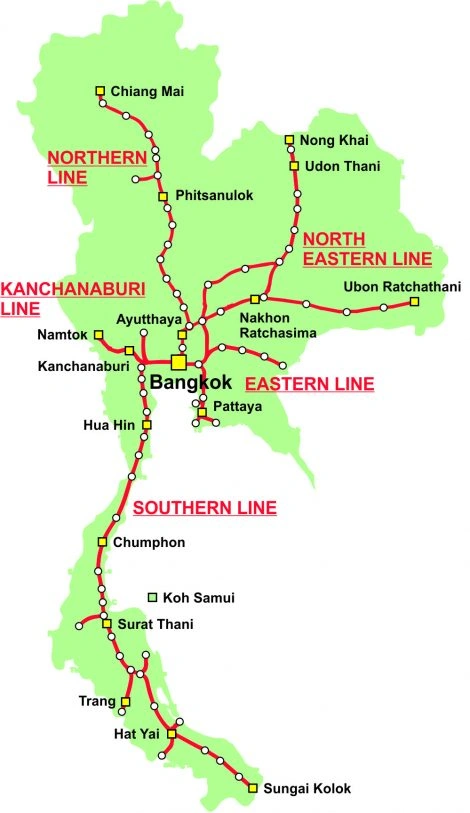
Thailand has begun opening its state-owned railway infrastructure to qualified private operators, marking a major shift in national transport policy and creating new opportunities for tourism trains, passenger services and freight movement across Southeast Asia.
The reform is being advanced through the State Railway of Thailand’s 2026 Network Statement, which provides operational information for companies seeking access to government-owned tracks. Instead of constructing separate railway systems, approved operators will be able to apply for train paths and pay regulated track-access charges.
Thailand’s railway infrastructure will remain under state ownership, while private companies may introduce services using their own rolling stock and operating models, subject to licensing, safety and timetable requirements.
The move is intended to improve the use of railway capacity created through years of dual-track construction, route upgrades and station development. It could also help Thailand diversify transport options for international visitors, domestic travellers, businesses and logistics providers.
Private Operators Gain Access to State Tracks
The new framework changes the traditional structure of Thailand’s national railway market, which has long been dominated by the State Railway of Thailand.
Under the emerging open-access model, qualified companies can seek permission to operate passenger, tourism or freight trains over existing tracks. Standardised access charges are expected to provide greater cost transparency, while track-sharing agreements may offer a faster route into the market than large public-private infrastructure partnerships.
Private operators will still need to comply with rail safety standards, licensing rules, rolling-stock requirements and operational procedures.
An independent mechanism for timetable allocation is expected to manage competing requests and help ensure that infrastructure capacity is distributed fairly. Passenger services, tourist trains and freight movements will need to be coordinated without disrupting existing state-operated schedules.
The system is designed to encourage competition while retaining public control over core national railway assets.
Tourism Trains Could Connect More Destinations
Tourism is likely to become one of the most visible beneficiaries of the reform.
Private companies may develop themed journeys, premium overnight services, regional sightseeing trains and destination-focused rail experiences linking Bangkok with cultural, coastal and rural tourism centres.
Thailand already has a diverse tourism geography extending from historic cities and mountain regions to beach destinations, national parks and border provinces. Expanded rail services could make some locations easier to reach without relying entirely on domestic flights, private vehicles or long-distance buses.
Specialised operators could introduce higher-end cabins, improved catering, multilingual guest services and packaged experiences connected with hotels, attractions and local communities.
Such services could support longer stays and spread visitor expenditure beyond established gateways. Railway tourism may also help less-visited destinations attract travellers seeking slower, more immersive journeys.
The reform could therefore strengthen Thailand’s position as a multimodal tourism hub, connecting rail with airports, ports, highways and urban transport systems.
Dual-Track Investment Creates Spare Capacity
Thailand has invested heavily in modernising and expanding its conventional railway network, particularly through dual-track projects intended to improve reliability and increase service frequency.
However, infrastructure growth has outpaced the availability of state-owned locomotives and carriages in some areas. This has left portions of the network with capacity that could potentially support additional services.
Allowing private operators to use those paths may generate greater value from public investment without requiring the government to finance every train or operating company.
More frequent passenger services could improve regional mobility, while tourism-focused trains may create demand during weekends and holiday periods. Private participation could also accelerate rolling-stock investment and introduce new service concepts.
The success of the model will depend on transparent charges, predictable timetable access and consistent safety enforcement.
Freight Operators Gain New Logistics Options
The reform also opens significant possibilities for rail freight.
Private logistics companies may use state tracks to move containers, agricultural products, manufactured goods and other cargo between industrial areas, ports and border corridors.
Increasing the share of freight carried by rail could reduce heavy truck traffic, lower road congestion and support more efficient supply chains. It may also strengthen Thailand’s role in regional trade as transport links expand toward neighbouring countries.
Rail freight is particularly important for long-distance and high-volume cargo, where predictable schedules and lower transport costs can improve competitiveness.
Closer integration between rail terminals, seaports and inland logistics centres could help Thailand attract investment in warehousing, distribution and cross-border commerce.
Reform Positions Thailand as Regional Rail Hub
Thailand’s open-access initiative reflects a wider transport strategy built around connectivity, sustainability and private investment.
The country is seeking to make better use of existing infrastructure while preparing for future passenger demand, expanding tourism and growing trade across mainland Southeast Asia.
Travellers may eventually benefit from more routes, improved onboard services and greater competition between operators. Hotels, attractions and regional destinations could gain from stronger rail access, while freight customers may receive new alternatives to road transport.
Implementation will require careful regulation, effective capacity management and strong coordination between public authorities and private companies.
Nevertheless, the reform represents a historic change in Thailand’s railway system. By retaining state ownership while permitting private operation, the country is creating a platform that could reshape tourism mobility, passenger choice and logistics growth for years to come.
For more travel news like this, keep reading Global Travel Wire