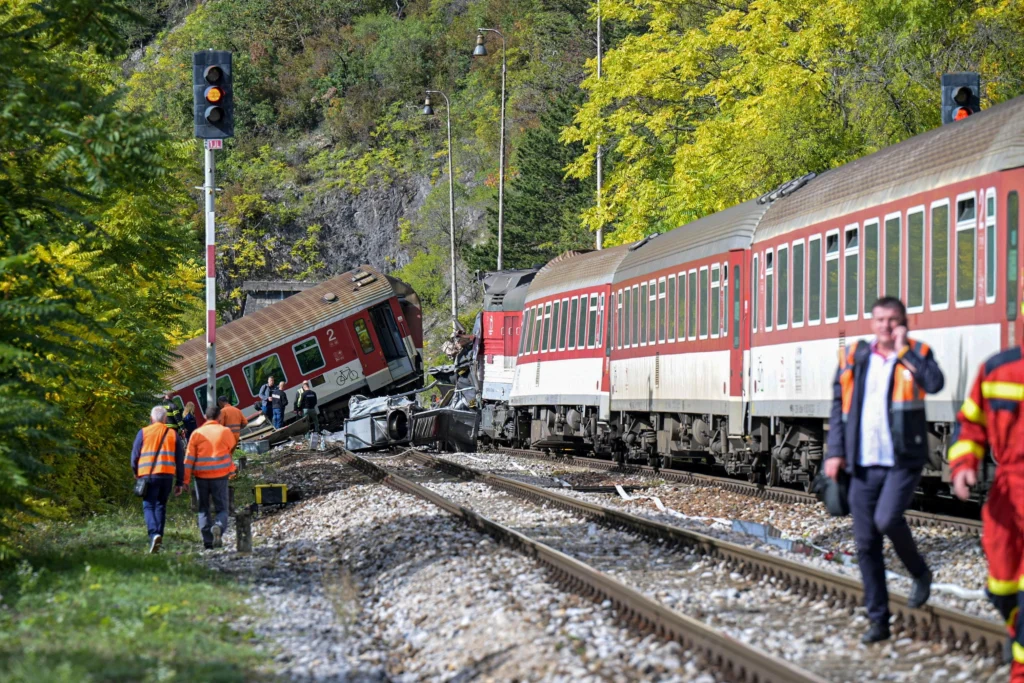
Slovakia has introduced preventive railway speed restrictions during periods of extreme heat, limiting trains to a maximum of 80 kilometres per hour on affected lines as infrastructure authorities respond to the growing threat of heat-related track deformation.
The measure took effect from June 27, 2026, and will apply throughout the summer whenever the Slovak Hydrometeorological Institute issues its highest, third-level temperature warning for individual districts. Restrictions operate between 10:00 and 21:00 on railway sections where normal speeds exceed 80 kilometres per hour.
The decision does not represent a network closure. Trains will continue operating, but passengers should expect delays as services reduce speed through high-risk districts.
The measure has immediate implications for tourists, commuters, conference delegates and tour operators relying on reliable rail connections between Bratislava, central Slovakia, mountain destinations and eastern cities. It also affects travellers making onward connections to airports, international trains, hotels and organised excursions.
Extreme Heat Raises Track Buckling Risk
Steel rails expand as temperatures increase, and the temperature of railway tracks can become significantly higher than the surrounding air.
Slovak railway guidance indicates that when air temperatures approach 40 degrees Celsius, rail surfaces can reach between 60 and 80 degrees. Such conditions increase compressive forces inside continuously welded rail and may cause the track to lose its stable alignment.
In severe cases, this can result in rail buckling, where sections of track shift horizontally or vertically. Any suspected deformation requires immediate inspection and may lead to temporary closure of the affected section until engineers confirm that it is safe.
Reducing train speeds lowers dynamic pressure on vulnerable infrastructure and gives drivers and control teams more operational margin. Railway authorities are also increasing inspections and monitoring track temperatures during the hottest hours.
Temperature patrols may begin when rail temperatures are expected to exceed 40 degrees or when air temperatures rise above 28 degrees. Some exposed sections also use reflective coatings intended to reduce solar heating of the rails.
Highest Heat Warnings Trigger Local Restrictions
The restrictions are activated by district rather than imposed across the entire country.
This means train performance may vary significantly during a single journey. A service could operate normally through one region before slowing after entering a district covered by a third-level warning.
The late-June heat episode brought exceptionally high temperatures and the strongest warning level to parts of Slovakia, prompting the first implementation of the new operating rule. Official forecasts warned of unusually intense conditions capable of approaching or breaking temperature records.
For passengers, this creates variable journey times rather than predictable nationwide disruption. Faster intercity routes are likely to experience the greatest impact because the reduction to 80 kilometres per hour represents a substantial change from normal corridor speeds.
Tourism Recovery Increases Commercial Exposure
The restrictions arrive as Slovakia’s visitor economy continues to strengthen.
Accommodation establishments hosted approximately 6.3 million guests during 2025, representing annual growth of more than 7 percent. Visitors generated 16.2 million overnight stays, an increase of 6.5 percent.
Tourism demand remained strong into 2026, with April setting a record for that month. More than 1.8 million guests stayed in Slovak accommodation establishments during the first four months of the year, around 10 percent more than during the corresponding period of 2025.
This growth means transport disruption now affects a larger network of hotels, attractions, destination-management companies, event venues and local transfer providers.
Rail plays an important role in connecting Bratislava with regional cities, spa destinations, cultural sites and the mountain tourism centres of northern Slovakia.
Bratislava Events Require Wider Travel Buffers
Business travel and meetings in Bratislava are especially exposed because delegates often combine international arrivals with fixed conference schedules, hotel check-ins and evening functions.
A moderate train delay may be manageable for independent tourists but can disrupt registration times, group transfers, technical visits and scheduled dining programmes.
Travel organisers should avoid tight rail-to-event connections during days covered by the highest heat warning. Morning departures offer a better option because the mandatory restriction begins at 10:00.
Tour operators should also add wider buffers to airport connections, cross-border rail transfers and group itineraries involving Žilina, Prešov or the High Tatras.
Hotels and event venues may need flexible arrival arrangements when guests are travelling on affected long-distance services.
Climate Resilience Becomes Essential for Rail Tourism
Slovakia’s response reflects a wider challenge across European transport networks.
Extreme heat is increasingly becoming an operational planning issue rather than an occasional weather event. Railway systems must now combine infrastructure maintenance with real-time temperature monitoring, passenger communication and flexible scheduling.
For travellers, the 80-kilometre-per-hour restriction may extend journey times, but it is a preventive safety intervention intended to keep trains running while protecting passengers and railway infrastructure.
For Slovakia’s tourism industry, the immediate priority is clear communication and realistic itinerary planning.
In the longer term, the country will need climate-resilient track systems, improved monitoring technology and operating strategies capable of supporting visitor growth during increasingly intense European summers.
For more travel news like this, keep reading Global Travel Wire