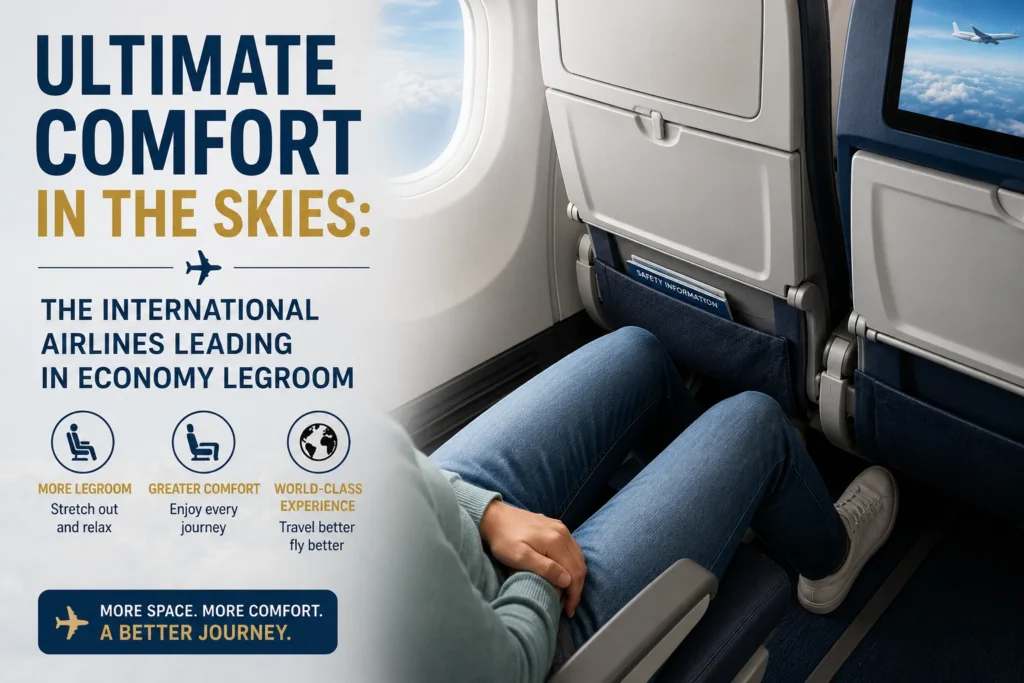
Long-haul air travel frequently presents a challenge for passenger comfort, with shrinking seat space remaining a primary concern for international flyers. Global industry trends show that the average economy class seat pitch has gradually declined over recent decades, narrowing the physical space between passengers. However, data from official aircraft certifications and fleet specifications reveal that several prominent international carriers are actively countering this trend by expanding space and redefining airline economy comfort.
Official specifications highlight that three major global carriers are leading the industry by providing a generous 34 inches of seat pitch in their standard economy cabins. Japan Airlines, All Nippon Airways, and Emirates have consistently structured specific long-haul aircraft layouts to emphasize personal space, demonstrating that the layout of economy cabins can significantly enhance the traveler experience.
Innovations in Japanese Aviation: Prioritizing Passenger Space
Japan Airlines has set a high benchmark for standard cabin configurations through its specialized seating designs. According to official fleet specifications, the carrier provides a 34-inch seat pitch on many of its long-haul international routes utilizing Boeing 787, Boeing 777-300ER, and Boeing 767-300ER aircraft. Rather than adopting the standard dense configurations seen across the industry, the airline operates an eight-abreast layout on its Boeing 787 fleet, contrasting with the typical nine-seat rows. This design choice directly yields broader individual seat widths alongside integrated power ports and device holders, optimizing the environment for long-distance international journeys.
Similarly, fellow Japanese carrier All Nippon Airways continues to implement substantial updates to its passenger cabins. Official statements from the airline group reveal an extensive fleet modernization program featuring advanced ergonomic seats engineered by seating manufacturers. The upgraded economy class cabins boast a seat pitch ranging between 33 and 34 inches, complemented by a redesigned knee-clearance area that provides an additional inch of localized space. These new economy designs also incorporate a significantly increased recline capability and a lightweight touch-screen monitor, establishing a highly competitive baseline for long-haul traveler ergonomics.
Middle Eastern Luxury and North American Standouts
Emirates, based out of Dubai, matches these dimensions by providing up to 34 inches of pitch in the economy sections of its double-decker Airbus A380 aircraft. According to the airline’s official cabin specifications, these configurations feature an 18-inch seat width and a distinct five-degree recline. The generous geometry of the massive double-decker aircraft enables the carrier to maintain these spacious conditions across the entire lower deck, distinguishing its standard long-haul product in the international market.
While international carriers dominate the highest tier of economy spacing, North American operators showcase a wider variation in standard cabin dimensions. Official fleet data identifies JetBlue Airways as a domestic leader in standard seating space, providing an average pitch of 32.3 inches. This places the carrier ahead of several notable global operators, including Hong Kong-based Cathay Pacific, which maintains a standard 32-inch pitch across much of its long-haul fleet. Conversely, ultra-low-cost operators present a much tighter alternative, with regional regulatory filings showing some carriers operating configurations with a minimal 28 inches of seat pitch.
Balancing Premium Economy Seating and Fleet Sustainability
The ongoing focus on expanding standard cabin dimensions coincides with a broader international push toward advanced premium economy seating options. Many international airlines are utilizing new materials and structural tech to slim down seatbacks. This engineering approach allows carriers to maximize legroom without adding unnecessary weight to the airframe, directly supporting weight-reduction goals and managing fuel burn efficiently.
As global passenger demand for comfortable long-distance travel continues to rise, these official fleet dimensions show that strategic cabin design remains a crucial differentiator for international airlines. By maintaining a higher standard for seat pitch, these leading carriers demonstrate how modern cabin layouts can preserve passenger comfort even within standard economy classes.
For more travel news like this, keep reading Global Travel Wire