Vietnam is reshaping rail tourism by transforming selected train services into immersive cultural journeys where regional food, traditional music, storytelling and dramatic landscapes become part of the travel experience.
Rather than treating trains purely as transport, tourism authorities and railway operators are developing services that introduce passengers to the identity of each destination before they arrive. From Hanoi’s heritage-inspired carriages to the mountain-and-coast route between Hue and Da Nang, the country’s railways are emerging as attractions in their own right.
The strategy reflects growing traveller interest in slower, experience-led tourism. It also gives Vietnam an opportunity to connect major destinations more sustainably while encouraging visitors to spend more time exploring regional culture, hospitality and local businesses.
Hanoi’s Five Gates Train Becomes a Moving Museum
One of the most distinctive additions is Hanoi’s Five Gates Heritage Train, which connects the capital with the historic Kinh Bac region.
The train has been designed as a cultural experience inspired by the gates of ancient Thang Long. Its themed carriages use architectural details, folk art, historic imagery and nostalgic interiors to reflect different periods of Hanoi’s development.
Passengers encounter elements inspired by Long Bien Bridge, the Red River, colonial architecture and traditional Dong Ho paintings. An open viewing carriage allows travellers to experience the landscape more directly while creating a memorable photography and sightseeing space.
Traditional xam folk music, contemporary performances and multilingual storytelling add another layer to the journey. Seasonal Hanoi dishes, including regional favourites and traditional snacks, help connect the onboard experience with the capital’s culinary heritage.
With themed interiors and cultural programming, the train functions more like a living museum than a conventional passenger service.
Hanoi–Hai Phong Route Celebrates Coastal Identity
Rail tourism is also expanding between Hanoi and Hai Phong through the Red Flamboyant, or Hoa Phuong Do, train experience.
The service reflects Hai Phong’s identity through colourful interiors and destination-focused design. The flamboyant flower has long been associated with the port city, and its visual influence helps create a clear sense of arrival before passengers leave the train.
Food and refreshments inspired by regional flavours strengthen the connection between the journey and the destination. The route gives travellers an alternative way to experience Hai Phong’s waterfront character, urban attractions and coastal cuisine.
For tourism businesses, improved rail appeal can support weekend travel, short city breaks and domestic visitor movement between two of northern Vietnam’s major urban centres.
Hue to Da Nang Delivers Mountains, Sea and Music
The Central Heritage Connection between Hue and Da Nang is among Vietnam’s most visually impressive rail journeys.
Operating through the Hai Van Pass, the route takes travellers between forested mountains and the coastline, offering views across Lang Co Bay and the central Vietnamese landscape. The journey has become a tourism product in itself rather than simply a connection between two cities.
Passengers can experience traditional performances and regional music during selected journeys. The train also pauses at Lang Co Station, allowing travellers time to admire the bay and capture photographs.
The route connects two major tourism centres while supporting wider travel through central Vietnam, including potential extensions towards Hoi An and surrounding cultural destinations.
By combining natural scenery with music and local hospitality, the service gives visitors a deeper introduction to central Vietnam’s identity.
Overnight Rail Adds Drama to the Sapa Journey
Northern Vietnam offers a different type of rail experience through overnight services between Hanoi and Lao Cai, the main rail gateway for Sapa.
Tourist sleeper trains provide cabins, bedding and a relaxed overnight journey that allows passengers to leave the capital in the evening and continue towards the highlands after arrival in Lao Cai.
The transition from city surroundings to northern valleys and mountain terrain gives the journey a strong sense of progression. Travellers heading to Sapa can combine rail travel with rice terraces, ethnic minority communities, cool mountain weather and trekking experiences.
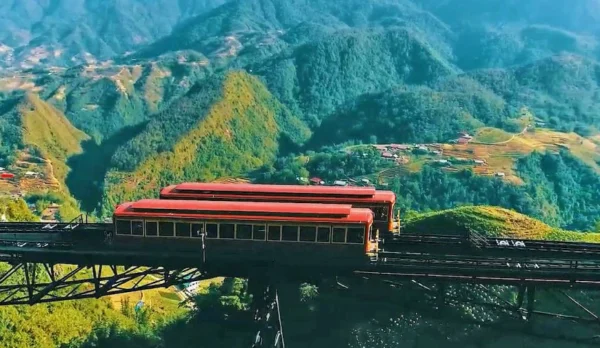
The railway also complements the Muong Hoa mountain train near Sapa, which connects visitors with upland scenery and tourism areas closer to the mountain town.
Food and Music Strengthen Destination Storytelling
Vietnam’s heritage rail strategy works because each route reflects the place it serves.
Hanoi’s services emphasise history, folk music and traditional cuisine. Hai Phong’s train highlights local identity and coastal character. The Hue–Da Nang route combines royal and folk culture with some of the country’s most dramatic natural scenery.
This approach allows passengers to understand a destination through several senses. They see the landscape, hear local music, taste regional food and learn stories linked to the communities along the railway.
It also creates opportunities for artists, musicians, food producers and cultural organisations to participate directly in tourism.
Heritage Rail Supports Sustainable Tourism Growth
Rail travel can help Vietnam distribute visitors more widely while reducing dependence on road transport for certain routes.
Tourists who might otherwise fly or arrange private transfers can use trains to connect major cities, coastal areas and heritage destinations. This can support lower-impact travel while bringing spending to stations, local restaurants, hotels and attractions.
The development of railway tourism also aligns with the rise of slow travel, where the journey is valued as much as the destination.
Vietnam Builds a Distinctive Rail Tourism Identity
Vietnam’s heritage trains demonstrate how existing transport infrastructure can be turned into memorable visitor experiences.
By combining culture, scenery, food and storytelling, the country is creating journeys that feel closely connected to each region. These trains are not simply carrying travellers across Vietnam; they are introducing the country’s identity one landscape, performance and local flavour at a time.
As more routes adopt this model, heritage rail could become one of Vietnam’s most recognisable and sustainable tourism experiences.
For more travel news like this, keep reading Global Travel Wire