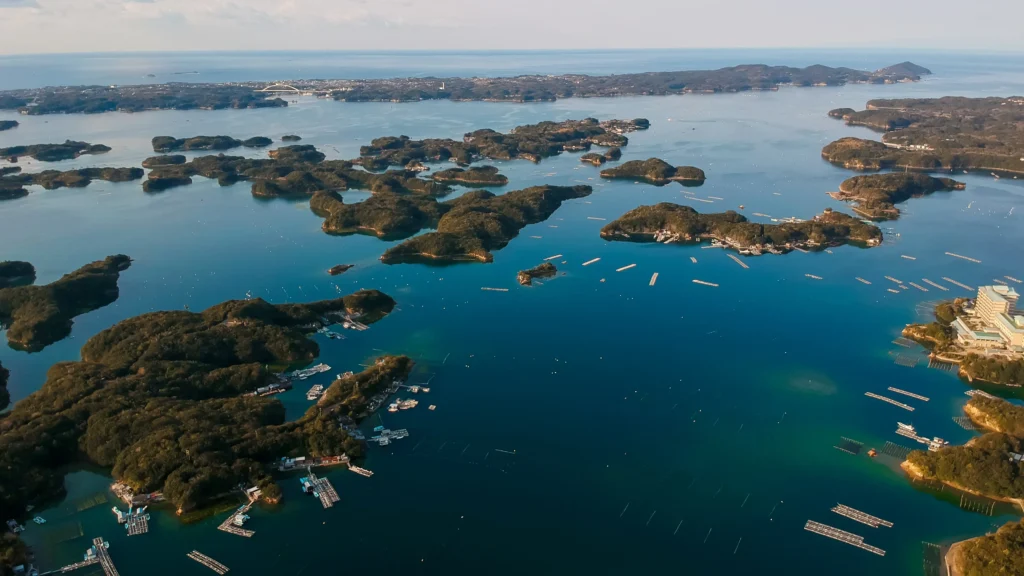
Japan is testing an advanced digital healthcare model across three inhabited islands in Toba, creating an unusual example of how artificial intelligence, remote medicine and connected health technology could indirectly strengthen the future of tourism in ageing island communities.
The Ministry of Land, Infrastructure, Transport and Tourism selected Kamishima, Toshijima and Sugashima in Mie Prefecture for its fiscal 2026 Smart Island demonstration programme. The initiative is designed to address healthcare challenges facing isolated communities through digital technology.
The programme comes at an important moment for the wider Ise-Shima tourism region. Toba recorded 4,243,565 visitors during 2025, including more than 1.54 million overnight stays, demonstrating the substantial visitor economy supported by the city and surrounding islands.
The supplied project information identifies remote dentistry, wearable-generated Personal Health Records, artificial intelligence and cloud connectivity among the technologies being tested.
Remote healthcare reaches Japan’s inhabited islands
The Toba demonstration goes considerably further than a conventional video consultation.
Under the planned model, oral images can be captured on the islands and assessed remotely by mainland dental professionals. Wearable devices are intended to collect information such as heart rate, activity, sleep and blood-oxygen levels.
AI analysis could then help identify physical changes, declining activity or signs that additional consultation may be required.
Cloud-based information sharing is intended to improve continuity between island residents and healthcare professionals located elsewhere.
For communities dependent on ferries, reducing the need to move patients or specialists across the water for routine services could become particularly valuable.
Tourism depends on healthy resident communities
The project is designed for residents rather than tourists. It should therefore not be presented as a new medical service available to international visitors.
Its tourism importance is more indirect.
Small island destinations depend heavily on permanent residents to operate accommodation, restaurants, ferries, fisheries, cultural activities and other visitor services. When essential services deteriorate, maintaining the local population becomes harder.
Kamishima had only 255 residents at the beginning of 2026, while Toshijima had about 1,590 and Sugashima around 427, according to the supplied destination research.
These figures show why healthcare resilience can ultimately become part of destination resilience.
Toba visitor economy gives project wider significance
Toba is far from a marginal tourism destination.
Official city statistics show more than 4.24 million visitors in 2025. The municipality also recorded 117 accommodation establishments with combined capacity approaching 12,000 guests.
Its offshore islands offer walking, maritime landscapes, fishing culture, ama diving traditions and small-community experiences that differ sharply from large Japanese urban destinations.
However, island tourism remains dependent on marine transportation.
Municipal ferries connect the islands with Toba, meaning weather, seasonal congestion and operating conditions can influence access. Digital healthcare cannot remove those geographical challenges, but it could reduce selected dependencies on physical travel for routine healthcare.
Ise prepares for the 2033 Shikinen Sengu
The development becomes particularly significant when considered alongside neighbouring Ise.
Ise City adopted a new Tourism Promotion Basic Plan covering fiscal 2026 through 2029 while explicitly recognising preparations connected with the 63rd Shikinen Sengu at Ise Jingu.
The Shikinen Sengu, scheduled for 2033, is the ceremonial rebuilding and renewal cycle associated with Ise Jingu and represents one of Japan’s most important religious and cultural traditions.
Ise’s tourism planning period is therefore becoming part of a longer preparation cycle for future visitor demand.
That creates potential benefits for surrounding destinations because travellers visiting Ise frequently continue into the wider Ise-Shima region.
The supplied tourism research shows that 17.8% of respondents to an Ise visitor survey named Toba as another destination they had visited or planned to visit, demonstrating measurable tourism movement between the two areas.
Smart destinations need more than visitor apps
Much of modern tourism technology focuses on booking platforms, digital payments, translation, smart tickets and AI itinerary tools.
Toba highlights another possibility.
Technology can also strengthen the underlying communities that make tourism possible.
Japan’s Smart Island programme is specifically intended to use ICT and other technologies to address structural challenges affecting remote islands. MLIT has selected projects covering healthcare, public services and elderly care across different Japanese island communities in 2026.
If successful, the approach could become relevant to other rural and island destinations facing population decline and shortages of specialised workers.
Japan tests a new model of destination resilience
Toba’s experiment should not be confused with medical tourism.
Instead, it represents civic technology that could indirectly protect tourism by helping small communities retain essential services.
As Ise-Shima prepares for the longer tourism cycle leading toward the 2033 Shikinen Sengu, infrastructure questions will become increasingly important.
Hotels, ferries and attractions remain essential, but healthcare, communications and community resilience may prove equally important for smaller destinations.
Japan’s Smart Island experiment therefore offers a broader lesson for global tourism: some of the most important technologies shaping future destinations may be systems travellers never directly see.
If digital healthcare helps island communities remain viable, Toba could demonstrate that the next generation of smart tourism infrastructure begins not with the visitor, but with the people who make the destination possible.
For more travel news like this, keep reading Global Travel Wire