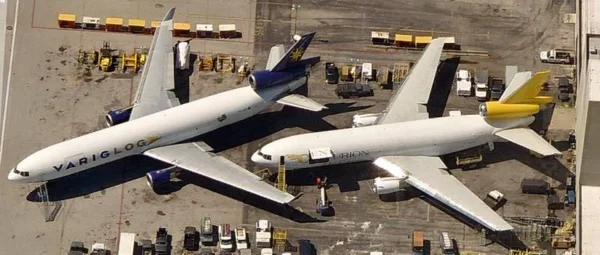
The transition from the McDonnell Douglas DC-10 to the MD-11 marked one of the most important technological shifts in long-haul commercial aviation, changing how aircraft were flown, managed and experienced by travelers.
Although the two widebody trijets shared a recognizable three-engine silhouette, the MD-11 was far more than a stretched successor. It introduced advanced cockpit automation, improved aerodynamics, more efficient engines and greater range, while reducing the number of pilots required to operate the aircraft.
For passengers, these developments helped airlines open longer intercontinental routes and improve operational efficiency. For flight crews, however, the change created a completely different working environment that demanded new skills and greater understanding of automation.
The DC-10 Established the Widebody Trijet Era
The DC-10 entered service during a period when international air travel was expanding rapidly and airlines required aircraft capable of carrying large passenger numbers across oceans.
Its three-engine configuration offered airlines a balance between the capacity of a Boeing 747 and the smaller size of early twin-engine aircraft. The DC-10 became a familiar sight on routes connecting North America, Europe, Asia and the Pacific.
Inside the cockpit, the aircraft reflected the technology of its era. Analog instruments, mechanical controls and complex fuel, hydraulic and electrical systems required a three-person flight crew consisting of a captain, first officer and flight engineer.
The flight engineer monitored aircraft systems from a dedicated panel, managed fuel distribution and responded to technical issues while the pilots concentrated on navigation and aircraft control.
MD-11 Automation Transformed the Cockpit
When the MD-11 was developed, McDonnell Douglas replaced much of the DC-10’s analog environment with an Advanced Common Flightdeck.
Large electronic displays consolidated flight, navigation and systems information, while computerized monitoring reduced the need for continuous manual intervention. This allowed the MD-11 to operate with two pilots instead of three, removing the traditional flight engineer position.
Automated systems could balance fuel, monitor hydraulic and electrical performance and alert pilots when corrective action was required. Flight management computers also improved navigation, performance calculation and fuel planning.
The change helped airlines reduce crew costs and standardize long-haul operations. However, it also transferred more responsibility to the captain and first officer, who had to monitor increasingly complex software while remaining prepared to take manual control.
Smaller Tail Changed Aircraft Handling
One of the most significant differences between the two aircraft involved the MD-11’s aerodynamic design.
The DC-10 possessed stronger natural pitch stability and was generally regarded as predictable during manual flight. Its larger horizontal stabilizer helped resist sudden changes in nose attitude caused by turbulence or pilot inputs.
The MD-11 used a smaller tailplane to reduce weight and aerodynamic drag. Fuel could also be transferred toward the tail to move the center of gravity rearward during cruise, improving efficiency.
These changes contributed to lower fuel consumption but made the MD-11 more sensitive in pitch. Pilots needed to use carefully measured control inputs, particularly during approach and landing.
A Longitudinal Stability Augmentation System helped compensate by providing automatic pitch corrections and damping unwanted movement. The aircraft therefore relied more heavily on computers to deliver the stable handling characteristics that the DC-10 achieved naturally through its larger aerodynamic surfaces.
Engines Delivered More Power and Efficiency
The DC-10 used several engine types over its production life, including versions of the General Electric CF6 and Pratt & Whitney JT9D.
These early high-bypass turbofan engines were powerful for their time but required crews to anticipate thrust changes carefully. Engine response and fuel management were more dependent on manual techniques than in later aircraft.
The MD-11 introduced newer General Electric CF6-80C2 and Pratt & Whitney PW4000 engines. These powerplants offered increased thrust, improved fuel efficiency and more sophisticated digital control.
Full Authority Digital Engine Control systems managed engine operation more precisely, helping produce smoother thrust changes and reducing pilot workload. The additional power supported heavier takeoff weights, longer routes and improved climb performance.
Winglets Extended Global Route Possibilities
The MD-11 was visibly longer than the DC-10 and incorporated distinctive winglets above and below each wingtip.
Winglets reduce the drag created by wingtip vortices, improving aerodynamic efficiency and helping an aircraft fly farther with less fuel. Their use reflected wider aerospace research into reducing operating costs and increasing aircraft range.
Combined with more efficient engines, increased fuel capacity and refined aerodynamics, the MD-11 could operate significantly longer routes than many DC-10 variants.
For travelers, this meant airlines could offer more nonstop intercontinental services, reducing the need for refueling stops and expanding links between distant tourism and business markets.
Why the Evolution Still Matters
Passenger service by both aircraft types has largely disappeared as airlines shift toward modern twin-engine jets such as the Boeing 777, Boeing 787 and Airbus A350.
Improved engine reliability and extended twin-engine operating approvals have allowed two-engine aircraft to perform routes that once favored trijets, while consuming less fuel and requiring lower maintenance costs.
The MD-11 nevertheless continued for years as a major cargo aircraft, where its large capacity and long range remained valuable. Regulatory inspections, maintenance requirements and airworthiness directives continue to shape the operation of surviving freighters.
The evolution from the DC-10 to the MD-11 still matters because it demonstrates how aviation manufacturers balanced efficiency, automation and flight handling during a critical period of technological change.
Many principles introduced or advanced through the MD-11—including two-pilot glass cockpits, automated system management, digital engine controls and aerodynamic drag reduction—are now standard across modern long-haul fleets.
The two legendary trijets may no longer dominate passenger airports, but their influence remains present in the aircraft carrying travelers around the world today.
For more travel news like this, keep reading Global Travel Wire