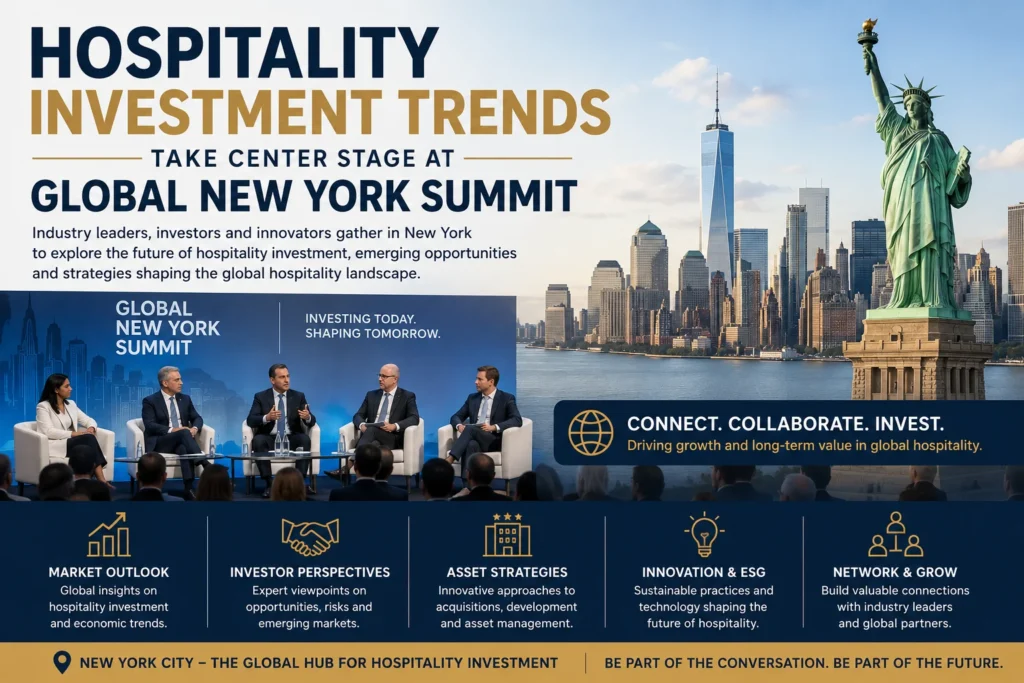
The international travel and lodging sector is undergoing a powerful structural shift, moving from a period of market stabilization into a phase of high-value capital allocation. At the 48th Annual NYU International Hospitality Investment Forum, held at the New York Marriott Marquis, leading institutional investors, corporate owners, and hospitality executives gathered to dissect the economic and operational realities defining the current travel landscape.
Official forum insights reveal that despite minor macroeconomic headwinds experienced late last year, the tourism and hospitality industries are reasserting their resilience. Fueled by strong consumer demand for upscale experiences and a narrowing gap between buyers and sellers, deal-making and strategic property redevelopments are moving forward with renewed velocity.
Premium Portfolios Outpace Tiers Amid Evolving Guest Preferences
A primary takeaway from the executive panels was the stark performance divergence between luxury resort assets and the lower-tier lodging segments. Verified industry benchmarks compiled by international real estate trackers indicate that revenue per available room has climbed significantly in the first half of this year, setting absolute performance records for premium accommodations. Affluent travelers are consistently prioritizing leisure travel, luxury excursions, and group family experiences, insulating high-end properties from the broader cost-conscious adjustments affecting select-service and economy spaces.
This sustained demand coincides with a profound evolution in consumer expectations. Industry leadership notes that modern travelers have notably gravitated toward informal luxury. Rather than desiring rigid, traditional fine-dining environments or formal dress requirements, guests are demanding a relaxed and casual atmosphere that refuses to compromise on an elevated caliber of amenities and highly personalized service.
Concurrently, operators are observing a widespread trend of decision-fatigue among upscale travelers. While past hospitality strategies focused heavily on providing guests with a dizzying array of custom selections, modern premium travelers prefer an informed, prescriptive level of service. Guests increasingly favor curated, expert recommendations tailored to their lifestyle over navigating dozens of independent variables during their stay.
Narrowing Capital Gaps Mobilize the Hotel Transaction Pipeline
The transaction landscape is preparing for a substantial wave of activity in the second half of this year due to systemic shifts in the real estate capital markets. For several consecutive quarters, institutional owners held onto major hospitality properties beyond their traditional investment timelines. However, financial analysts point out that a massive wall of debt recapitalization is approaching, necessitating asset monetization for groups lacking the balance sheet or corporate appetite to fund expensive property improvement plans.
A major catalyst driving current negotiations is the dramatic narrowing of the bid-ask gap between hotel buyers and sellers. Where the spread between valuation expectations was previously separated by as much as twenty percent, current market transactions are coalescing around a manageable ten percent margin, with some competitive entities narrowing the spread down to five percent.
Because of this stabilization, major management firms are aggressively reviewing pipeline opportunities. Rather than looking for deeply distressed real estate, buyers are targeting well-located properties that present clear opportunities for operational enhancement, structural modernizations, or soft-goods guestroom renovations to capture regional tourism demand.
Talent Acquisition and Smart Technology Revolutionize Operations
On the property level, execution and human capital remain the bedrock of sustainable competitive advantage. Industry leaders emphasized that placing highly qualified general managers at individual properties is the single most critical factor in cultivating a premium operational culture. While staffing across various geographic markets historically represented a significant logistical pain point, data shows that focused, top-down recruitment initiatives have stabilized workforce turnover from coast to coast.
To optimize workforce efficiency and mitigate ongoing labor constraints, forward-thinking hospitality groups are carefully integrating artificial intelligence into their guest-facing and backend systems. Initial implementations have yielded substantial success, particularly within specialized customer service environments.
Official operational reports highlight that automated platforms deployed within high-volume property call centers are successfully managing thousands of routine customer inquiries simultaneously. By utilizing technology to address standardized guest questions regarding reservation logistics, amenities, and local travel information, customer satisfaction scores have improved by nearly twenty percent. This technological buffer allows human personnel to focus entirely on intricate, high-touch guest interactions.
Hospitality executives maintain a measured and deliberate approach to future technology rollouts, emphasizing that artificial intelligence must serve as a monitored support tool rather than a replacement for authentic hospitality, ensuring that technology elevates rather than disrupts the human-centric guest experience.
For more travel news like this, keep reading Global Travel Wire