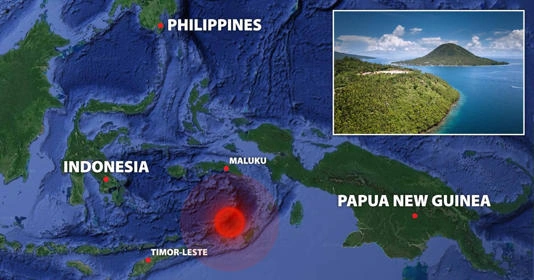
Indonesia’s North Maluku tourism corridor entered a short-term operational monitoring phase on Friday after a magnitude 6.2 tectonic earthquake struck near West Halmahera, prompting travel operators to check hotels, roads, ports, boats and local transport services across the affected island region.
Indonesia’s Meteorology, Climatology and Geophysics Agency confirmed that the earthquake occurred at 09:31:29 Western Indonesian Time on July 3, 2026. BMKG’s updated analysis placed the epicentre at 1.93 degrees north and 127.42 degrees east, around 56 kilometres southwest of Doi Island, at a depth of 104 kilometres.
Most importantly for coastal tourism, official modelling determined that the earthquake had no tsunami potential.
The finding reduces the likelihood of widespread coastal evacuations, port closures and major disruption to marine itineraries. However, tourism companies are still being encouraged to verify local infrastructure before moving guests through Halmahera, Ternate, Tidore, Sanana, Morotai and surrounding island destinations.
Tremors Felt Across Key North Maluku Destinations
BMKG recorded the strongest reported shaking at intensity III to IV on the Modified Mercalli Intensity scale in North Halmahera.
Tremors were also felt at intensity III in Ternate, Tidore, Sanana and Morotai. At that level, vibrations may be clearly noticed indoors and can feel similar to the movement caused by a passing heavy vehicle.
These destinations support specialised tourism products including diving, island hopping, heritage travel, nature tourism, coastal holidays and small-group adventure programmes.
The earthquake was classified as a medium-depth event caused by rock deformation within the Maluku Sea plate. BMKG advised communities to remain calm, avoid damaged or cracked buildings and stay alert for possible aftershocks.
No Tsunami Warning Helps Protect Coastal Travel Confidence
The absence of a tsunami threat is the most reassuring development for tourism businesses operating around North Maluku’s coast.
Many regional itineraries depend on ferries, small boats, jetties and short sea crossings. A tsunami warning could have disrupted harbour operations, forced shoreline evacuations and caused widespread cancellations across island programmes.
Instead, operators can focus on controlled inspections rather than emergency shutdowns.
Hotels and destination management companies should still check waterfront structures, piers, stairways, walls, roofs, power systems and emergency exits. Boat operators should confirm harbour access, vessel condition and passenger-safety equipment before departure.
No-tsunami status should therefore be treated as an important reassurance point, but not as a substitute for local inspection.
Ternate Airport Remains Central to Regional Access
Ternate is one of the most important gateways for travel across North Maluku.
Sultan Babullah Airport serves as a major domestic entry point for passengers continuing towards Halmahera, Tidore and nearby islands. Travellers with air-inclusive itineraries should reconfirm flight schedules, airport transfers and onward sea connections before departure.
The earthquake does not represent a nationwide tourism disruption, and Indonesia’s principal destinations, including Bali, Jakarta, Yogyakarta, Lombok and Labuan Bajo, remain geographically separate from the immediate monitoring zone.
This distinction is important for travel agents. Advisories should focus on the affected province rather than creating unnecessary concern about the entire Indonesian tourism market.
Hotels and Tour Operators Begin Supplier Verification
The immediate priority for tourism companies is confirming that individual services remain safe and operational.
Hotels should inspect guest rooms, reception areas, kitchens, lifts, stairways and external walls. Ground transport providers need to verify roads, bridges and transfer routes, particularly in more remote areas.
Marine operators should check jetties, boarding points and weather conditions before island departures. Dive companies should also confirm access to equipment facilities, boats and coastal infrastructure.
Group tours require particular attention because one disrupted transfer can affect an entire itinerary. Operators handling corporate travel, research teams, educational groups or incentive programmes should request clear operational confirmation from every supplier.
Adventure Travel Requires Additional Hazard Awareness
North Maluku sits within one of Indonesia’s most active geological regions, meaning earthquake monitoring must be combined with wider awareness of volcanic and terrain-related risks.
Adventure travellers should follow official restrictions around volcanic areas and avoid closed routes. Remote trekking, mountain and volcano-linked itineraries require separate safety assessments from urban stays or coastal resort visits.
Operators should not assume that every tourism product faces the same level of exposure. A hotel stay in Ternate, a boat journey to Tidore and a remote trek in Halmahera each require different checks.
Local Impact Expected to Remain Contained
The commercial impact is likely to remain localised if infrastructure checks confirm normal operations and no significant aftershocks occur.
North Maluku’s tourism economy is smaller than Indonesia’s major visitor markets, making local hotels, guides and transport providers more sensitive to cancellations. Clear communication can therefore protect both traveller safety and regional livelihoods.
Travel companies should avoid blanket cancellations while continuing to provide factual updates based on official information.
The earthquake is expected to remain a regional operational event rather than a national tourism setback. With BMKG confirming no tsunami potential, the next phase will depend on rapid supplier inspections, reliable transport updates and calm communication with travellers across Halmahera, Ternate, Tidore, Sanana and Morotai.
For more travel news like this, keep reading Global Travel Wire