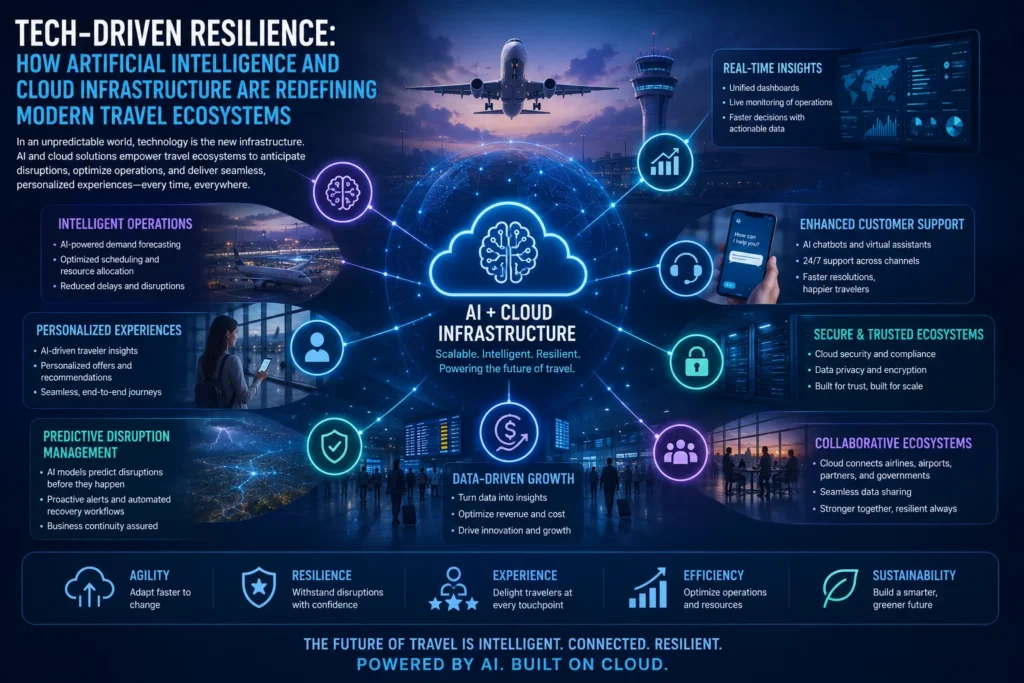
The global travel and tourism sector is demonstrating remarkable structural resilience, maintaining its position as one of the world’s most significant employers despite ongoing headwinds from geopolitical shifts and macroeconomic pressures. Historically, the hospitality and aviation markets have shown an ability to rebound rapidly from localized downturns. However, as traveler volumes continue to climb toward record peaks, the primary challenge facing regional tourism boards and international transport networks is no longer just predicting demand, but optimizing existing frameworks to handle larger crowds without systemic friction.
According to data sets published by global travel technology orchestrators, including the comprehensive Amadeus annual performance review, the industry’s strategy is shifting decisively from physical expansion toward digital modernization. International flight paths and terminal hubs are actively integrating automated solutions to remove traditional operational pain points, such as prolonged queuing at border checkpoints and baggage terminals. Rather than reducing human engagement, this structural transition relies heavily on the concept of workforce augmentation in travel. By deploying predictive software layers to manage repetitive administrative data, transport networks are designed to increase the capabilities of frontline service personnel, ensuring that human touchpoints remain focused on high-value hospitality and customer care.
Data Protection and Scaling R&D in a Multi-Cloud Environment
As transit frameworks become increasingly data-dependent, safeguarding travelers’ sensitive personal details and maintaining strict compliance with international data privacy standards have become top institutional priorities. To secure this expanding digital frontier, leading travel technology firms are executing massive, multi-year investments in research and development. Official financial records indicate that Amadeus allocated more than €1.4 billion to R&D initiatives over the past year alone, dedicating a substantial portion of its corporate revenue to architectural innovation and collaborative technology platforms.
A key component of this data-security strategy involves the total migration of core technology stacks from localized private data centers to open, decentralized public cloud infrastructure. This massive computational shift relies on strategic alliances with premier cloud provider ecosystems, including Microsoft Azure and Google Cloud. By transitioning to a multi-cloud architecture, travel networks ensure that all transactions—which can reach up to 150,000 processed operations per second globally—are protected by advanced zero-trust security measures. Because global cloud partners invest exponentially more capital directly into active cybersecurity defenses, automated threat intelligence, and encryption-at-rest protocols, the travel sector effectively leverages massive, large-scale data protections to keep sensitive traveler records highly secure against emerging digital vulnerabilities.
Automating Passenger Touchpoints for Contactless Journeys
The integration of advanced artificial intelligence into daily airport operations is fundamentally altering the traditional passenger touchpoint timeline, moving the sector closer to a completely integrated, contactless journey. By combining automated biometric identity verification with real-time flight tracking databases, primary international hubs are systematically removing the necessity for manual document checks at repetitive intervals.
Under these modernized terminal frameworks, eligible travelers can navigate from check-in desks through security lines and directly to departure gates without presenting physical passports or enduring prolonged interactions with terminal staff. This automated flow utilizes secure facial recognition and digital travel credentials to verify passenger status instantly. Furthermore, personalized digital signage and mobile notification systems provide travelers with highly accurate, real-time tracking of their expected transit time at each stage of the airport. This localized data approach eliminates guesswork, allowing tourists to plan their arrival schedules with precision and dramatically reducing terminal anxiety.
The Operational Scope of Conversational AI in Aviation
The deployment of conversational artificial intelligence is also delivering notable improvements in the realm of customer service and airline booking management. Advanced airline AI agents have graduated from basic text-based chat responses to handle complex, multi-layered voice interactions over production-ready communication lines.
Official operational trials demonstrate that these specialized digital assistants possess the capability to accurately identify individual consumer itineraries, comprehend spoken flight alteration requests, and instantly calculate real-time fare differences across complex global distribution systems. Once a new flight path is selected by the user, the integrated agent can safely process digital payments and issue modified travel vouchers in the passenger’s preferred native language. By managing high volumes of standard rebooking calls simultaneously, this technology minimizes telephone queue wait times during severe weather disruptions. This operational shift provides crucial backup capacity to centralized call centers, allowing human agents to dedicate uninterrupted attention to passengers with highly complex routing needs.
Optimizing Commercial Routings and Ground Operations
Beyond consumer-facing interfaces, artificial intelligence algorithms are being heavily relied upon to resolve deep operational silos and data fragmentation across distinct airline business units. On the commercial side, predictive data modeling allows carriers to instantly detect underperforming flight routes, generate highly targeted regional marketing campaigns, and optimize digital advertising budgets across diverse distribution channels to maximize international booking volumes.
Simultaneously, airside management teams are deploying machine learning layers to coordinate complex aircraft turnaround processes on the tarmac. By continuously monitoring the real-time status of critical maintenance checks, crew rotation schedules, refueling volumes, and ground catering flows, the centralized AI engine can predict localized bottlenecks before they cause a departure delay. If a disruption occurs, the platform automatically recommends a highly integrated, real-time recovery plan that aligns the immediate needs of the traveler with the structural priorities of the airline, ensuring that global travel networks remain remarkably agile as international tourism continues its steady growth.
For more travel news like this, keep reading Global Travel Wire