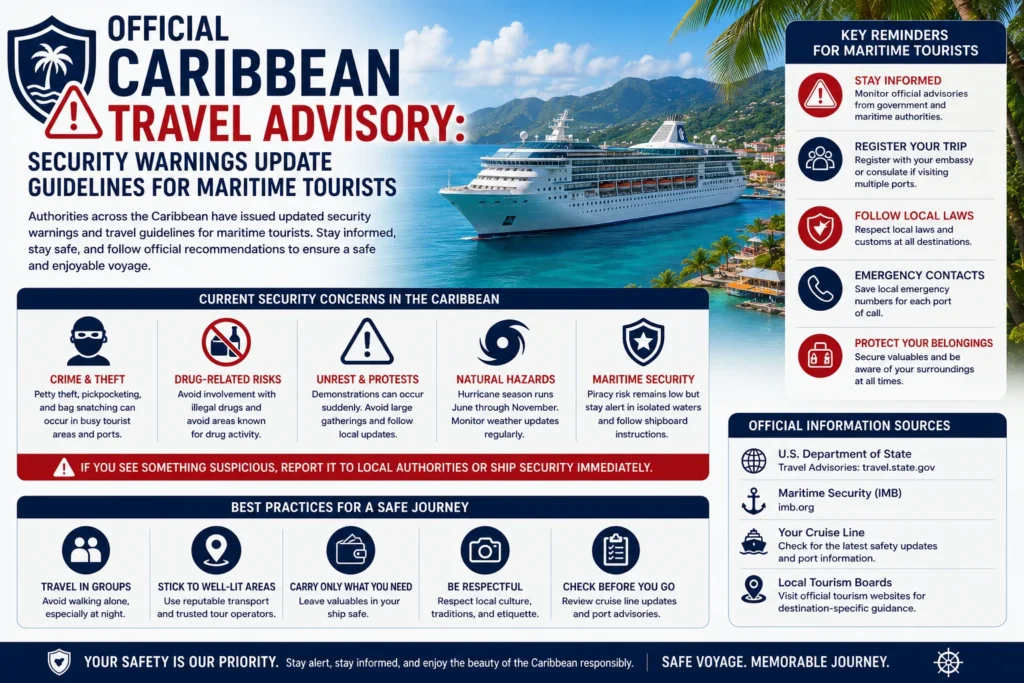
The crystalline shorelines and tropical environments of the Caribbean remain a premier global destination for international cruise passengers and sun-seeking vacationers alike. Major international maritime lines routinely position their modern fleets across these highly trafficked corridors to provide travelers with access to some of the world’s most visually stunning coastal ecosystems. However, maintaining personal safety during international travel requires continuous monitoring of shifting security parameters.
In a newly updated international directive, the United States Department of State officially modified its security assessment for a heavily visited archipelago within the region. The federal agency issued an updated safety notification for the Turks and Caicos Islands, establishing a formal Level 2 designation that advises international travelers to exercise increased caution when arriving at the territory. This security update serves as a critical operational notice for independent flyers and cruise passengers executing land excursions across the islands.
Localized Security Risks and Regional Emergency Support Structural Limits
According to the official safety warnings published within the consular updates, the primary catalyst for the elevated security level is a documented increase in localized criminal activity. Detailed statistical records indicate that the vast majority of security incidents impacting the territory are heavily concentrated on the island of Providenciales, commonly recognized by visitors and locals as Provo. This specific island serves as the primary hub for commercial resorts, beachfront villas, and tourist infrastructure, making it a frequent focus area for opportunistic property crimes.
A primary logistical variable highlighted by federal authorities is the inherent limitation of municipal law enforcement infrastructure within the territory. The official document indicates that local policing bodies often operate with tightly constrained human and technical resources, which can directly affect response times and limit immediate investigative capabilities following an incident.
Furthermore, international travelers must remain cognizant of diplomatic infrastructure limits when navigating the archipelago. The United States does not maintain a physical embassy or consulate building within the borders of the Turks and Caicos Islands. Consequently, all emergency consular operations, victim assistance programs, and administrative protections for foreign nationals are managed remotely through the United States Embassy located in Nassau, The Bahamas. This geographic separation highlights the necessity for travelers to maintain proactive situational awareness throughout their stay.
Common Opportunistic Vulnerabilities Affecting Foreign Tourists
Official country security reports clarify that the bulk of unlawful activities encountered by international visitors consist primarily of non-violent crimes of opportunity. In bustling public zones, crowded market squares, and popular public beaches, incidents such as pickpocketing, purse snatching, and unattended baggage theft remain common. Security officials also warn that commercial tourist zones occasionally host targeted financial scams, including arbitrary overcharging for local transit or hospitality services.
Travelers are urged to exercise heightened vigilance when interacting with aggressive street vendors or beach merchants. A frequent pattern observed by local tourist police involves the presentation of unsolicited or seemingly complimentary items to tourists, which is quickly followed by aggressive demands for financial compensation. Beyond petty property theft, federal health and security frameworks note that reports of serious personal offenses, including physical and sexual assaults, occur with enough frequency to warrant strict avoidance of isolated locales. To counter these vulnerabilities, dedicated tourist police forces are structurally deployed across primary resort beaches to intervene in uncomfortable or high-pressure merchant encounters.
Essential Safety Tips for Mitigating International Travel Hazards
To ensure a secure and orderly vacation experience, federal agencies have outlined a comprehensive matrix of protective measures for all individuals arriving in the territory via commercial aviation or cruise ship disembarkation. Adhering to these established protocols significantly reduces the probability of encountering security complications while traveling abroad.
Primary defensive actions recommended by security specialists include:
The Smart Traveler Enrollment Program: Registering personal itineraries prior to departure ensures that the regional consular office in Nassau can establish direct communications or notify emergency contacts in the event of a natural disaster or security crisis.
Residential Security Management: Visitors utilizing local villa rentals or traditional hotel rooms must avoid opening entry doors to unverified individuals, keeping all secure barriers locked continuously.
Nighttime Navigational Caution: Restricting pedestrian movement and vehicle transit to well-lit, highly populated thoroughfares after sunset minimizes exposure to low-visibility safety hazards.
Non-Resistance Compliance: In the rare event of an attempted physical robbery, security protocols strongly dictate that victims should never physically resist demands for personal property to prevent escalation.
Medical Logistics and Financial Contingency Planning Guidelines
Comprehensive vacation preparation requires thorough alignment with international health guidelines alongside standard security measures. The Centers for Disease Control and Prevention maintains active, updated travel health indices for the territory, advising tourists to verify that all routine immunizations are fully up to date before departure.
Additionally, because standard domestic medical insurance plans rarely extend coverage across sovereign borders or remote territories, buying comprehensive international travel insurance remains a vital safeguard. Travelers should explicitly verify that their chosen policy includes robust allocations for emergency medical evacuations, localized hospitalization expenses, and unforeseen trip cancellations stemming from regional disruptions. Utilizing standard international travel checklists before boarding ensures that minor health and security vulnerabilities are systematically addressed long before arrival.
For more travel news like this, keep reading Global Travel Wire