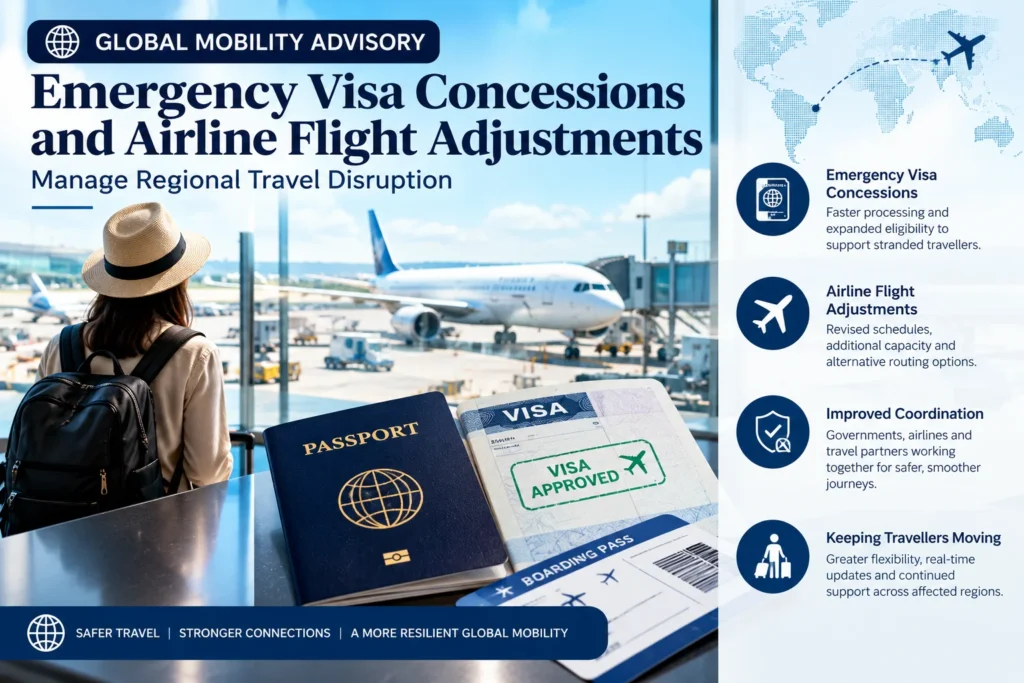
Elevated regional tensions and operational security adjustments across the Middle East have renewed concerns surrounding commercial aviation schedules and international travel mobility. Official reports confirm that widespread air travel disruption continues to impact primary transit corridors, prompting governments worldwide to issue emergency visa concessions, update travel advisories, and implement enhanced security protocols for international travelers and foreign workforce populations.
As flight cancellations affect major regional hubs, national governments are establishing support frameworks to assist travelers stranded abroad, ensure workforce continuity, and streamline immigration procedures during ongoing operational interruptions.
Commercial Aviation Schedules and Regional Flight Cancellations
Air transit across Saudi Arabia and surrounding regional hubs experienced notable schedule modifications in mid-October 2026. Official transport tracking indicates that approximately 35% of scheduled commercial departures faced cancellations or temporary flight suspensions on October 12.
Major international carriers have issued extended schedule adjustments to navigate regional airspace restrictions:
Etihad Airways: Suspended selected commercial flights servicing major hubs including Riyadh, Jeddah, and Dammam through October 19.
flydubai: Temporarily suspended all flight operations into Riyadh through October 14.
Qatar Airways: Paused commercial flight operations into Riyadh and Dammam pending airspace status re-evaluations.
Aviation authorities strongly advise all departing and connecting passengers to verify flight status directly with operating airlines prior to departing for airports, as scheduling changes, transit re-routing, and gate adjustments are occurring on short notice.
Official Government Visa Concessions and Foreign National Support Measures
To mitigate legal overstay penalties and administrative delays caused by unexpected flight suspensions, several national governments and immigration ministries have enacted temporary visa concessions for affected international travelers:
India: The Ministry of External Affairs announced that foreign nationals currently in India experiencing flight cancellations or delayed departures can apply for visa extensions or regularize their legal stay. Affected travelers are instructed to contact their nearest Foreigners Regional Registration Office (FRRO) to complete necessary documentation and maintain lawful residence during transit interruptions.
South Africa: The Ministry of Home Affairs reinstated temporary visa relief measures valid until November 30, 2026, or until standard flight operations resume following official ceasefires. Foreign nationals holding visitor visas that reached maximum validity may reapply for three-month extensions under existing conditions. Furthermore, applicants experiencing travel delays linked to airspace closures will not be flagged as undesirable overstayers upon departure or during pending application processing.
Netherlands: Dutch authorities confirmed that foreign nationals unable to depart the Schengen area to return to Iran or secondary countries of habitual residence due to flight suspensions can apply to extend short-term visas for up to 90 days (provided total stay does not exceed 180 days). The Dutch consular post in Iran maintains limited operational appointments for essential passport services, entry visa stickers, and basic document legalization.
Canada: Updated policy measures have been introduced by the Canadian government to support Iranian temporary residents currently residing in Canada who face disrupted return transit routes.
United Kingdom: Dedicated concessions and specific entry exemptions have been enacted to assist travelers affected by regional transport delays.
Immigration Processing Protocols and Travel Restrictions
Immigration processing across the Gulf Cooperation Council (GCC) and the broader region continues to function largely as normal, though travelers may experience localized government office delays, administrative backlogs, or consular appointment rescheduling.
National authorities in several jurisdictions have introduced stricter border screening measures. These updated security frameworks include additional supporting document requests across select visa categories and the temporary suspension of discretionary visa-on-arrival facilities for specific nationalities. Travelers are strongly encouraged to secure pre-approved electronic or paper visas prior to international travel, as entry decisions at border checkpoints remain strictly at the discretion of immigration officials.
Furthermore, diplomatic authorities have issued official travel warnings. The UAE Ministry of Foreign Affairs issued a complete travel directive banning UAE nationals from traveling to Iran and Iraq, urging citizens currently residing in those territories to organize their immediate return and register with dedicated government emergency support helplines.
Essential Security Guidance for Travelers and Employers
Global organizations, corporate travel directors, and independent international travelers operating within or through affected regional transit hubs are urged to implement structured safety protocols:
Embassies Registration: Foreign nationals currently in the region should officially register their presence with their home country’s embassy or consular mission to receive real-time security alerts and evacuation notifications.
Contact Data Verification: Corporate employers should maintain verified contact details, dependent records, nationality data, and current visa status tracking for all international staff stationed in affected territories.
Non-Essential Travel Review: Travel management teams should evaluate non-essential business trips into or through disrupted air corridors and prepare contingency scheduling options.
Emergency Documents: Travelers requiring emergency passports or replacement travel documents should contact their respective consular posts immediately prior to finalizing transit plans.
For more travel news like this, keep reading Global Travel Wire