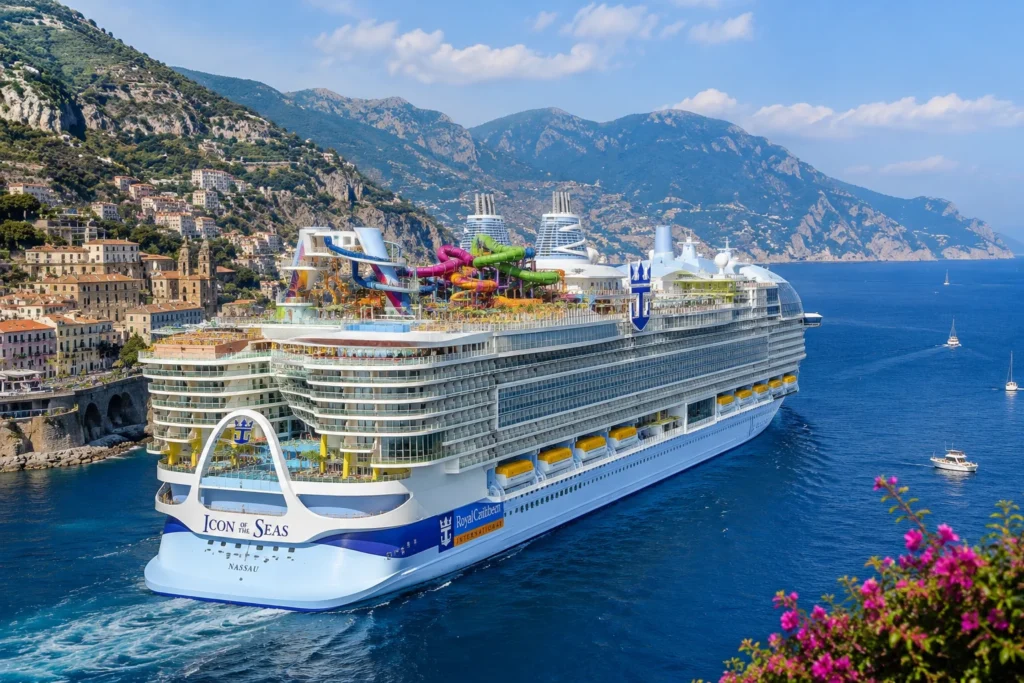
The global maritime tourism sector has achieved a significant milestone in 2026 as mega-ship travel officially expands its footprint into the European continent. Royal Caribbean Group has officially introduced its revolutionary Icon Class framework to the Mediterranean, marking a strategic pivot toward deploying ultra-large vessels in high-demand European cruise tourism corridors. The deployment of the brand-new vessel, Legend of the Seas, highlights a growing industry trend where the cruise ship itself functions as a primary destination, working in close tandem with historic coastal cities to accommodate the modern surge in international holiday travel.
Constructed at the specialized Meyer Turku shipyard in Finland, this new maritime marvel is the third vessel in the celebrated Icon Class lineup, following its predecessors that debuted in recent years. Measuring approximately 365 meters in length and boasting a gross tonnage exceeding 248,000, the ship represents a direct response to a massive surge in consumer demand for comprehensive, multi-generation family travel experiences throughout Spain, France, and Italy.
Navigating Regional Port Dynamics and Sustainable Coastal Operations
Deploying a vessel capable of carrying up to 7,600 passengers at maximum capacity into historic European waters requires intricate logistics and deep regional alignment. Cruise industry frameworks highlight that large-scale vessels with thousands of berths must tailor their operations to local port infrastructures. While traditional mid-sized ships are frequently able to dock directly at metropolitan piers, ultra-large mega-ships adapt dynamically to geographical conditions and water depth limits.
A prime example of this operational adaptation is seen at the port of La Spezia, Italy. Due to current maritime channel depth restrictions, mega-ships safely utilize established tender boat operations. These highly coordinated operations transport guests comfortably between the open water anchorage and the shoreline in short, structured intervals. Official guidelines ensure that local shuttle transport is seamlessly positioned near the tender drop-off points to connect travelers directly to regional cultural excursions, such as visits to the iconic landmarks of Tuscany and the Ligurian coast.
To maintain long-term harmony with the local communities visited, maritime operators emphasize responsible tourism frameworks. By keeping an extensive array of entertainment and dining neighborhoods active while anchored, a significant percentage of passengers frequently choose to experience the vessel’s internal features during port days. This internal guest distribution works as a strategic mechanism to help alleviate physical congestion in historic city centers on land, balancing regional economic benefits with localized crowd management.
Elevated Accessibility Frameworks for Diverse Global Vacationers
As international travel regulations place greater emphasis on universal inclusivity, the infrastructure surrounding mega-ship deployments has evolved significantly. Maritime safety protocols require comprehensive, transparent frameworks regarding ship-to-shore accessibility, particularly at ports dependent on tender operations.
Official guest relations guidelines state that passengers utilizing collapsible manual wheelchairs must be able to navigate steps safely to utilize standard tender crafts. For guests traveling with heavier motorized wheelchairs or specialized mobility scooters, operators provide detailed roll-on capability assessments directly at the shipboard relations desk. By fostering clear, upfront communication regarding physical port conditions, maritime authorities ensure that high-yield international excursions remain accessible and safe for all traveling demographics.
The Onboard Neighborhood Ecosystem and Multi-Generational Appeal
The core philosophy of modern mega-ship travel centers on providing a fully diversified vacation product across distinct onboard neighborhoods. The internal layout of these monumental vessels is divided into specialized zones tailored to different age brackets and vacation styles, allowing multi-generational family units to customize their daily schedules.
For young families, dedicated youth neighborhoods provide extensive interactive waterparks, children’s clubs, and family-oriented dining venues. Concurrently, adult passengers seeking relaxation can access isolated, adults-only retreats situated at the aft of the ship, featuring multi-level swim-up bars and elevated viewing platforms overlooking the open ocean.
Culinary programming on these modern ships is similarly extensive, featuring dozens of unique dining options ranging from casual food hall markets to upscale, multi-sensory specialty restaurants. Entertainment boundaries are continuously pushed with full-scale theatrical productions, high-performance aquatic spectacles, and advanced ice-skating revues. This vast internal ecosystem ensures that after returning from historical land tours, guests can seamlessly transition back into an all-inclusive resort environment.
Long-Term Capital Allocation and Environmental Innovation
The introduction of the newest Icon Class ship to the Mediterranean also aligns with the global cruise industry’s strict focus on environmental stewardship and eventual carbon neutrality. According to official shipyard releases, modern mega-ships are designed to utilize cleaner liquefied natural gas propulsion, dramatically reducing sulfur and particulate emissions in delicate European coastal zones.
Furthermore, the integration of advanced waste heat recovery systems, robotic hull cleaning technology to minimize drag, and comprehensive shore-power connectivity allows these massive structures to operate with unprecedented energy efficiency. As regional environmental regulations tighten, these sustainable technologies protect the long-term operational licenses of cruise lines, securing their entry into the world’s most sought-after eco-sanctuaries.
Financially, the deployment represents the robust health of the global travel sector. Tourism ministries note that the high net promoter scores achieved by these massive capital investments give operators the reliable cash flow required to steadily manage long-term debt, refinance outstanding capital obligations, and fund future shipbuilding innovations through the next decade. By building highly efficient corridors of travel, the modern cruise sector is successfully redefining the future of global leisure tourism.
For more travel news like this, keep reading Global Travel Wire