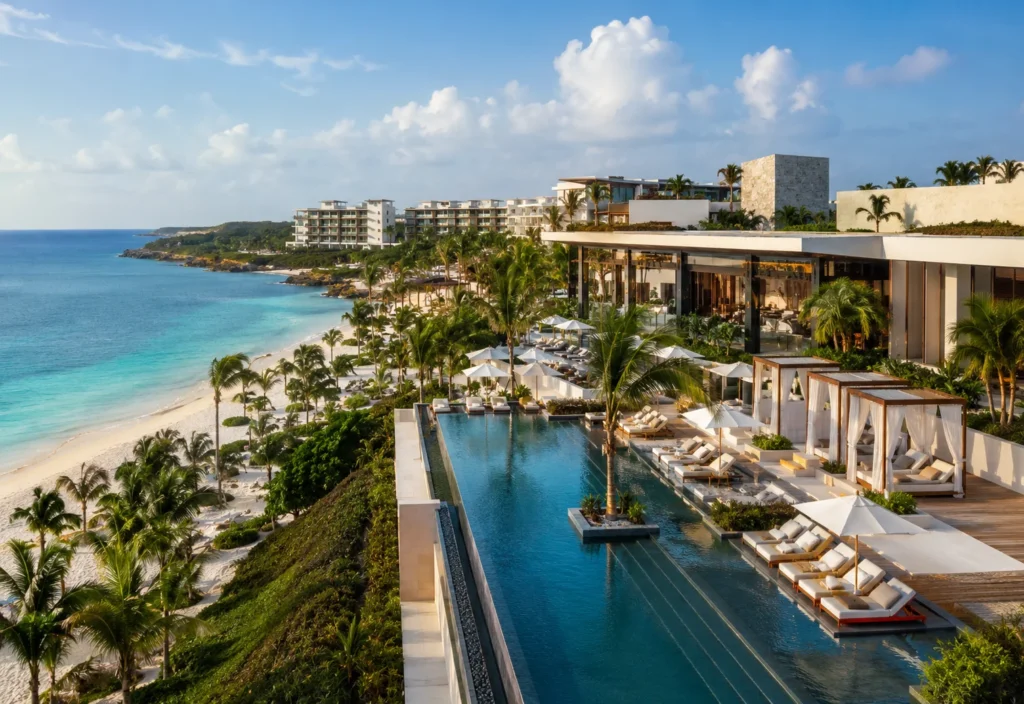
The tourism economy of the Mexican Caribbean is entering a sophisticated phase of structural evolution, shifting its baseline from high-density occupancy models toward high-yield, premium-tier international hospitality. Officially anchored by the launch of major flagship assets, including the 500-room Grand Hyatt Cancun Beach Resort, the state of Quintana Roo is solidifying its position as the primary engine for Caribbean tourism growth in 2026. This tactical expansion comes at a crucial time as the federal government refines its economic blueprint to maximize visitor expenditure and protect long-term destination value.
According to the Secretariat of Tourism (SECTUR) in its official mid-2026 report, Mexico’s national Tourism Investment Portfolio has expanded dramatically, tracking hundreds of active projects across the federation. Of this national total, Quintana Roo commands the largest individual share, securing 20% of all planned national tourist infrastructure investments. This concentrated capital deployment underscores strong public and private sector alignment, demonstrating that international demand for premium, highly curated coastal travel experiences is outpacing traditional leisure subsectors.
Infrastructure Analysis of the Premium Coastline Strategy
The physical footprint of this luxury surge highlights a deliberate pivot toward self-contained lifestyle ecosystems. The recently unveiled Grand Hyatt property features approximately 500 upscale rooms and suites, complemented by more than ten dedicated culinary establishments, extensive wellness spas, and multi-tiered aquatic viewing areas directly facing the Caribbean Sea. This infrastructure is strategically engineered to mitigate seasonal travel dips by attracting highly diverse, affluent traveler demographics—specifically target markets from North America, the United Kingdom, continental Europe, and emerging luxury segments within Latin America.
Parallel to this development, adjacent coastal corridors like Costa Mujeres are experiencing similar high-cap luxury installations, such as the St. Regis Costa Mujeres Resort. By positioning these ultra-luxury properties in less congested beachfront zones, regional planners are successfully dispersing visitor volumes while elevating the average daily rate across the state. This design matrix matches the current preferences of high-net-worth travelers who demand localized authenticity, extended-stay configurations, and deep programmatic focuses on personal health, gastronomy, and environmental tranquility.
Aviation Connectivity and the Global Gateway Paradigm
The expansion of the luxury lodging sector is structurally dependent on the massive transit capabilities of Cancún International Airport, which serves as the primary gateway for the Yucatan Peninsula and the wider Caribbean basin. Federal aviation statistics show that the hub ranks as one of the most critical entry networks in Latin America, routinely processing millions of international passengers annually.
To sustain this influx and accommodate the peak travel waves projected for the upcoming multi-national sports schedules and seasonal holiday periods, terminal infrastructure expansions are being finalized across the airport network. This continuous expansion provides a highly predictable arrival pipeline for top-tier resort operators, giving them the confidence to invest in specialized service layers, such as elite butler programs and private maritime transits, which differentiate the region from competing island destinations in the Americas.
Macroeconomic Returns of High-Yield Travel Corridors
The deliberate embrace of high-yield tourism addresses a critical economic goal outline by the Ministry of Tourism: maximizing the value generated per individual visitor. Historically, standard leisure models relied heavily on thin margins and massive volume, which put extreme stress on local public services, municipal water systems, and sensitive coral reef ecosystems. Luxury travelers, conversely, stimulate economic velocity through distinct spending behaviors:
Extended Stay Profiles: Comprehensive luxury developments feature extensive on-site entertainment and remote-work infrastructure, successfully enticing travelers to stay longer.
Direct Ancillary Spend: Premium visitors allocate significantly higher budgets toward customized local excursions, premium health treatments, and fine dining.
Regional Wealth Distribution: High-end hospitality operations rely on deep supply chains, directly increasing procurement from local agricultural cooperatives, independent transit providers, and regional artisan guilds.
By capturing these affluent sub-segments, new beachfront operations act as economic multipliers, generating sustainable tax revenues that fund critical municipal preservation projects and statewide environmental protection initiatives.
Maximizing the MICE Sector and Off-Peak Resilience
A core component of the region’s long-term operational resilience is the aggressive integration of the Meetings, Incentives, Conferences, and Exhibitions (MICE) sector. The latest hotel infrastructure models deliberately move away from basic banquet halls toward massive, tech-integrated event spaces capable of hosting high-profile international corporate retreats and major academic symposiums.
By blending professional conference facilities with elite beachfront leisure amenities, the destination allows international corporate planners to merge productivity objectives with high-end corporate hospitality. This strategic positioning provides a stable economic baseline during traditional shoulder seasons when leisure travel naturally contracts. As Quintana Roo continues to capture both the global luxury vacationer and the corporate incentive traveler, its diversified economic blueprint establishes a highly resilient model for Caribbean tourism growth throughout 2026 and well into the future.
For more travel news like this, keep reading Global Travel Wire