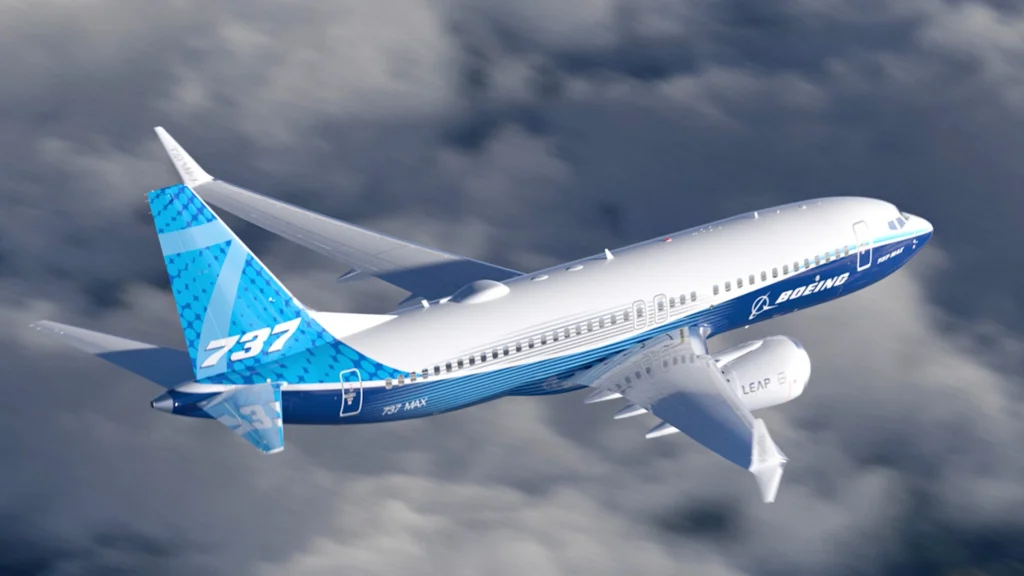
Boeing 737 MAX orders have passed a major milestone as airlines prepare to expand fleets across Asia, Europe and the Americas.
The aircraft family has secured more than 7,200 orders across its different variants. This achievement makes it Boeing’s most ordered commercial aircraft programme.
The expanding order book could eventually bring travellers more frequencies, newer cabins and additional nonstop connections. Airlines can also use efficient narrowbody aircraft to open routes that may not support larger jets.
However, passengers will not experience all these benefits immediately. Thousands of aircraft remain awaiting delivery, while production capacity, certification work and supply-chain pressures will determine when airlines receive them.
Boeing’s milestone also strengthens competition with the Airbus A320neo family, which continues to hold a larger overall narrowbody order position.
For travellers, stronger competition between manufacturers could support continuing improvements in aircraft efficiency, cabin design and route capability.
Different MAX Variants Support Airline Growth
The Boeing 737 MAX family includes several aircraft designed for different markets and airline operating models.
The MAX 8 remains the programme’s central variant. Airlines use it across domestic services, regional international flights and medium-haul routes.
The larger MAX 9 provides additional seating for busy corridors. Meanwhile, the MAX 10 targets high-capacity routes where airlines need more seats without moving to a wide-body aircraft.
The smaller MAX 7 aims to serve thinner routes and airports where demand does not justify a larger model.
Certification and delivery timelines differ across these variants. Therefore, fleet growth will depend on regulatory approvals and individual airline schedules.
Once delivered, the aircraft could support high-frequency services between major cities, leisure destinations and secondary regional gateways.
Travellers Could Gain More Route Choices
Narrowbody aircraft form the foundation of airline networks because they operate large numbers of short-haul and medium-haul flights every day.
New deliveries allow airlines to replace ageing jets while adding capacity in expanding markets.
Travellers across Asia-Pacific could gain more links between rapidly growing cities and tourism destinations. The region is expected to lead global passenger traffic growth during 2026 despite aircraft availability constraints.
European holidaymakers may see the MAX deployed on routes connecting major capitals with Mediterranean resorts, island destinations and emerging city-break markets.
North American airlines can use the aircraft across domestic networks and longer services to the Caribbean, Mexico, Central America and northern South America.
Latin American carriers may also use new aircraft to connect secondary cities without routing every passenger through a large hub.
Fuel Efficiency Supports New Airline Services
Airlines have selected the 737 MAX partly because fuel represents one of their largest operating costs.
The aircraft uses CFM International LEAP-1B engines, advanced winglets and updated aerodynamic systems. Boeing says these technologies reduce fuel consumption and emissions compared with previous-generation 737 aircraft.
Lower fuel use can improve the economics of routes with uncertain or seasonal demand.
An airline may launch a new service when an efficient aircraft reduces the number of passengers needed to make that route commercially sustainable.
However, lower operating costs do not guarantee cheaper tickets. Airfares also depend on airport charges, taxes, competition, fuel prices and passenger demand.
Travellers could still benefit when new aircraft encourage airlines to add capacity or compete on the same route.
Global Passenger Demand Drives Fleet Requirements
Air travel demand continues to increase despite economic uncertainty and aviation supply-chain pressures.
The International Air Transport Association reported that worldwide passenger demand grew by 5.3 percent during 2025. International demand increased by 7.1 percent, while domestic traffic rose by 2.4 percent.
IATA expects global air travel demand to more than double by 2050 under its central forecast. Asia-Pacific is likely to make a major contribution to this expansion.
Boeing’s latest long-term outlook forecasts demand for more than 43,000 new commercial aircraft between 2025 and 2044.
Single-aisle jets will account for most deliveries as airlines renew fleets and connect growing urban markets. Boeing expects around 41 percent of all new aircraft to replace older models.
Safety Oversight Remains Central to Recovery
The 737 MAX programme continues to carry the legacy of two fatal accidents involving Lion Air Flight 610 and Ethiopian Airlines Flight 302.
Regulators grounded the aircraft worldwide while investigators examined the causes and required extensive modifications.
The United States Federal Aviation Administration completed a review lasting approximately 20 months before approving the MAX’s return to commercial service.
Required measures included software changes, revised procedures, additional pilot training and individual aircraft inspections.
The FAA later increased oversight of Boeing’s manufacturing and quality systems following separate production concerns. It also restricted uncontrolled production expansion while evaluating corrective measures.
Continued regulatory scrutiny will remain important as Boeing increases deliveries and works through its extensive backlog.
New Aircraft Could Improve Passenger Journeys
Travellers may notice updated interiors, larger overhead storage, modern lighting and quieter cabins when airlines introduce new MAX aircraft.
The exact passenger experience will depend on each carrier. Airlines choose their own seating density, legroom, entertainment systems, connectivity and onboard service.
Some operators may configure the aircraft for premium business routes. Others may install more seats for low-cost or leisure operations.
Passengers can usually identify the scheduled aircraft through airline booking pages or flight details. However, airlines may change aircraft before departure for operational reasons.
Boeing’s Milestone Extends Beyond Aircraft Sales
The order milestone reflects airline confidence in long-term travel growth, but Boeing still faces a demanding delivery challenge.
Manufacturing quality, regulatory compliance and passenger confidence must remain more important than production speed.
Aircraft orders only create tourism benefits once safe and reliable jets enter service.
For travellers, the strongest outcome would include more destinations, dependable schedules and efficient aircraft serving both major hubs and regional cities.
The Boeing 737 MAX could support that next phase of global connectivity. Its long-term success, however, will depend on proving that fleet expansion and safety progress can advance together.
For more travel news like this, keep reading Global Travel Wire