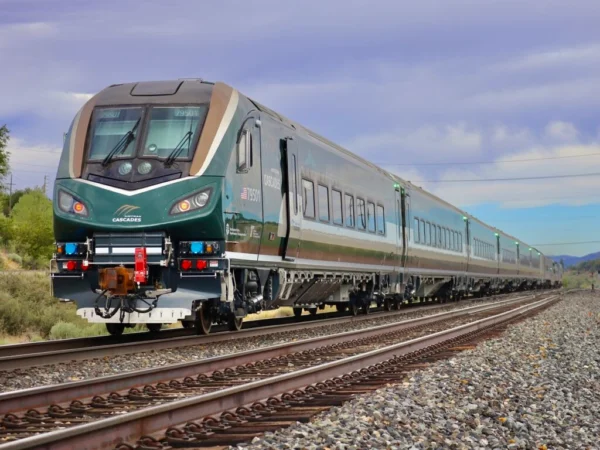
The sixth new Amtrak Cascades Airo trainset has left the manufacturing facility for testing, marking another major milestone in Pacific Northwest rail modernization.
The train will travel to the Transportation Technology Center near Pueblo, Colorado. Engineers will examine its safety, performance and reliability before passenger operations begin.
Amtrak plans to introduce eight Airo trainsets across the Cascades corridor. Therefore, the departure of the sixth unit means most of the planned fleet has now entered or approached the testing programme.
The new trains will eventually serve passengers travelling through Washington and Oregon. Amtrak Cascades also provides international connections to Vancouver in British Columbia.
The fleet renewal promises more seats, updated interiors and improved onboard amenities. It will also replace older equipment with trains designed around modern accessibility and passenger expectations.
Amtrak and Washington transport officials expect the first Cascades Airo trains to enter service later in 2026. However, the final launch schedule will depend on successful testing and regulatory approval.
Colorado Testing Examines Safety and Performance
Pueblo’s rail testing centre allows engineers to evaluate trains under controlled operating conditions before they enter busy passenger corridors.
Testing will examine acceleration, braking, handling and overall train dynamics. Technical teams will also assess communication systems, onboard controls and passenger facilities.
Engineers can operate the equipment across different speeds and track conditions while recording detailed performance data.
The process may reveal components that require adjustment before final certification. Any necessary changes can then be completed before trains begin carrying passengers.
The first Cascades Airo trainset has already completed major testing in Pueblo. It later moved to the Northeast Corridor for further assessments before reaching Seattle.
Each additional trainset must complete the required inspections and commissioning work before joining regular service.
Modern Fleet Will Bring More Seats and Amenities
The Cascades fleet will include eight complete trainsets rather than eight-car passenger formations.
Each trainset is designed around six passenger cars and a modern locomotive. The trains will provide Coach Class, Business Class and food-service facilities.
The new equipment will offer significantly more seating than some trains currently used on the corridor.
Passengers can also expect larger windows, improved lighting and modern interiors inspired by the Pacific Northwest.
Updated restrooms, clearer digital information systems and accessible spaces will support travellers with different mobility requirements.
Power outlets and improved Wi-Fi systems will help passengers work, communicate or enjoy entertainment during longer journeys.
The trains will also feature onboard food and beverage options reflecting regional products and flavours.
Diesel-Electric Design Supports Cascades Operations
The Cascades Airo configuration differs from some other Airo trains planned for routes in the northeastern United States.
Amtrak will operate the Pacific Northwest fleet with efficient diesel locomotives because the Cascades corridor does not have continuous overhead electrification.
The trainsets can use new ALC-42E locomotives or Washington-owned Siemens Charger locomotives, depending on operational requirements.
Other Airo configurations will use Auxiliary Power Vehicles with pantographs on routes where trains move between electrified and non-electrified infrastructure.
Therefore, the Cascades trains should not be described as conventional electric-diesel hybrids.
Their modern diesel equipment will still provide improved efficiency and lower emissions compared with older locomotive technology.
The streamlined trainset design can also support quicker acceleration, improved reliability and reduced turnaround times.
Washington and Oregon Gain Stronger Rail Connections
Amtrak Cascades connects 18 communities across the Pacific Northwest corridor.
Major destinations include Seattle, Tacoma, Olympia, Portland, Eugene, Bellingham and Vancouver in Canada.
The service supports daily commuters, university students, business passengers and leisure travellers exploring the region.
Modern trains could encourage more people to choose rail instead of driving along the busy Interstate 5 corridor.
Tourists can travel between city centres without managing highway traffic, parking or airport procedures.
The route also provides access to cultural attractions, food destinations, sporting events and natural landscapes across Washington and Oregon.
New equipment may strengthen the corridor’s appeal as both a practical transport service and a relaxed regional travel experience.
Testing Remains Essential Before Passenger Launch
Passengers will not immediately see every completed trainset in regular service.
Each unit must pass extensive testing, certification and acceptance procedures. Maintenance facilities and operating teams must also prepare for the new equipment.
Drivers, onboard staff and technicians require training before the fleet can support full daily operations.
Amtrak has also invested in maintenance upgrades in Seattle to prepare for the Airo programme.
Travellers should continue checking official schedules because older equipment will remain in use during the transition.
The rollout may occur gradually as individual trainsets receive approval and enter service.
Airo Programme Signals New Rail Travel Era
Amtrak plans to introduce 83 Airo trainsets across several routes nationwide, beginning with Amtrak Cascades.
The sixth Cascades trainset’s departure for testing shows that the programme is moving from manufacturing towards passenger operations.
For Washington and Oregon, the new fleet represents a visible improvement in regional rail travel.
Passengers can expect greater capacity, modern amenities, improved accessibility and a more consistent experience.
Once testing concludes, the Cascades Airo trains could help make rail a stronger alternative to driving and short regional flights across the Pacific Northwest.
For more travel news like this, keep reading Global Travel Wire