Global luxury travel across the Gulf Cooperation Council region remains highly proactive as regional civil aviation authorities, national defense ministries, and tourism boards reinforce security parameters around primary destination infrastructure. Following recent geopolitical updates out of Tehran, where the Islamic Revolutionary Guard Corps specified particular U.S.-branded hospitality portfolios and recreational developments as geopolitical targets, tourism ministries in the United Arab Emirates, Saudi Arabia, Oman, and Qatar have reiterated their absolute, ironclad commitment to maintaining passenger protection and border integrity.
As international travel schedules adjust to shifting regional conditions, official statistical data demonstrates that the visitor economy throughout major Middle Eastern commercial hubs continues to demonstrate structural stability. By utilizing sophisticated defense shields, strict local policing, and advanced airport monitoring networks, Gulf nations are successfully protecting their ultra-luxury hospitality landscapes, allowing high-end leisure and corporate travelers to safely navigate the region.
Comprehensive Air Defense Measures Shielding Major Tourist Zones
A vital element sustaining tourism confidence across the Arabian Peninsula is the deployment of heavily integrated, state-of-the-art airspace protection infrastructure. Defense ministry announcements from the United Arab Emirates and neighboring Gulf states highlight the successful integration of advanced, multi-layered tactical systems. These include the Terminal High Altitude Area Defense framework alongside Patriot PAC-3 networks, which actively secure main international flight routes and highly populated urban hospitality centers.
Official defense records indicate that these systems maintain an exceptionally high interception velocity, neutralizing airborne risks well before they can impact commercial zones or civil infrastructure. Local tourism boards emphasize that daily operations at luxury landmarks—ranging from high-rise hotels in downtown Dubai to expansive holiday developments along the coast of Muscat—continue without disruption. Arriving international travelers are greeted by fully operational destination networks, confirming that the defensive umbrella effectively prevents wider regional geopolitical friction from altering civilian life or holiday packages.
Strict Local Security and Surveillance in Luxury Hospitality Hubs
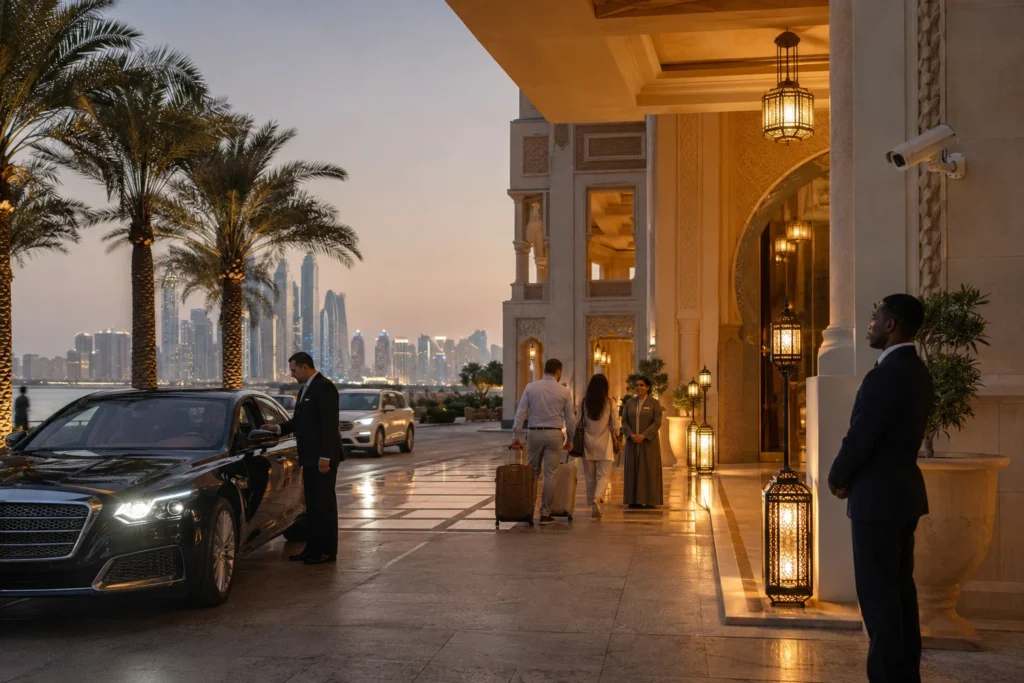
Beyond national airspace defense, urban safety standards across key corporate and holiday cities are managed via highly sophisticated, automated urban monitoring programs. The General Directorate of State Security and local police commands have deployed extensive closed-circuit television networks that integrate biometric mapping and automated facial recognition across major international entry points, transit corridors, and luxury hotel environments.
This high-density monitoring system ensures that high-profile lifestyle properties—such as the Trump International Hotel & Residential Tower and the Trump International Golf Club in Dubai—benefit from proactive, around-the-clock defense measures. Zero-tolerance legal codes enforced throughout the Gulf ensure that any unauthorized activity or potential security risk near resort perimeters is resolved immediately. For global holiday planners concerned with street-level safety, these structural safeguards make violent crime targeting international arrivals incredibly rare, creating a secure environment that rivals top global travel hubs.
Navigating Changing Travel Advisory Alerts and Airline Routing
While city-level security remains robust, the changing geopolitical landscape requires careful planning regarding global flight coordination and travel advisory alerts. International aviation regulators, including the European Union Aviation Safety Agency, periodically issue updated routing guidance to commercial carriers, occasionally advising operators to use alternative transit paths across Gulf air corridors to guarantee passenger safety.
Concurrently, various foreign ministries maintain active travel advisories for the wider region, reminding international visitors to exercise caution, register their travel itineraries with local embassies, and keep a close eye on official government announcement portals. Civil aviation authorities note that temporary tactical adjustments to flight patterns or localized border checks may occur with little notice. To guarantee a smooth journey, incoming travelers are encouraged to confirm their flight details directly with their airlines, secure comprehensive international travel insurance, and follow official government updates rather than unverified commercial media reports.
Continued Operational Health in Luxury Leisure Markets
Despite regional security updates, tourism authorities report that primary luxury golf resorts, corporate convention centers, and high-end residential communities are maintaining solid booking trends. In Saudi Arabia, massive development projects under the Vision 2030 framework—such as the luxury spaces within Wadi Safar near Riyadh and corporate assets in Jeddah—continue their construction and operational schedules under tight federal compliance laws.
Similarly, Qatar’s specialized tourism assets, including the premium coastal projects in Semaisma, are operating under robust state protection guidelines. By matching five-star service standards with strict background checks for all incoming staff and contractors, these luxury properties ensure that high-net-worth travelers can continue to enjoy premier leisure experiences with complete peace of mind. The resilience of the Gulf’s premium travel segment highlights the effectiveness of combining forward-looking hospitality projects with strict national security strategies, keeping the Middle East at the forefront of the global luxury travel industry.
For more travel news like this, keep reading Global Travel Wire