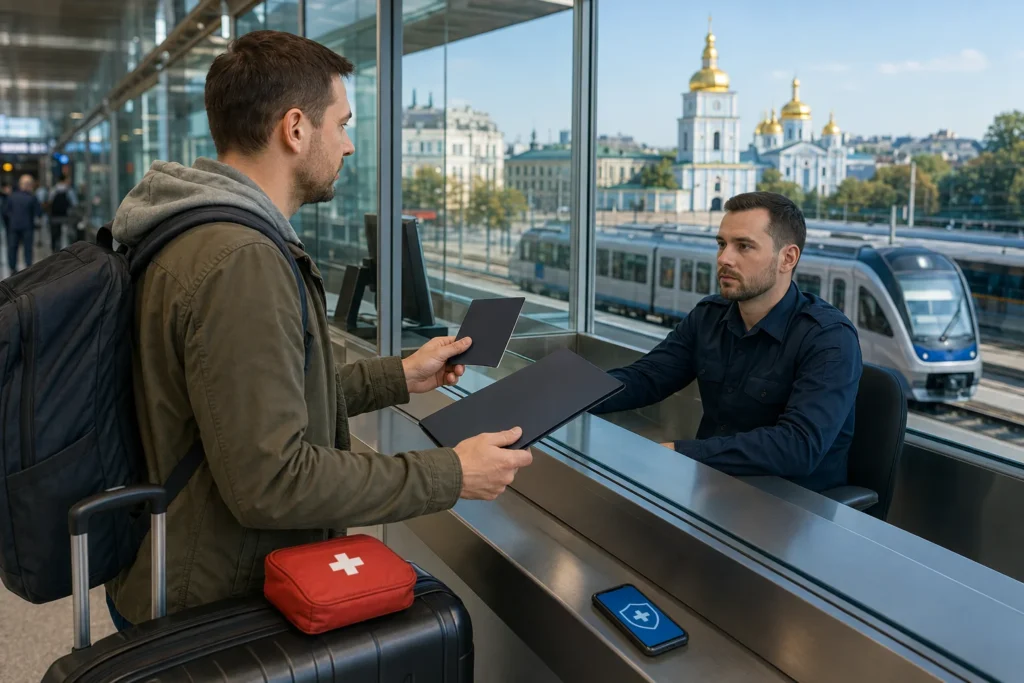
International journeys have undergone vast structural shifts over the past few years, meaning that traveling to Ukraine now demands more rigorous administrative planning than traditional European leisure spots. Despite distinct logistical parameters, thousands of foreign nationals continue to cross the border every month. These visitors arrive for private corporate meetings, critical humanitarian operations, long-term volunteer initiatives, international journalism, academic pursuits, and visits to see family members. Managing a successful trip relies directly on obtaining verified border control updates, establishing reliable ground transit, and understanding local safety systems.
Because regional conditions vary considerably depending on the specific oblast, travelers must avoid making broad assumptions about daily life in the country. Central and western urban areas continue to support highly active local populations, with commercial hotels, modern coworking facilities, public transit systems, and restaurants operating steadily. However, because martial law remains consistently active across the territory, travelers are required to maintain strict adherence to municipal defense protocols, install local emergency alert applications, and locate community shelters immediately upon arrival.
Navigating Border Crossings and Purpose of Travel Verifications
Because the nation’s civilian airspace remains entirely closed to commercial aviation networks, planning a route requires organizing multi-stage land transit through neighboring European gateways. The State Border Guard Service monitors crossing points adjacent to Poland, Romania, Slovakia, Hungary, and Moldova. Most international arrivals combine standard commercial flights to major regional hubs, such as Warsaw or Kraków, with direct international rail links or specialized coach services to navigate the final leg of the trip.
When presenting documents at the border check stations, incoming foreign nationals face precise, structured interviews. Border control officers focus heavily on the clear validation of five core parameters: holding an original passport valid for the entirety of the stay, presenting an approved entry visa or registered e-visa where applicable, maintaining a clean record free from regional entry bans, proving a definitive purpose of travel, and demonstrating sufficient financial means.
To satisfy the financial capability test, individuals must show they possess the required financial reserves calculated against official national subsistence levels. In 2026, the baseline requirement is structured at 12,836 Ukrainian hryvnia (UAH) for a single day of travel, scaling up to 74,876 UAH for a 30-day stay, and reaching 203,237 UAH for a full 90-day itinerary. Border agents carry out physical verifications by checking physical cash, auditing authenticated banking statements, verifying international payment cards alongside dynamic ATM balances, or validating formal corporate letters of financial guarantee.
Securing Healthcare and Mandatory Medical Protection Packages
One of the most vital components of international trip preparation is organizing adequate healthcare coverage before reaching the border station. The country possesses a highly developed network of state-run hospitals and premium private clinics, particularly within major metropolitan centers. Many private facilities feature multi-lingual medical teams capable of managing complex diagnostic procedures and acute emergency treatments. However, municipal legislation dictates that foreign citizens bear complete individual financial liability for all medical bills incurred during their stay, unless protected by a verified policy.
According to the State Migration Service and border tracking authorities, securing dedicated medical protection prior to arrival is a necessary administrative requirement for border entry. A standard international health insurance plan or regular credit card travel policy is frequently insufficient if it excludes coverage for specialized regional risks or high-altitude transport.
A fully compliant policy must provide dedicated coverage for emergency medical treatments, acute illness management, prescriptive medications, and overnight hospital stays. Furthermore, experienced corporate and humanitarian coordinators strongly advise securing comprehensive medical evacuation and repatriation benefits. These specialized clauses ensure that if a traveler requires emergency transport back to their home country or an alternative European clinic, the high costs associated with medical aviation are fully managed by the insurer.
Practical Ground Logistics and Essential Pre-Departure Checklists
Achieving daily travel comfort requires looking past basic border paperwork to address practical lifestyle tools. While digital infrastructure remains highly modern and mobile internet services are fast, downloading detailed offline navigation systems ensures seamless mapping if communication networks experience short-term service gaps. Additionally, while debit and credit cards are standard across supermarkets and urban retail centers, keeping a reserve of local currency is practical for secondary transit options and rural transactions.
For citizens traveling from distant locations such as the United States or the United Kingdom, additional steps provide an extra layer of structural safety. Western travelers are encouraged to register their full itineraries with their respective diplomatic missions or specialized state travel monitoring programs before crossing the border. Informing domestic banking institutions about international card transactions prevents accidental security freezes on financial assets during transit. By focusing on meticulous document preparation, organizing flexible travel windows, and maintaining proper health coverage, international arrivals can confidently manage their visits with clarity and complete operational safety.
For more travel news like this, keep reading Global Travel Wire