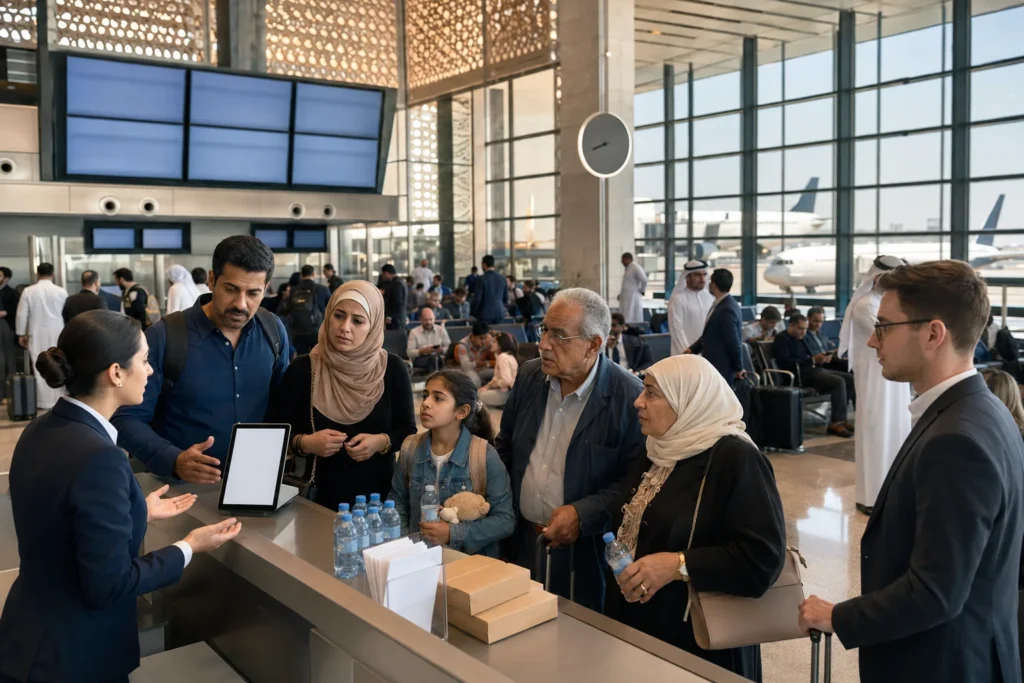
Operational adjustments and airspace flows across the Middle East have introduced significant schedule pressures at Kuwait International Airport. Registered tracking data indicates a wave of sudden disruptions, forcing civil aviation authorities and domestic carriers to adapt rapidly to maintain terminal efficiency. With multiple flight cancellations and widespread delays impacting both short-haul Gulf corridors and long-haul international connections, the situation emphasizes the complex nature of modern aviation management during periods of regional network congestion.
A total of nine comprehensive flight cancellations and forty-eight severe delays have been logged, altering travel timelines for thousands of passengers moving through the capital city’s primary aviation hub. The operational changes have heavily impacted primary routes connecting the State of Kuwait with commercial destinations in the United Arab Emirates, Qatar, Saudi Arabia, India, and various European gateways.
Detailed Operational Impact Across International Carriers
The schedule modifications have been distributed across a wide mix of national flag carriers, regional low-cost operators, and long-haul international airlines. While some carriers opted for strategic cancellations to realign their aircraft routing, others have managed continuous delays as ground handlers work to optimize terminal gate allocations and runway slots.
Kuwait Airways: The national carrier absorbed the highest volume of scheduling pressure, recording twenty-nine distinct delayed services. Despite the timing adjustments, the airline maintained its full schedule without initiating outright cancellations, continuing its primary connections to London Heathrow, Frankfurt, Paris Charles de Gaulle, and Cairo International Airport.
Jazeera Airways: The local low-cost airline navigated nine major departure and arrival delays. The carrier focused its efforts on stabilizing high-frequency regional paths connecting Kuwait City with Dubai, Amman, Beirut, and New Delhi.
Qatar Airways, Saudia, Akasa Air, and Emirates: These prominent international operators each registered two flight cancellations. The adjustments halted specific scheduled services connecting Kuwait to Hamad International Airport in Doha, King Khalid International Airport in Riyadh, Chhatrapati Shivaji Maharaj International Airport in Mumbai, and Dubai International Airport.
Kam Air: The regional operator logged a single service cancellation affecting its standard connection to Kabul and adjacent transit corridors.
Etihad Airways, Flydubai, IndiGo, and Air Arabia: These carriers experienced moderate operational impacts, with each operator managing two delayed flights. The disruptions altered arrival and departure windows for key business routes to Abu Dhabi, Dubai, Mumbai, Chennai, Hyderabad, and Sharjah.
SalamAir and Air Arabia Abu Dhabi: Ground tracking registries noted one delayed service for each carrier, affecting specialized regional flights to Muscat and Abu Dhabi.
Essential Logistics and Regulatory Protections for Affected Travelers
For passengers navigating the terminals or planning transit itineraries through the country during these schedule pressures, understanding consumer protections and airport logistics remains critical for a seamless journey.
Passenger rights within the country are strictly governed by the Directorate General of Civil Aviation (DGCA). Under official DGCA consumer protection mandates, operating airlines bear specific responsibilities depending on the duration of an operational delay. If a flight departure is delayed beyond a six-hour threshold, the operating air carrier is legally required to provide travelers with hot meals, adequate refreshments, and complimentary hotel accommodations if the delay extends overnight. Travelers facing extended waits should engage directly with their airline’s customer service desks to claim these statutory benefits.
Navigating the physical layout of the airport also requires careful verification. The aviation hub operates across distinct terminal buildings that are not universally connected internally. Passengers flying with the national carrier, Kuwait Airways, must check in at Terminal 4. Those traveling on the regional low-cost network of Jazeera Airways utilize Terminal 5. Meanwhile, the vast majority of international airlines, including legacy carriers from Europe and the Indian subcontinent, conduct all arrival and departure processes from the main Terminal 1 facility. Verifying the correct terminal before initiating airport drop-offs prevents critical delays during check-in windows.
Furthermore, international transit passengers caught in cancellation cycles must evaluate local immigration rules. If a flight cancellation requires a traveler to exit the international clean zone to access off-site hotel accommodations, specific entry visa parameters apply. While numerous nationalities qualify for an automated electronic visa, specific passport holders must secure an official transit visa directly at the primary immigration counters before proceeding to baggage claim.
Airspace Congestion and Hub Infrastructure Flow Management
The operational bottlenecks recorded at the airport highlight the broader challenges of managing dense regional connecting traffic. The Middle Eastern aviation theater relies on highly synchronized flight waves where regional hops feed long-haul networks in neighboring transit hubs like Dubai, Doha, and Abu Dhabi. When major international carriers cancel services or arrive behind schedule, the knock-on effects impact seat availability on onward global flights, creating a complex re-routing scenario for ground teams.
For airport ground handlers and air traffic controllers in the country, managing forty-eight delayed operations concurrently demands precise coordination of ramp equipment, refueling timelines, and security checkpoints. The immediate focus for civil aviation authorities remains the maintenance of transparent communication channels, ensuring that travelers receive dynamic, real-time schedule updates via digital flight boards and mobile applications before arriving at the terminal gates.
For more travel news like this, keep reading Global Travel Wire