Official representatives from the French Ministry of the Interior and the European Commission have reaffirmed their commitment to the automated Entry/Exit System (EES) across the European Union. In official statements responding to public inquiries regarding passenger clearance timelines at international transport hubs, authorities maintain that the digital border infrastructure is operating effectively to protect external Schengen boundaries without causing systemic congestion.
The Entry/Exit System represents a comprehensive modernization of European Schengen travel requirements across 29 participating nations. Replacing traditional manual passport stamping with an automated electronic database, the system registers non-EU short-stay visitors entering and exiting the Schengen Area, calculating permitted stay durations while strengthening identity verification at external border crossing points.
Official Implementation and Strategic Objectives of the Schengen Digital Border Overhaul
Designed under European Union regulations, the EES applies to all non-EU and non-Schengen nationals traveling for short stays of up to 90 days within any 180-day period. According to official migration and home affairs documentation, the system establishes a centralized digital record for each traveler, capturing precise entry and exit timestamps, port locations, and official decisions regarding entry authorization or refusal.
Primary security and operational objectives established under official EU directives include:
Automated Stay Monitoring: Electronically identifying travelers who exceed their authorized 90-day short-stay limit, replacing manual calculations based on physical ink stamps.
Enhanced Identity Verification: Detecting identity fraud, duplicate passport usage, and forged documentation by verifying physical facial images and fingerprints against stored digital profiles.
Streamlined Border Processing: Establishing permanent digital traveler profiles that streamline verification procedures for frequent short-stay visitors during subsequent trips.
Inter-Agency Security Cooperation: Interfacing with European law enforcement networks, including the Visa Information System and security databases, to identify individuals posing security risks.
Official data published by European home affairs agencies indicates that tens of millions of border crossings have been registered during the system’s progressive operational phase, allowing border guards to identify illegal entry attempts, document fraud, and security risks across participating member states.
Technical Framework and Biometric Operational Mechanics at External Border Terminals
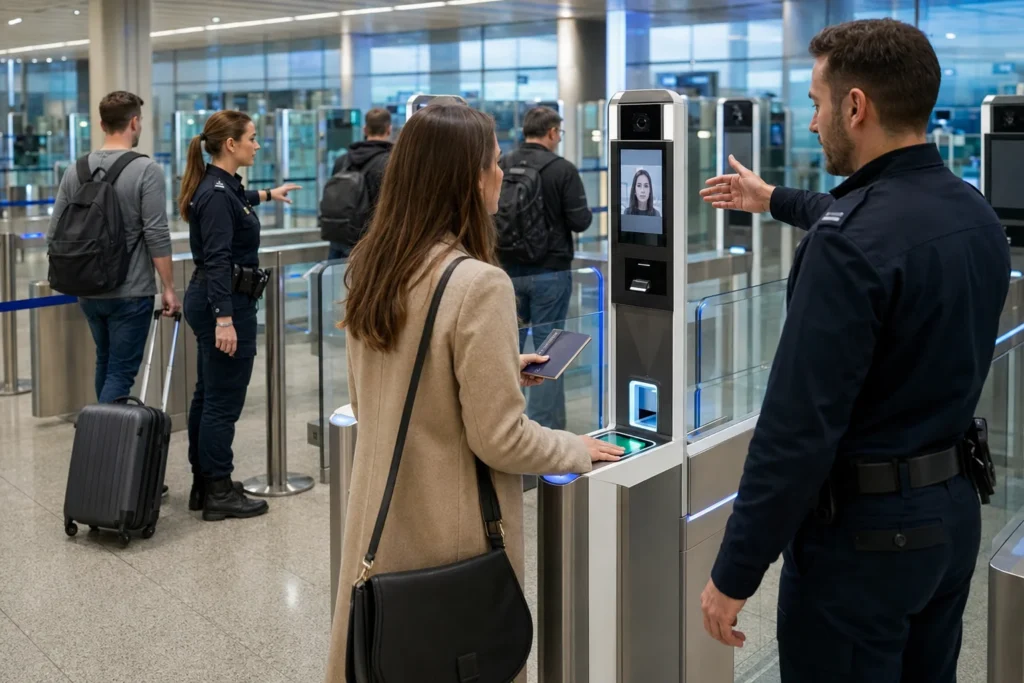
The operational mechanics of the EES require non-EU passengers arriving at external Schengen borders to interface directly with automated biometric registration kiosks or dedicated border control booths. During the initial registration process, the system collects specific personal and travel data:
Travel Document Records: Full legal name, date of birth, nationality, passport number, issuing country code, and document expiration date.
Biometric Profile Data: A live high-resolution facial photograph and, for travelers aged 12 and older, four-finger print scans.
Movement Log Details: The exact date, time, and specific border crossing point for every entry and exit.
While initial biometric enrollment requires additional processing time per passenger during their first visit following system launch, traveler profiles remain active in the centralized database for three years from the date of the last recorded exit or refusal of entry. During subsequent trips within this three-year validity window, verification involves matching live biometrics against the existing digital record, drastically reducing check-in times.
French Government Directives and Pragmatic Deployment Across Key Transit Gateways
As a primary international gateway to Europe, France manages significant volumes of air, maritime, and rail traffic at major hubs including Paris-Charles de Gaulle Airport, the Port of Dover, Eurotunnel terminals, and Paris St Pancras rail connections. In official briefings published by the Directorate General for Foreigners in France, government authorities outlined a flexible, phased implementation strategy aimed at balancing security protocols with smooth passenger flows.
French border control regulations incorporate adaptive operational measures during peak transit periods. Border officials are authorized to deploy flexible verification protocols to prevent excessive queuing at international departure and arrival gates while upholding mandatory security checks.
The French Interior Ministry emphasizes that the transition to digital border infrastructure represents an indispensable investment in long-term public safety. By providing real-time visibility into international passenger flows, the system eliminates gaps inherent in manual passport checks and ensures comprehensive protection across all European transit corridors.
Global Visitor Mobility and Essential Compliance Mandates for Non-EU Travelers
The introduction of EU Entry Exit System biometric checks impacts all non-EU passport holders, including travelers from visa-exempt nations such as the United Kingdom, the United States, Canada, and Japan, as well as visa-required passport holders across Africa, Asia, and Latin America.
Official border advisories issued by national transport departments highlight critical guidelines for foreign travelers:
In-Person Terminal Enrollment: Biometric registration takes place directly at land, sea, and air border crossing points upon arrival; no advance online registration or additional fee is required for the EES.
Juxtaposed Controls in the UK: For travelers departing the United Kingdom via the Port of Dover, Folkestone Eurotunnel, or London St Pancras Eurostar terminals, French border clearance and biometric collection occur prior to departure from UK soil.
Compliance Requirements: Providing requested biometric data is a mandatory condition of entry under European immigration law; refusal to provide facial scans or fingerprints results in formal entry refusal.
Coordination with ETIAS: The EES operates independently from the upcoming European Travel Information and Authorisation System (ETIAS), an electronic travel permit that will require pre-travel online application for visa-exempt visitors.
As international transit networks complete the transition toward automated border administration, official tourism authorities recommend that travelers allocate adequate time for border clearance during peak holiday seasons. By aligning travel plans with updated European immigration procedures, global visitors can look forward to secure, efficient, and transparent travel across the Schengen Area.
For more travel news like this, keep reading Global Travel Wire