The international travel landscape is experiencing notable operational adjustments as ongoing regional conflict in West Asia continues to alter major air corridors connecting South Asia with Europe, North America, and the Gulf region. Grounding thousands of scheduled journeys and pushing flight paths into longer circumferences, the disruptions highlight how closely intertwined global tourism and aviation safety infrastructure remain.
According to official statements presented to Parliament by the Ministry of Civil Aviation, Indian carriers have recorded approximately 26,000 international flight cancellations attributable to airspace restrictions over West Asia. The data, submitted in a written response to the Lok Sabha by Minister of State for Civil Aviation Murlidhar Mohol, underscores the scale of operational adjustments required by airlines to maintain maximum safety protocols for passengers and flight crews.
Official Disclosures Reveal the Scale of Aviation Adjustments
The Ministry of Civil Aviation confirmed that the Directorate General of Civil Aviation (DGCA) has issued multiple safety advisories and operational guidelines to guide airlines through high-risk airspaces. These regulatory measures require domestic and international operators to continually reassess security conditions, monitor updated Aeronautical Information Publications, and strictly avoid restricted air corridors across affected West Asian zones.
Because West Asian flight corridors represent primary transit routes connecting Indian gateways such as Delhi, Mumbai, Bengaluru, and Kochi with major global destinations, the necessary closure of these pathways has necessitated widespread timetable revisions. Flight diversions, delays, and strategic cancellations have affected both business travel and outbound leisure tourism, forcing travel planners and passengers to adapt to changing travel windows.
Airspace Curbs and Long-Haul Flight Rerouting
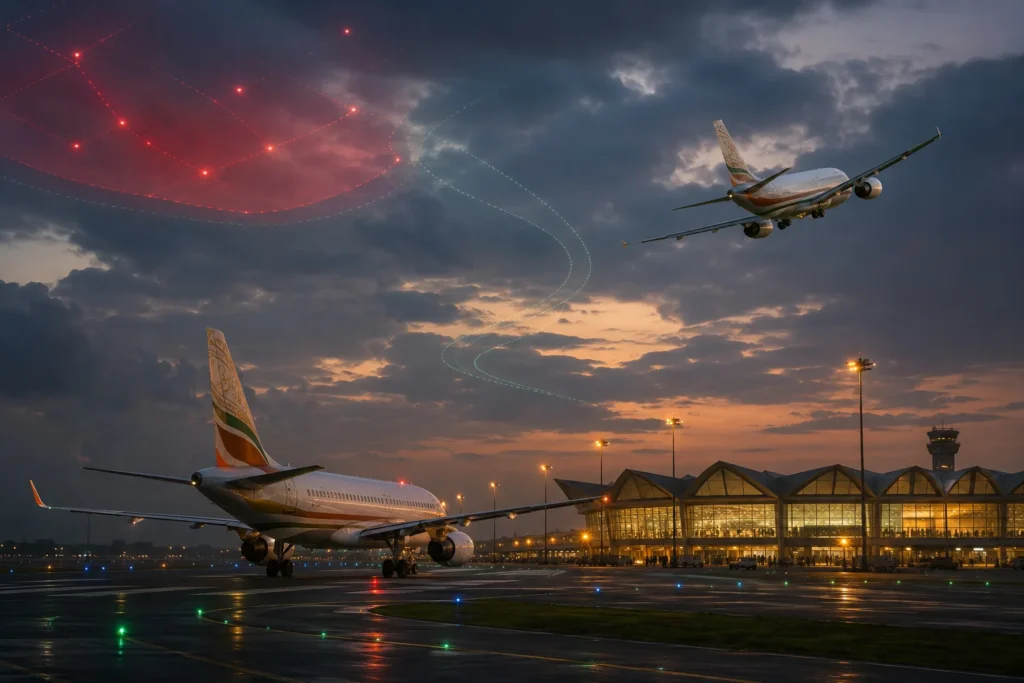
To ensure uninterrupted safety across long-haul operations, airlines have been forced to implement longer detour routes around restricted airspace. These alternate routing tracks bypass traditional corridors over central West Asia, navigating instead through approved southern or northern air paths.
While these safety measures ensure passenger security, they add significant flying time to long-haul journeys. Flights linking India with cities across Western Europe and North America have seen travel durations increase by anywhere from 45 minutes to over two hours depending on the origin and destination.
The extended routing also requires enhanced operational planning from aviation authorities and airport management. The Ministry of Civil Aviation noted that temporary adjustments, including flexibilities in Flight Duty Time Limitations for flight crews, have been coordinated alongside safety regulators to manage the operational demands of longer flight hours while keeping safety standards absolute.
Economic and Operational Pressures on Aviation and Tourism
The requirement to fly extended circumferences has compounded financial and resource pressures across the aviation sector. Longer air routes naturally result in increased jet fuel consumption, elevated aircraft maintenance demands, and greater crew allocation requirements.
In official statements to Parliament, civil aviation representatives acknowledged that re-routing has led to higher operational expenses for Indian carriers, with the exact financial impact varying based on specific route diversions, flight durations, and prevailing international fuel prices. In parallel, airlines face significant revenue losses stemming from cancelled capacity during peak travel months.
The downstream impact on the tourism economy is equally distinct. Outbound tourism packages to popular destinations in Western Europe, the Middle East, and North America have seen adjustments in itinerary scheduling. Travel agencies and tour operators report that while traveler demand remains resilient, logistical delays and altered flight availability have led to shifting travel timelines, with some tourists choosing alternative regional destinations within South Asia and Southeast Asia that do not rely on West Asian air transit.
Passenger Facilitation and Airport Operational Readiness
To mitigate passenger inconvenience resulting from schedule changes, government bodies and airport operators have put enhanced facilitation frameworks into place. The Airports Authority of India (AAI), working alongside major private airport operators, has maintained continuous coordination to oversee ground handling, manage parking bays, and ensure smooth transit procedures for affected travelers.
Airports across key Indian metro hubs remain on operational alert to accommodate potential unscheduled landings, technical stops, and rerouted aircraft. Passengers traveling on international routes are advised by official aviation notices to regularly check flight status updates directly through official airline notification channels prior to airport arrival.
Furthermore, airlines continue to offer revised booking arrangements, fee waivers for schedule adjustments, and alternative flight routings where available to assist passengers navigating delays.
Strengthening Resilience in International Tourism Flow
Despite the immediate operational headwinds, official tourism and civil aviation perspectives emphasize the fundamental resilience of international travel demand. India remains one of the world’s fastest-growing outbound travel markets, backed by robust economic fundamentals and a strong domestic travel appetite.
While the temporary narrowing of key West Asian air corridors presents complex logistical challenges, active collaboration between aviation regulators, airport infrastructure managers, and airline operators ensures that safety protocols remain uncompromisingly strong. As flight paths stabilize and global aviation networks adjust to evolving airspace conditions, the sector continues to demonstrate its capacity to protect traveler safety while preserving essential international connectivity.
For more travel news like this, keep reading Global Travel Wire