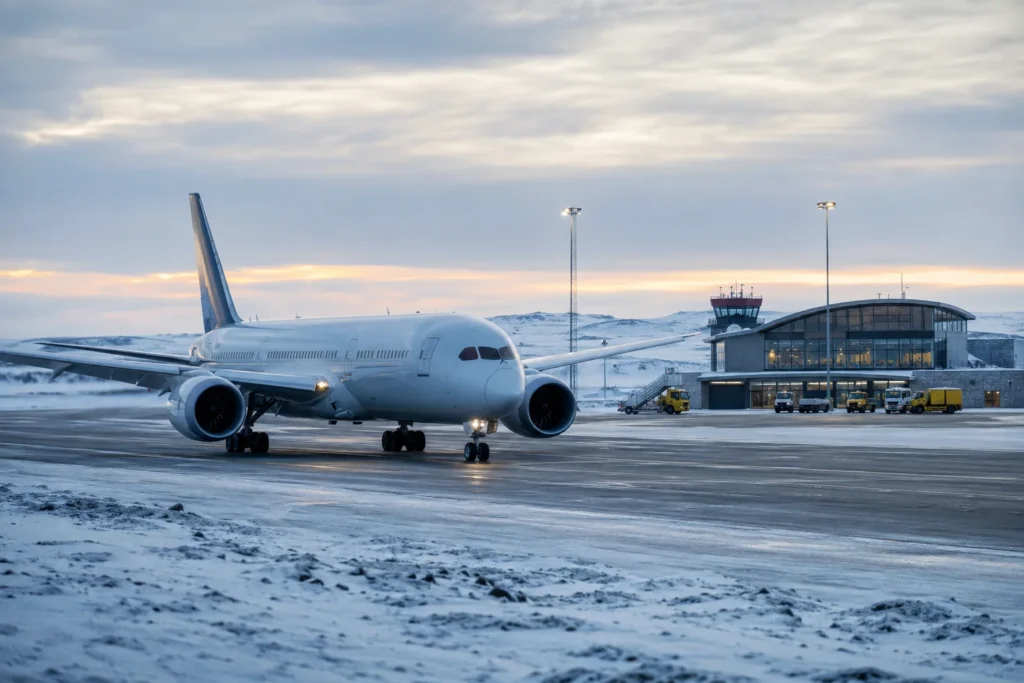
An unexpected transatlantic detour provided over 270 travelers with a rare look at Canada’s far north when a long-haul commercial flight made an unscheduled landing in Nunavut. Flight BA53, a daily scheduled service operating from London Heathrow Airport to Seattle-Tacoma International Airport, diverted to Iqaluit Airport following a reported technical issue while traversing high-latitude polar airways.
The Boeing 787-10 Dreamliner landed safely at the Arctic air facility at 11:07 a.m. local time after flight crew elected to abort the routine transcontinental crossing over the Arctic region. Airline representatives confirmed that the decision to land at the northern Canadian gateway was taken as a precautionary measure in response to an undisclosed technical fault identified mid-flight.
The aircraft turned off its planned flight path across Greenland and northeastern Canada, making a direct approach toward Iqaluit, the territorial capital of Nunavut. The landing occurred approximately six hours after departure from the United Kingdom, demonstrating the critical role that remote polar airfields play in international aviation safety networks.
Seamless Ground Handling in Canada’s Far North
Upon landing in Iqaluit, local ground services executed a smooth disembarkation procedure for all passengers and crew members on board. Specialized arctic ground-handling personnel managed the arrival operation, transitioning the stranded travelers from the widebody twin-jet into the secure holding areas of the terminal facility.
Passengers were provided with meals, beverages, and basic comfort amenities inside the airport terminal while international operational teams worked behind the scenes to coordinate onward travel logistics. Flight crew members actively monitored passenger welfare inside the terminal throughout the holding period, assisting travelers who required specialized mobility support or personal guidance.
Handling unexpected long-haul flight diversions in remote northern territories presents unique logistical considerations. Iqaluit Airport serves as a vital emergency diversion point for polar and transatlantic flight corridors, equipped with long-runway capabilities specifically designed to support large commercial aircraft operating between Europe, North America, and Asia.
High Hotel Occupancy Highlights Regional Tourism and Assemblies
The arrival of more than 270 international air passengers coincided with a period of exceptionally high hotel occupancy across Nunavut’s capital city. The region was actively hosting a major northern international assembly, bringing delegates, cultural ambassadors, and Arctic leaders from across the globe to the territory.
Because local hotel rooms and guest accommodations across Iqaluit were almost fully booked due to the scheduled international conference, ground teams focused on accommodating passengers comfortably within the airport facility while evaluating aircraft maintenance requirements and alternative flight solutions.
The influx of global travelers underscores the rising profile of Canada’s Arctic territories as hubs for major cultural gatherings, eco-tourism initiatives, and specialized scientific research expeditions. While unexpected, the brief stay offered international visitors an authentic glimpse into the unique infrastructure required to connect remote northern communities with the broader global tourism landscape.
Essential Role of Polar Route Safety Networks
The Arctic flight corridor represents one of the most direct and fuel-efficient flight paths connecting European travel hubs with the Pacific coast of North America. To ensure passenger safety along these high-latitude tracks, international civil aviation regulations require strict operational protocols, real-time tracking systems, and certified polar diversion airports located along the flight path.
Facilities such as Iqaluit Airport provide critical infrastructure that supports safe international travel across polar routes. Equipped with specialized emergency response capabilities, high-capacity jet fuel storage, and modern terminal facilities, these northern outposts ensure that air carriers can address technical anomalies promptly and securely.
Airline engineering teams are evaluating the grounded aircraft to complete necessary technical inspections and clear the widebody jet for return to active flight operations. Meanwhile, international passenger service teams continue working to transport all affected travelers to their final destination in Seattle, completing a memorable chapter in polar air travel.
For more travel news like this, keep reading Global Travel Wire